The Use of Axes in Historical Warfare
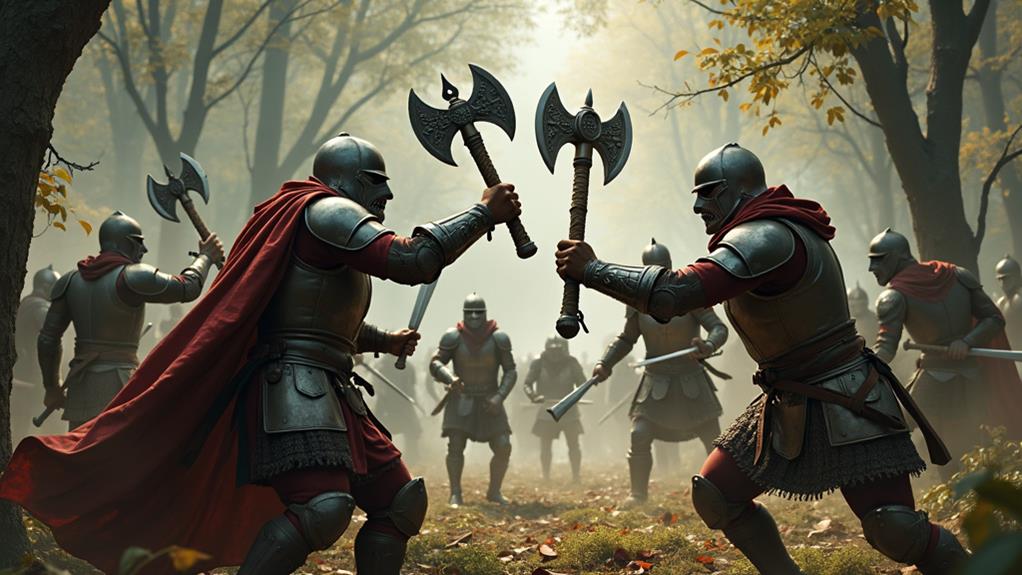
When envisioning historical warfare, swords and shields often come to mind, but axes played a critical role on the battlefield as well.
From the rudimentary stone tools of early humans to the finely crafted weapons of the medieval period, axes were designed for more than just chopping wood. These versatile tools were essential in close combat, capable of inflicting severe damage and penetrating armor where other weapons often failed.
Picture Richard the Lionheart wielding an axe amidst the chaos of battle. Axes significantly shaped the course of military history, and their impact is a testament to their effectiveness and versatility.
Historical Context
Battle axes have a rich history that dates back to the Paleolithic period. Early humans began using hafted stone axes around 6000 BCE, marking their significant role in early warfare. By the Viking Era (8th-11th centuries), battle axes had become prominent weapons due to their ability to inflict deep wounds and penetrate armor, making them essential for close combat.
During medieval times, notable figures such as King Richard the Lionheart and King Stephen of England wielded battle axes, highlighting their importance. These weapons weren't confined to melee combat; designs like the francisca could be thrown or used in hand-to-hand fighting, showcasing their versatility and effectiveness on the battlefield.
However, the prominence of battle axes declined by the late 16th century with the introduction of gunpowder weaponry. Firearms and cannons revolutionized warfare, reducing the reliance on traditional melee weapons. Despite this shift, battle axes continued to be used in some regions until the 18th century, maintaining their legacy as iconic tools of historical combat.
Evolution and Design
Exploring the evolution and design of axes in historical warfare reveals their significant advancements over millennia. Starting with hafted stone axes around 6000 BCE, these tools evolved into powerful weapons with the onset of metalworking in the Iron Age. By approximately 1000 BCE, battle axes with wedge-shaped iron heads appeared, dramatically improving combat effectiveness.
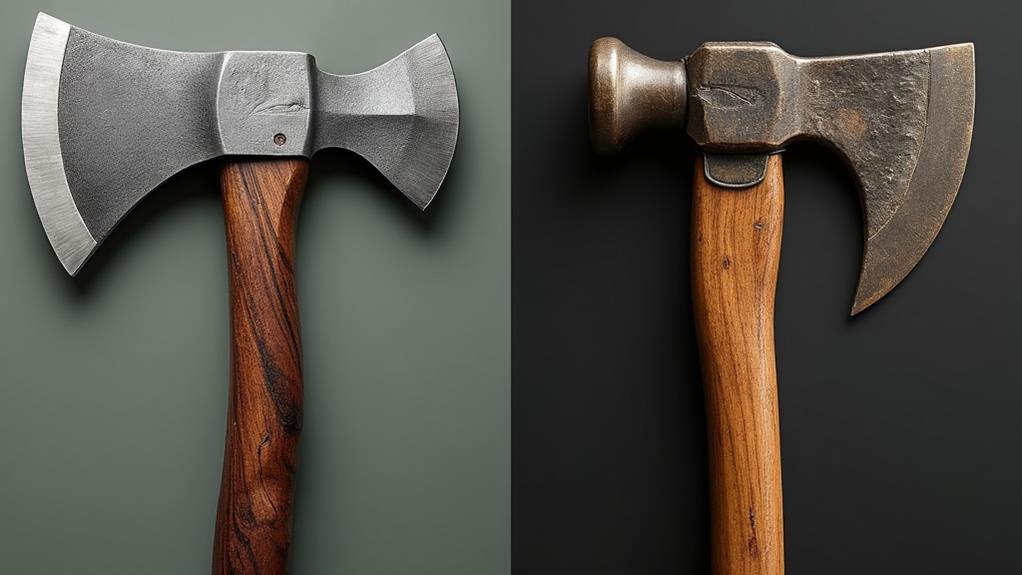
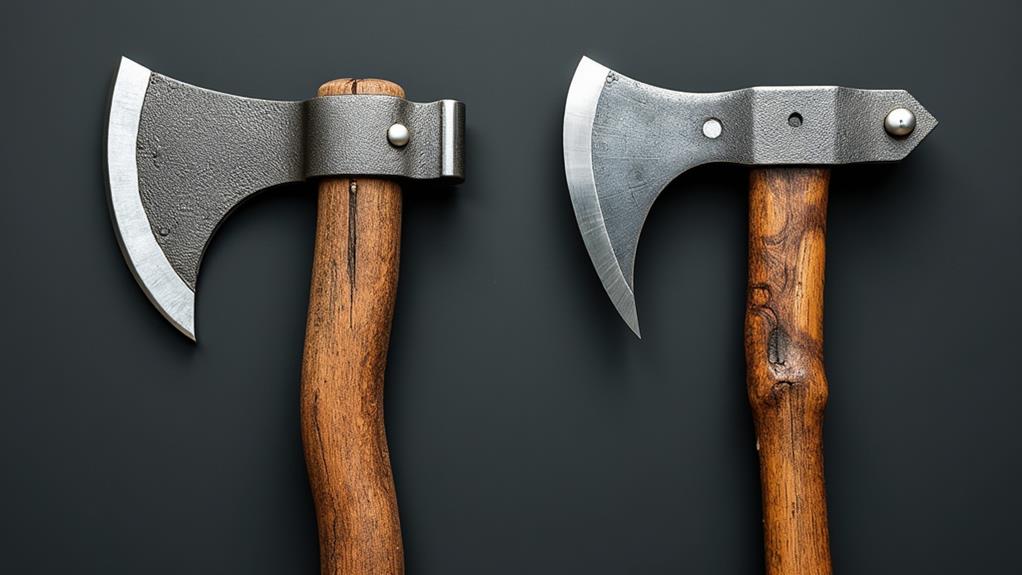
During the medieval period, battle axes underwent substantial design improvements. Socketed heads facilitated easier haft insertion, and the addition of langets reinforced the haft, enhancing durability in intense combat. Secondary stabbing spikes were incorporated to address the need for more effective armor penetration.
- Functional diversity: Variants like halberds and pollaxes adapted the basic battle-axe design for specialized combat roles.
- Ceremonial axes: Decorative engravings and elaborate designs underscored their cultural significance.
- Combat effectiveness: Innovations such as all-metal construction improved both durability and versatility.
The crescent-shaped Sindhi tabar and the versatile Indian tabar-zaghnal exemplified the blend of functional diversity and cultural importance.
These designs served practical purposes in combat and played significant roles in ceremonial contexts, highlighting the profound impact of axes throughout history.
Regional Variations
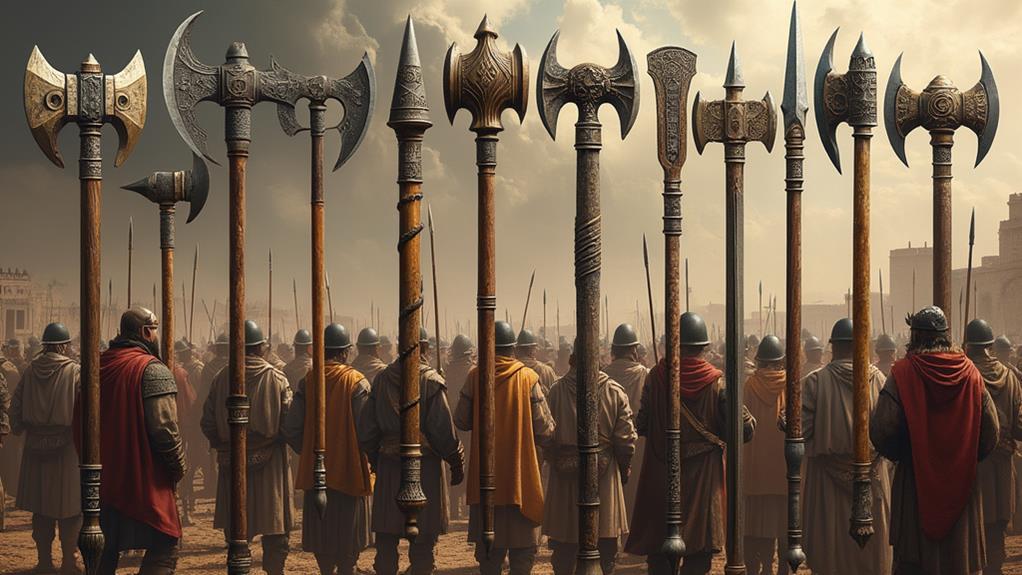
Exploring regional variations in historical battle axes reveals a fascinating array of designs tailored to specific combat needs and cultural contexts. In the Middle East, the tabarzin, with its crescent-shaped blade, was a formidable weapon in Persia, Egypt, and the Arab world, reflecting regional preferences for agility and precision in battle.
Ancient Chinese battleaxes like the Fu and Yue symbolized power and were carefully crafted. The Song dynasty introduced specialized axes, such as the Phoenix Head and Invincible Axes, underscoring their significance in both combat and ceremonial contexts.
In India, the parashu, with its length of 90 to 150 cm and dual-edged blade, was versatile for various combat scenarios and revealed deep cultural roots. Dong Son axes from ancient Vietnam were robust and artistically intricate, showcasing exceptional craftsmanship and reflecting the region's martial traditions.
Lastly, Viking battle axes, particularly the bearded axe, evolved with a downward extension of the edge, enhancing their cutting capability and playing a crucial role in Viking combat strategies.
Cultural Significance
Throughout history, axes have transcended their utilitarian origins to become potent symbols of cultural identity and power. Battle axes like the parashu in India weren't merely weapons; they symbolized power and divine association, often depicted in Hindu art with deities such as Shiva and Durga.
In Viking culture, axes were central to warrior identity, celebrated in sagas and poetry, marking them as status symbols among the Norse elite.
- Ceremonial use: The panabas in the Philippines highlighted the cultural significance of axes in rituals and executions, reinforcing social order.
- Ornate designs: The Ottoman tabar exemplified the combination of functionality and aesthetics, reflecting the period's craftsmanship and values.
- Martial traditions: From the Lombards and Celts to the Slavs, battle axes underscored societal hierarchy and regional martial practices.
Axes also played a significant role in reinforcing social hierarchy. In diverse cultures, their ceremonial use underscored authority and social structure.
The intricate craftsmanship of ornate designs in the Ottoman Empire, for instance, demonstrated not just the weapon's utility but also the cultural values and artistic skills of the time. Across different regions, battle axes were integral to martial traditions, representing both personal status and broader societal norms.
Famous Battles and Figures
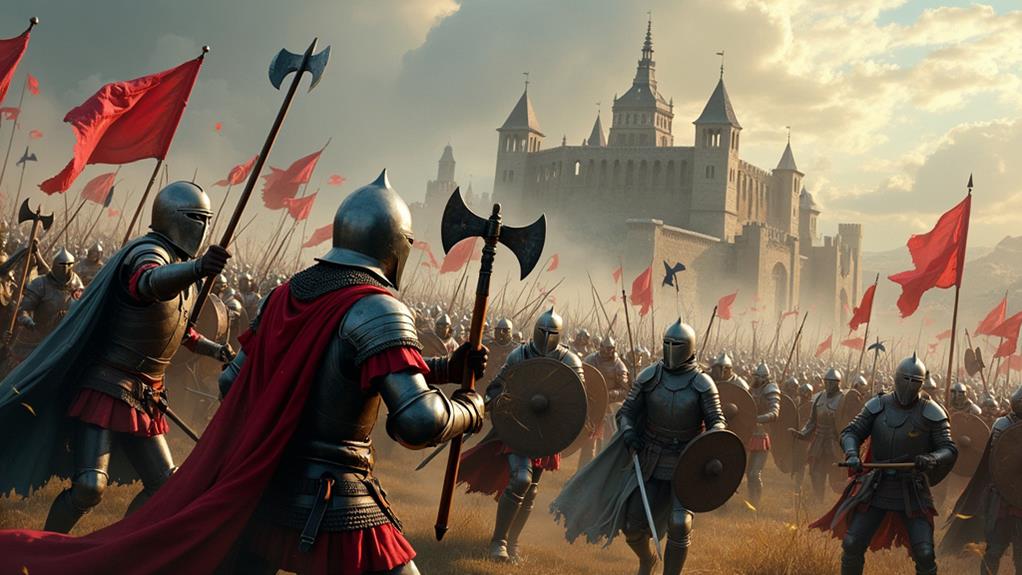
The significance of battle axes in shaping historical conflicts and legendary figures can't be overstated. At the Battle of Hastings in 1066, the professional infantry wielded the formidable English long axe to devastating effect against the invading Norman forces. This weapon's sheer power and reach made it an essential tool in both defense and offense during the battle.
Richard the Lionheart's use of a battle axe during the Third Crusade became a symbol of his martial prowess and leadership. His axe-wielding exploits in key conflicts showcased the weapon's versatility and effectiveness in hand-to-hand combat.
In the Battle of Bannockburn in 1314, Scottish forces skillfully employed battle axes against English knights. The axes proved invaluable in both offense and defense, helping to turn the tide of the battle in favor of the Scots.
King Stephen of England also favored battle axes during the civil unrest of the 12th century, emphasizing their importance in royal conflicts. Meanwhile, during the Viking era, the francisca—a throwable battle axe—was a staple. This weapon could shatter enemy shields and disrupt formations, making it a feared tool in Viking raids and battles.
Decline and Legacy
As the thunderous clashes of steel and the heroic tales of battle axes in historical conflicts begin to fade, a new epoch of warfare emerges. The decline of battle axes started in the late 16th century when gunpowder weapons and adaptable swords became the primary combat tools. Firearms overshadowed the once-dominant axes, rendering them less effective on the battlefield.
However, the legacy of these weapons didn't vanish entirely. Battle axes maintained ceremonial significance in Europe, symbolizing authority and tradition during formal military parades.
In the 17th and 18th centuries, battle axes adapted to the changing combat environment by evolving into pole arms and staff weapons. Native American cultures accepted trade axes, replacing traditional tomahawks and integrating them into their hand-to-hand combat skills.
- Ceremonial Use: Still used in military parades and as symbols of authority.
- Adaptation: Evolved into pole arms and staff weapons.
- Cultural Integration: Adopted by Native American cultures as trade axes.
In modern times, the legacy of battle axes persists in different forms. They're used in forestry, throwing competitions, and preserved as historical artifacts, symbolizing a rich martial heritage. The history of battle axes continues to inspire and intrigue.
Conclusion
Axes have played a pivotal role in historical warfare, evolving from simple tools to formidable weapons. Their distinct designs and regional variations demonstrate their adaptability and significance across different cultures. Notable figures like Richard the Lionheart and iconic battles highlight their impact. Although their prominence has waned, the legacy of battle axes endures, reminding us of their crucial role in martial history. The next time you see an axe, consider its rich and storied past.