The Role of the Axe in Homesteading
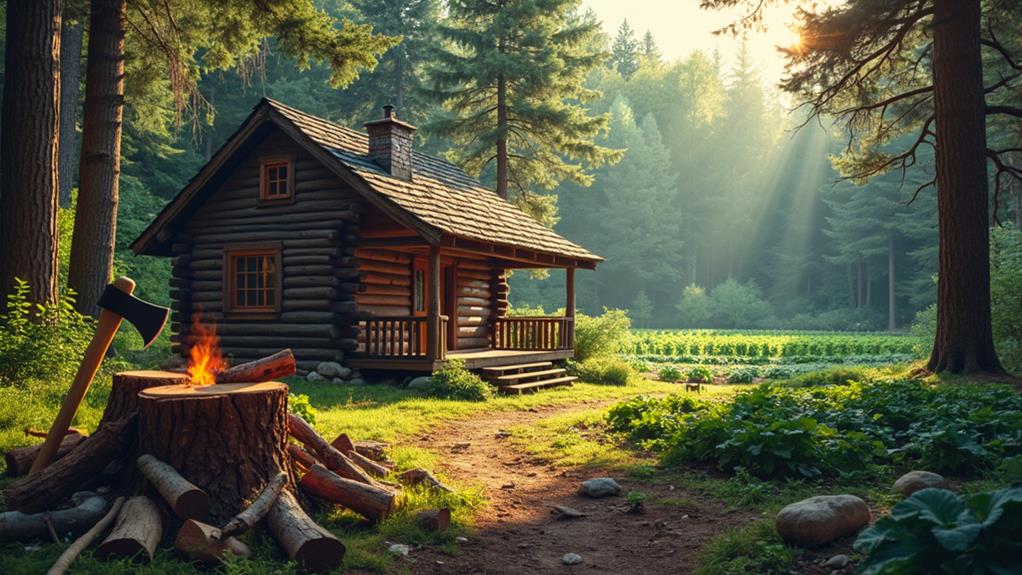
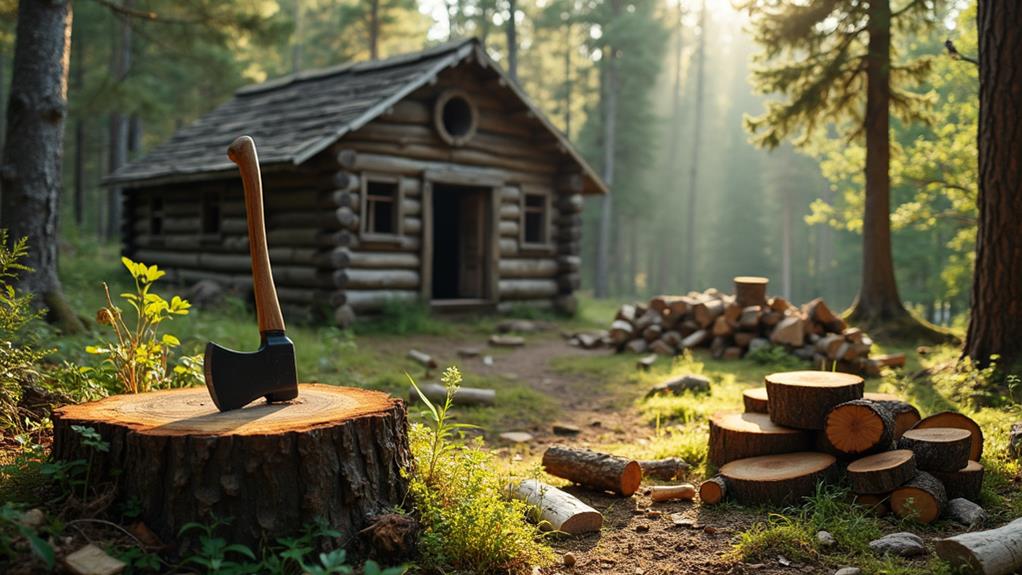
When you think about homesteading, the axe stands out as a fundamental tool. Its significance extends beyond chopping wood to its historical role in transforming wild landscapes into habitable spaces. Early settlers used axes to build cabins and furniture, making it indispensable for self-sufficiency.
Even today, its utility in sustainable living practices remains unparalleled. Choosing the right axe for your homesteading needs is crucial, as it continues to be vital in modern sustainable living.
Historical Significance
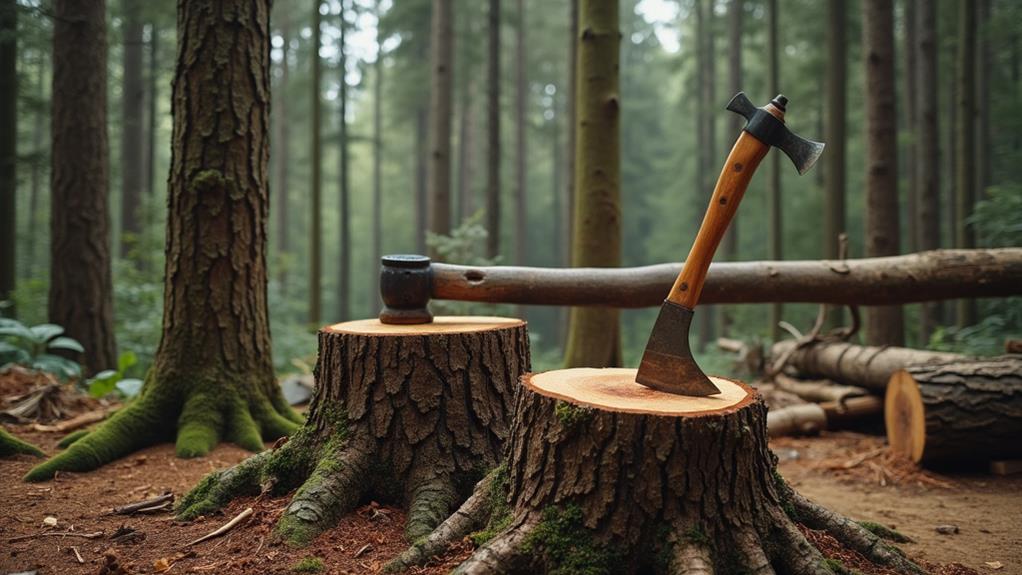
The axe, one of humanity's oldest tools, was essential for early settlers in establishing communities. Alongside your rifle, the axe was vital for survival. Beyond chopping wood, it was a lifeline. The American felling axe, with its extended handle, was specifically designed to effectively cut down the dense forests that spanned much of North America.
Each morning, the rhythmic sound of your axe striking wood marked the beginning of your day. This routine wasn't merely about clearing land; it was about survival. Log cabins, often built within a week, provided crucial shelter against harsh conditions. The axe enabled you to transform the wilderness into a livable environment, allowing for agriculture and securing your future.
Evolution of Axe Design
Adapting to the demands of North American timber, early settlers transformed French and Portuguese axes into robust tools capable of handling the region's thick, dense woods. Consequently, the American axe emerged with significant modifications, including a heavier poll and a shorter bit, facilitating more efficient chopping and felling. These changes made it easier to clear land and build shelters.
The handle also evolved, becoming longer and ergonomically curved to increase leverage and reduce user fatigue. These innovations were crucial for settlers, who often needed to construct cabins within a week using their felling axes.
By 1900, axes had been instrumental in clearing approximately 500 million acres of forestland, reshaping the American landscape. However, the rise of chainsaws in the mid-20th century led to a decline in traditional axe usage. In recent years, there's been a resurgence of interest in high-quality, handcrafted axes.
Boutique axe makers now blend traditional craftsmanship with modern designs, emphasizing the historical significance and superior quality of the American axe. This evolution underscores the enduring importance of the axe in homesteading and beyond.
Practical Uses
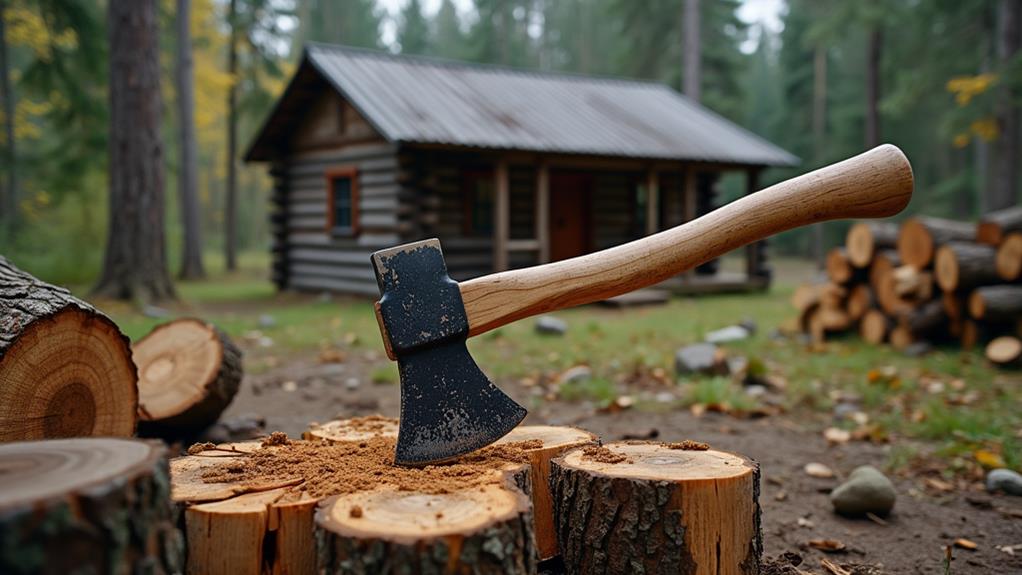
As the design of axes evolved to meet the demands of North American timber, their practical applications expanded considerably. For homesteaders, axes were indispensable, serving multiple crucial functions in daily life. You'd use an axe to fell trees, trim branches, and shape logs, essential for building shelters and other structures.
Preparing firewood was another critical task; you'd rely on axes to chop kindling and split wood, ensuring warmth and the ability to cook meals, vital for rural survival. Axes also played a key role in land preparation. With a sturdy wooden handle, you could clear fields, making way for planting crops and establishing your farm.
Crafting furniture and tools was another area where axes excelled. You could shape and refine wood to create tables, chairs, and even sled runners, contributing to a self-sufficient lifestyle.
Imagine the satisfaction of:
- Building your own shelter from timber you've felled and shaped.
- Warming your home with firewood you've split yourself.
- Clearing fields to grow food that sustains your family.
- Crafting furniture that will be used for generations.
Axes enabled homesteaders to manage resources effectively, supporting their daily survival and economic stability.
Modern Resurgence
Driven by a growing interest in sustainable living and self-sufficiency, the modern resurgence of axe usage has captivated homesteaders and outdoor enthusiasts alike. This renewed interest has generated a demand for premium axes, especially those handcrafted by boutique makers who combine utility with aesthetic appeal. High-quality tools from makers like Council Tool offer the sharp edge and durability required for various tasks.
Online communities and workshops have flourished, sharing invaluable knowledge about axe use, maintenance, and restoration, thereby easing the learning curve for newcomers. Activities such as camping and bushcraft have further fueled this renaissance, as enthusiasts seek versatile tools for practical outdoor applications.
Modern axe enthusiasts often prioritize vintage and restored models, reflecting a deep appreciation for the craftsmanship and history behind these tools. This connection to the past underscores the enduring legacy of the axe in homesteading culture.
Choosing the Right Axe
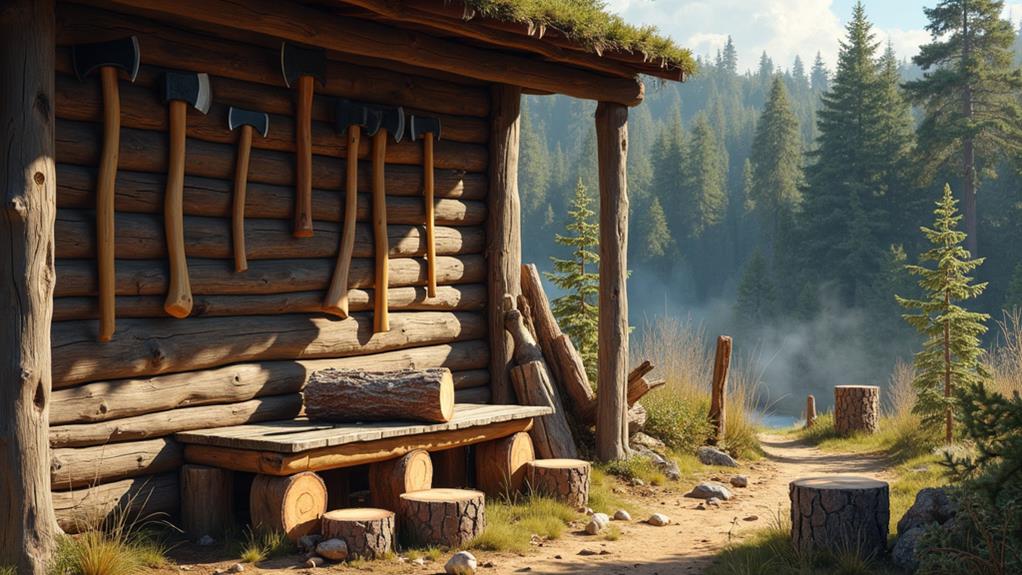
With the renewed interest in axes among modern homesteaders, selecting the appropriate tool for your needs is crucial. Always consider the task at hand when choosing the right axe.
Types of Axes for Different Tasks
- Felling Trees: For felling trees, opt for a felling axe with a 3-4 lbs head and a 28-36 inch handle. This provides the necessary power and leverage.
- Splitting Logs: For splitting logs, a heavier splitting maul weighing 6-8 lbs is essential for efficient firewood preparation.
- General Homesteading Chores: A single bit axe weighing between 2-3 lbs with a 28-32 inch handle offers a good balance between control and cutting efficiency.
- Portable Tasks: For portability and light tasks like splitting kindling and building shelters, a camp axe with a 14-26 inch handle and weighing 1.5-3 lbs is ideal.
Benefits of the Right Axe
- Effortless Efficiency: Experience the satisfaction of effortlessly splitting logs.
- Power and Leverage: Feel the power of a well-balanced felling axe.
- Control and Precision: Enjoy the control of a versatile single bit axe.
- Convenience and Portability: Relish the convenience of a portable camp axe.
Choosing the right axe is vital for your homesteading success.
Conclusion
In embracing homesteading, you'll find the axe is more than just a tool—it's a link to a rich history of self-reliance and ingenuity. From its evolution in design to its practical applications, the axe remains indispensable. Today's homesteaders appreciate its versatility in both traditional and modern tasks. By choosing the right axe for your needs, you're not just honoring the past but also ensuring a sustainable future. So, grab your axe and start crafting a legacy.