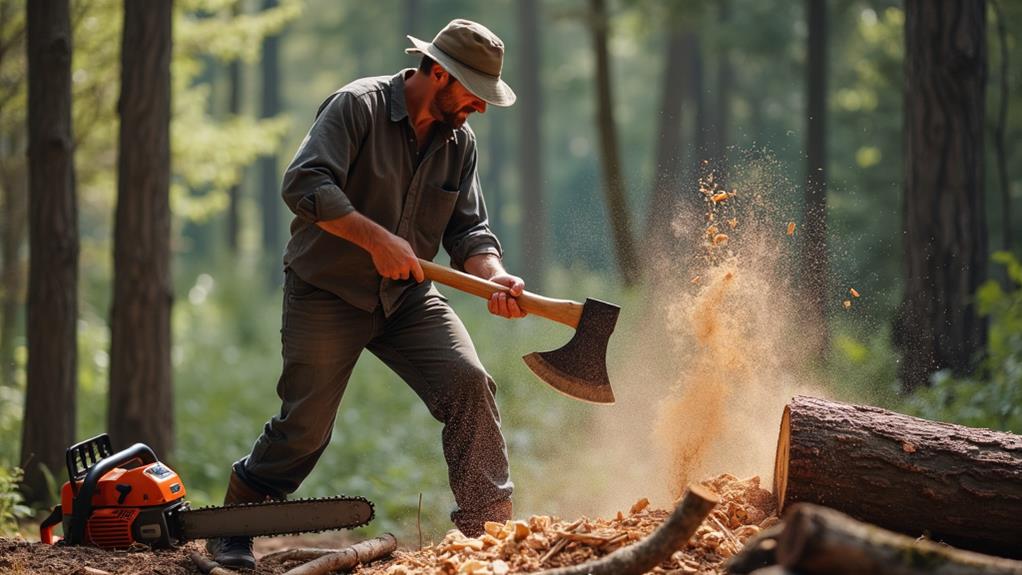
The Role of Axes in Traditional Farming Practices
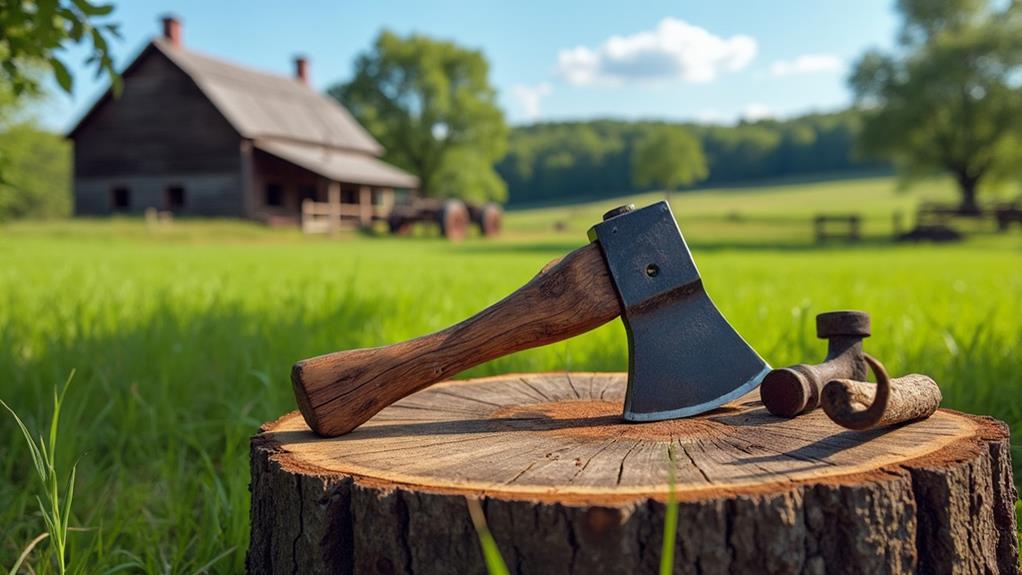
When considering traditional farming, the axe stands out as one of the earliest and most fundamental tools. Its role extends beyond chopping wood; it's essential for clearing land, preparing crops, and constructing infrastructure.
Each region boasts unique axe designs tailored to specific agricultural needs, reflecting local craftsmanship and cultural heritage. What makes axes indispensable in farming communities is their versatile uses and the communal bonds they foster during shared labor.
Curious about the interplay of these elements?
Historical Significance
Axes have been indispensable in traditional farming practices for thousands of years, evolving from simple stone tools to sophisticated metal versions. Their importance is evident in ancient civilizations like Mesopotamia and Egypt, where they were essential for foundational agricultural tasks.
Early farmers relied on these versatile tools for cutting wood, harvesting crops, and managing livestock. The design of axes varied regionally to meet specific farming needs, with some optimized for chopping wood and others for harvesting grain. Archaeological findings reveal that axes also held cultural significance. These tools were often buried with their owners or used in rituals, symbolizing their importance beyond mere utility.
In traditional agricultural settings, axes represented both the physical and spiritual labor invested in farming.
Land Clearing
Axes have been indispensable in traditional farming, especially for land clearing. When preparing land for cultivation, axes enable the efficient removal of trees and shrubs. This essential step in farming is rooted in ancient agricultural practices, highlighting the historical importance of axes in converting wild forests into arable fields.
Different axe designs, such as the broad axe and felling axe, optimize land clearing efforts. Each type is tailored for specific tasks, making it easier to manage various kinds of vegetation. Whether dealing with dense underbrush or towering trees, a suitable axe is available to meet your needs.
Land clearing with axes goes beyond creating space; it enhances agricultural productivity and supports subsistence farming. By clearing land, you enable crop cultivation and community sustenance.
Traditional methods also promote sustainability. Axes allow for selective cutting, reducing soil erosion and maintaining biodiversity. This careful approach ensures that land clearing isn't only effective but also environmentally responsible, preserving the land for future generations.
Using axes in land clearing aligns with the enduring principles of traditional farming practices.
Wood Processing
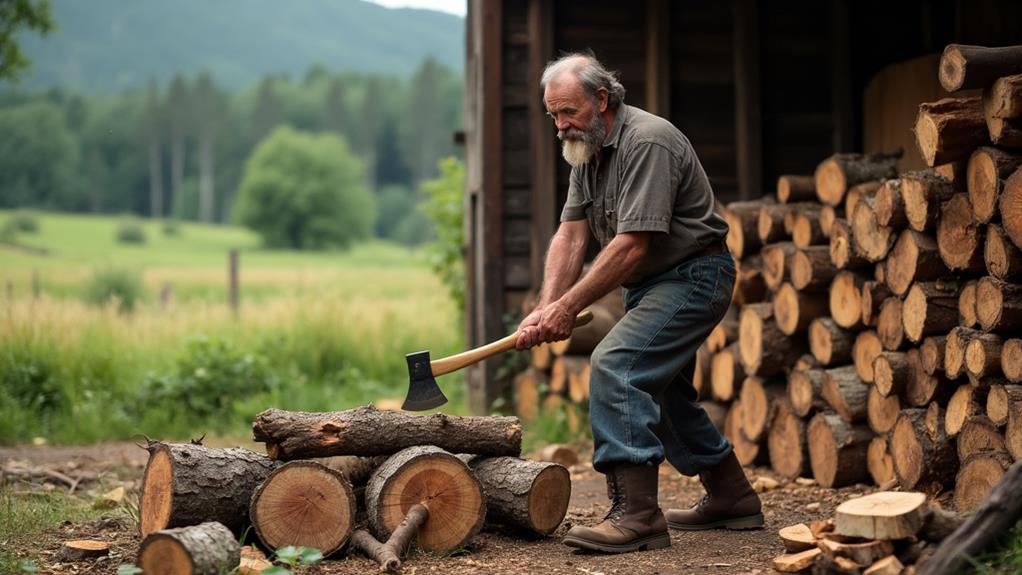
Axes play a crucial role in traditional wood processing, serving as indispensable tools for felling trees and shaping timber for various agricultural purposes. In traditional farming, axes are essential for converting raw wood into practical materials.
Whether constructing farm structures or crafting basic tools, the efficiency of your axe directly impacts productivity. Different regions feature unique axe designs, often influenced by locally available materials. Typically, axes have sturdy wooden handles and iron or steel heads, tailored to the needs of traditional farming communities.
These tools aren't only for large tasks but also ideal for creating firewood, vital for cooking and heating in rural areas. A key advantage of using axes for wood processing is sustainability. They allow for the efficient use of fallen branches and trees without relying on industrial machinery, aligning with eco-friendly farming practices.
However, regular maintenance is essential to keep your axe effective. Sharpening and caring for your axe ensures efficient management of forest resources, making wood processing an integral part of traditional farming.
Tool Crafting
Transitioning from wood processing to tool crafting, creating an axe involves a blend of skill, tradition, and local materials. In traditional farming, durable components like wood for the handle and metal for the blade are essential for crafting an effective axe.
The process begins with shaping both the axe head and handle, ensuring balance and comfort. This endeavor isn't just about making a tool; it's about preserving local craftsmanship and traditional techniques passed down through generations.
Indigenous knowledge is crucial in tool crafting. Selecting the right materials and methods ensures the axe is well-suited to the local environment and specific agricultural tasks such as cutting, chopping, and land clearing.
For example, some axes have unique designs—curved or straight blades—that enhance their effectiveness for specific jobs, like felling trees or harvesting crops. The continued use of these traditionally crafted axes underscores their cultural significance. They aren't merely practical tools; they symbolize the deep connection between farmers and their ancestral agricultural practices.
Crop Preparation
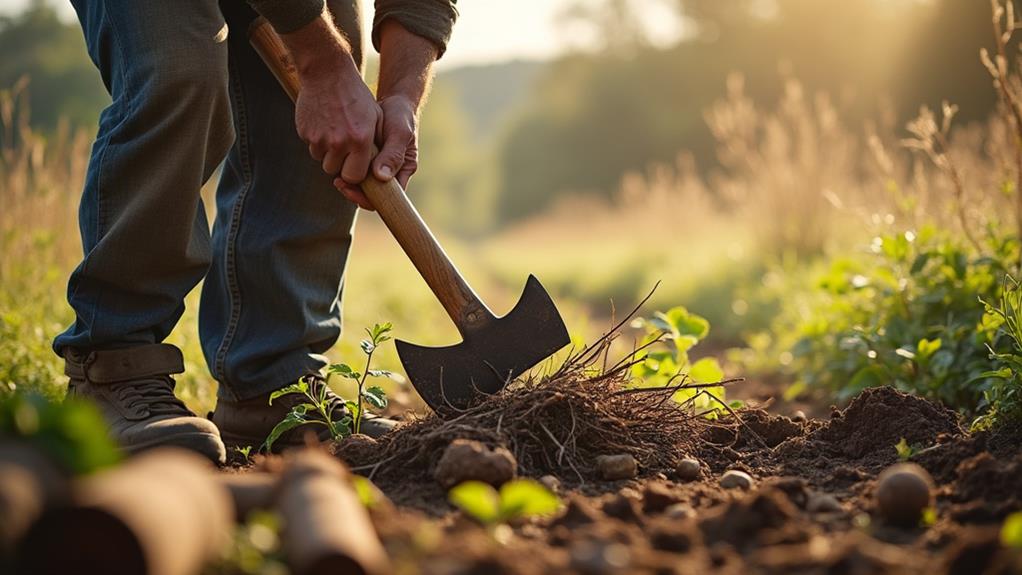
In traditional farming, an axe's versatility makes it indispensable for crop preparation. Initially, you'll find an axe fundamental for land clearing, allowing you to chop down trees and shrubs to prepare fields for cultivation. This crucial step ensures your fields are ready for planting. When dealing with hard soil, use your axe to break up large clods and improve soil aeration, facilitating easier seed planting.
Axes also play a significant role in creating and maintaining firebreaks in slash-and-burn agriculture. By using an axe to clear vegetation, you can prevent uncontrolled wildfires, effectively managing your crop plots. This practice is essential in many traditional farming systems, where controlled burns enrich the soil with nutrients, enhancing crop yields. Beyond land preparation, your axe is invaluable for harvesting timber and firewood, providing crucial resources that support the sustainability of your farm operations.
The design and weight of traditional axes vary across regions, reflecting local agricultural practices and specific farming needs. By mastering the use of these axes, you can efficiently prepare your land, manage your crops, and ensure sustainable farming practices that align with local traditions.
Agroforestry Management
Transitioning from conventional farming to an integrated agroforestry system is a logical progression for enhancing agricultural sustainability. Agroforestry management involves incorporating trees and shrubs into farmland, which boosts biodiversity and offers multiple yields such as food, timber, and firewood. Axes are essential tools for managing tree growth and clearing underbrush, promoting a healthier ecosystem and increasing crop yields.
Incorporating trees into your farming system provides several benefits:
- Soil Fertility: Tree roots stabilize the soil, reduce erosion, and improve nutrient retention, essential for sustainable agricultural productivity.
- Economic Diversification: Diversified production reduces reliance on single crops, increasing income and promoting environmental sustainability.
- Climate Change Mitigation: Agroforestry systems sequester significant amounts of carbon, aiding climate change mitigation and enhancing overall land productivity.
Axes are indispensable in maintaining a balance between tree growth and agricultural land use. This integration supports soil conservation and long-term soil fertility.
Maintenance and Repair
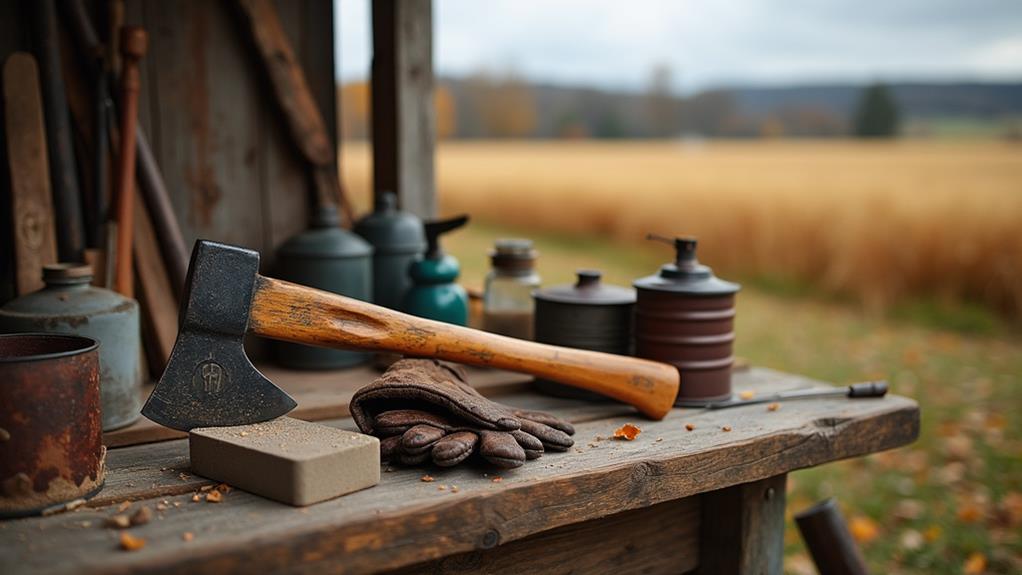
To maintain your axes, regularly sharpen the blade to ensure its effectiveness and safety. Properly replacing handles when needed will extend the tool's lifespan. Store your axes in a dry place to prevent rust and avoid exposing them to harsh weather conditions.
Blade Sharpening Techniques
Regularly sharpening your axe blade is crucial for maintaining its cutting efficiency and extending its lifespan. In traditional farming, effective blade sharpening techniques significantly enhance daily tasks. Begin with a whetstone or a file to sharpen the blade, aiming for an angle between 20 to 25 degrees to achieve an optimal edge for cutting through materials like wood or crops.
Follow these key steps:
- Sharpening: Use a whetstone or file, maintaining the correct angle, to ensure the blade's edge is sharp and effective.
- Honing: Post-sharpening, use a fine stone or leather strop to hone the blade. This removes any burrs, improves cut smoothness, and reduces effort during use.
- Cleaning and Inspection: After each use, wipe down the blade with oil or a protective coating to prevent rust and damage. Regularly inspect the axe head for cracks or looseness and address any issues promptly.
Handle Replacement Methods
Replacing an axe handle is a vital skill in traditional farming to maintain the tool's effectiveness and safety. Begin by selecting a durable wood, such as hickory or ash, known for its strength and shock-absorbing qualities. Carefully remove the old handle by cutting or hammering it out of the axe head, taking care not to damage the eye—the hole where the handle fits.
After removing the old handle, choose a new handle that fits snugly into the eye of the axe head. Secure the new handle with a wedge made of softer wood to prevent splitting. Regular maintenance is essential; inspect your axe handles for cracks or signs of wear. Periodic sanding and oiling will protect the wood from moisture and external elements, ensuring long-term usability.
Preventing Rust Formation
Maintaining your axes to prevent rust is crucial for extending their lifespan and ensuring their effectiveness. Rust can significantly impair the performance of agricultural tools, making regular upkeep essential. After each use, thoroughly clean your axe to remove dirt and moisture, which can help minimize rust formation.
Applying a thin layer of oil or grease to the metal surfaces can serve as an effective barrier against moisture and oxidation, further protecting your tools. Additionally, storing your axes in a dry environment and away from direct contact with soil or damp areas is important, as such conditions can expedite rust development.
Regular inspections of your axes are also necessary. Check for any signs of damage like nicks or scratches, which can compromise the metal's protective layer. Promptly addressing these issues can prevent rust from forming at these vulnerable spots.
Follow these steps to maintain your axes:
- Clean thoroughly after each use to remove moisture.
- Apply a thin layer of oil or grease to the metal surfaces.
- Store in a dry place, avoiding soil and damp areas.
Cultural Impact
In traditional farming, axes are more than just tools—they symbolize heritage and community. They play a crucial role in rituals and traditions, reinforcing cultural beliefs and practices.
Symbol of Heritage
Across diverse societies, axes have served as more than just practical tools in traditional farming; they've become powerful symbols of cultural heritage. In many indigenous communities, axes are cherished heirlooms passed down through generations, embodying the deep connection between agricultural practices and cultural identity.
These tools are often intricately crafted, showcasing regional materials and techniques that highlight the unique identities of farming communities. The engravings and designs on traditional axes hold spiritual significance, linking the tool to ancestral beliefs and farming rituals.
This craftsmanship isn't merely decorative; it represents the collective memory of agricultural history and the evolution of sustainable farming practices. When you grasp an ax with such engravings, you're not just holding a tool; you're holding a piece of history that tells a story about the land and the people who worked it.
Consider these aspects to appreciate the cultural heritage embodied in traditional axes:
- Heirlooms: Axes passed down through generations, symbolizing continuity and heritage.
- Craftsmanship: Unique regional designs reflecting local materials and techniques.
- Spiritual Significance: Engravings and designs that connect to ancestral beliefs and rituals.
Community Bonding Tool
The cultural significance of axes extends beyond their symbolic value, playing an essential role in fostering community bonds. In traditional agricultural societies, axes aren't merely tools for chopping wood or clearing land; they serve as indispensable community bonding instruments. During harvesting seasons, the communal use of axes promotes social gatherings, fostering cooperation and strengthening relationships among community members.
Picture this: families and neighbors coming together, each wielding an axe, working side by side to harvest crops or clear fields. These shared efforts create a sense of unity, reinforcing the idea that farming is a collective endeavor. Axes are often passed down through generations, symbolizing familial heritage and continuity in farming practices. This generational transfer deepens community ties and enriches cultural traditions, making the axe far more than just a farming implement.
Moreover, communal tree-felling for land clearing or firewood isn't just a practical task; it's a ritual that reinforces social bonds through collective effort. In these moments, the axe symbolizes shared labor and mutual support. These traditions underscore the fundamental role of the axe in the social fabric of rural farming communities.
Ritual and Tradition
Amid traditional farming practices, axes hold profound cultural significance that extends beyond their practical use. They're integral to rituals and traditions imbued with spiritual meaning.
In many cultures, axes are employed in ceremonies to invoke blessings for fertility and abundance during planting and harvest seasons. These rituals often involve communal activities like clearing land or planting trees, which strengthen social bonds and reinforce cultural identity within farming communities.
The craftsmanship of axes, passed down through generations, reflects cultural heritage. Each design and material choice symbolizes the unique values and resources of specific regions. This connection isn't only practical but also deeply symbolic.
In some indigenous cultures, axes are central to mythologies and storytelling, symbolizing the relationship between humans and nature and emphasizing the importance of sustainable farming practices.
When using an axe in traditional farming, the scene is often accompanied by songs and dances, highlighting the spiritual significance of the axe and its alignment with the seasonal cycles of agriculture.
- Spiritual significance: Blessings for fertility and abundance.
- Ritual and Tradition: Strengthening communal bonds.
- Cultural Heritage: Unique designs and materials.
Conclusion
Axes play a crucial role in traditional farming, essential for tasks ranging from land clearing to processing wood. These tools significantly enhance agricultural productivity and sustain farming practices. Beyond their practical utility, axes embody cultural heritage, showcasing ancestral craftsmanship. Furthermore, using axes during group farming activities fosters community bonds. Embrace the heritage and efficiency they offer to enhance your farming endeavors.