The Best Axes for Cutting Through Frozen Wood

When tackling the challenge of cutting through frozen wood, choosing the right axe can make all the difference. Consider options like the Gransfors Bruks Forest Axe and the Fiskars X27, both renowned for their superior performance in cold conditions.
Hickory handles are ideal for shock absorption, while high-quality carbon steel blades ensure your axe remains sharp and durable. To maintain consistent results, proper axe maintenance is crucial.
Let's explore some key maintenance tips and the features that make these axes exceptional for winter woodcutting.
Recommended Axes
Selecting the right axe for cutting frozen wood can significantly ease the task. Here are some top recommendations:
- Gransfors Bruks Forest Axe: Renowned for its durability and ease of sharpening, this axe offers precise splitting capabilities, making it ideal for handling frozen wood efficiently.
- Fiskars X27 Axe: With its lightweight design and powerful cutting ability, the Fiskars X27 features an ergonomic handle for comfort during extended use in cold conditions. It's perfect for those looking to quickly and effectively split frozen wood.
- Husqvarna Forest Axe: This budget-friendly yet robust option is crafted from quality Swedish steel, ensuring reliable performance when dealing with frozen wood. It's a solid investment for any woodcutter.
- Estwing Axes: Known for their solid steel construction, Estwing axes offer long-lasting durability and are highly effective for various tasks, including splitting wood in freezing temperatures.
- Council Tool Boys Axe: A vintage model with a well-balanced design, the Council Tool Boys Axe excels in cutting through frozen wood. Its proven track record makes it a dependable choice for tackling tough jobs efficiently.
These axes are trusted tools for anyone looking to make quick and efficient work of cutting frozen wood.
Handle Material
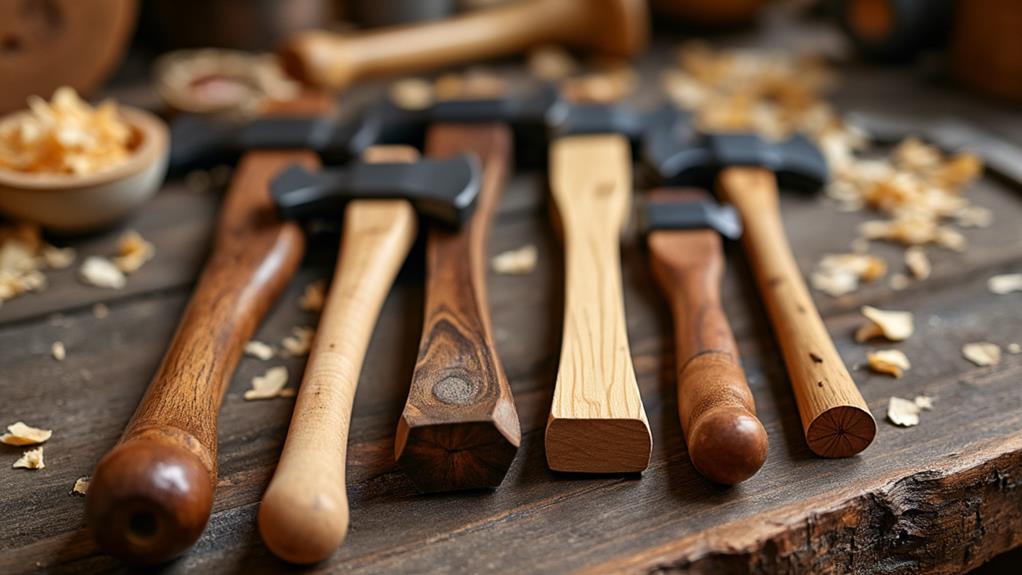
Choosing the right axe is only part of the equation when you're cutting frozen wood; the handle material plays an essential role, especially in freezing temperatures. Wooden handles, particularly those made from hickory, are highly recommended due to their exceptional durability and resilience. Unlike composite or plastic handles that can become brittle and snap in low temperatures, hickory maintains its integrity, ensuring your axe remains reliable in harsh conditions.
Steel handles might seem robust but can shatter when exposed to extreme cold, making them unsuitable for long-term use in icy environments. Wooden handles not only resist breaking but are also repairable if damaged, improving the long-term usability of your axe.
Moreover, wooden handles provide better control and comfort. Hickory handles offer a comfortable grip and superior maneuverability, reducing fatigue as you work through tough, frozen wood. This combination of durability, repairability, and ergonomics makes hickory an ideal choice for cold-weather woodcutting.
Usage and Performance
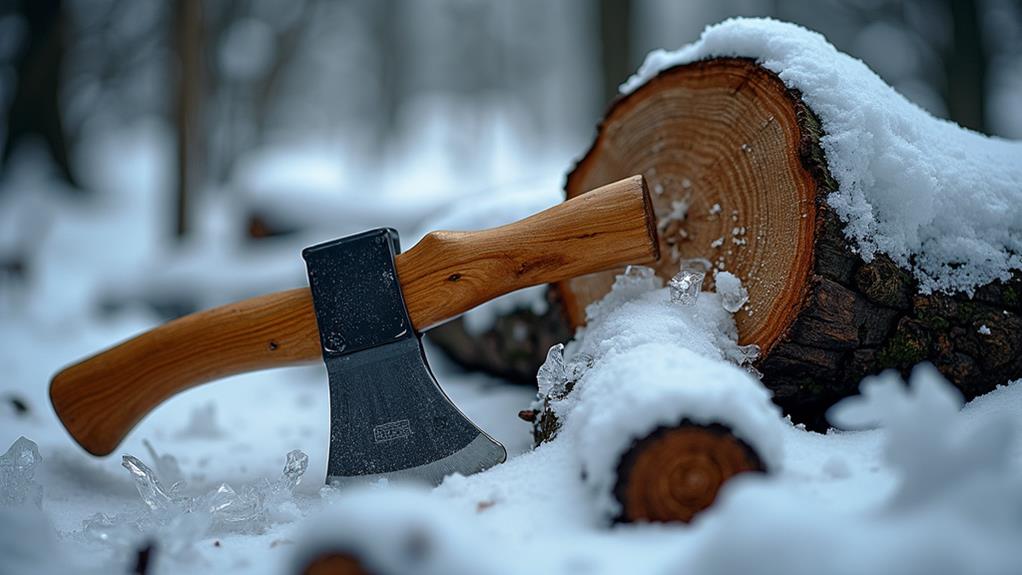
Understanding the usage and performance of axes in frozen conditions is essential for effective woodcutting. When cutting wood in extremely cold weather, selecting the right axe is crucial. Axes made from high-quality carbon steel with proper heat treatment maintain their performance and reduce brittleness, even when tackling frozen wood.
Thicker axe heads handle shock loads better, making them ideal for splitting axes that need to cut through tough, ice-laden logs. In temperatures dropping below -30°F, these robust tools have proven effective, showing no significant performance issues.
While some users recommend warming the axe inside your clothing to prevent brittleness, this isn't always practical in the field. Instead, focus on regular maintenance: sharpening the blade and inspecting both the blade and handle. This ensures your axe remains in optimal condition, ready for the rigorous task of cutting through frozen wood.
Historical examples like Gransfors Bruks and Iltis Oxhead axes have demonstrated reliable performance in low temperatures, trusted by experienced woodcutters. By choosing the right axe and maintaining it properly, you can ensure peak performance, making your woodcutting tasks more efficient and less challenging in freezing conditions.
User Insights
Experienced users possess extensive knowledge about testing their axes in harsh, frozen conditions. They stress the importance of choosing durable, high-quality carbon steel axes and maintaining them with regular sharpening and cleaning. Many also recommend pre-splitting wood and warming the axe to ensure optimal performance in extreme cold.
Field Testing Experiences
Field testing provides critical insights into the performance of axes in frozen wood conditions, especially in harsh winter environments. The material composition and heat treatment of an axe are vital factors influencing its functionality. Modern axes, particularly those with high-quality heat treatments, have demonstrated remarkable reliability even at temperatures below -30°F.
Thicker axes are especially noteworthy in field testing. They manage shock loads better and are less prone to brittleness, a common issue in freezing temperatures. Historical axes, such as those from Gransfors Bruks, continue to excel due to their robust design and superior material quality.
A useful tip from field testing is the strategy of pre-splitting wood in the fall. This preparation significantly reduces the effort required to handle frozen wood in winter, enhancing efficiency. While some users suggest warming the axe to prevent brittleness, most modern axes perform adequately in the cold without this extra step.
Axe Durability Insights
Axes crafted from high-quality carbon steel and subjected to proper heat treatment excel in durability and performance, even in freezing conditions. These axes are less prone to brittleness and maintain their structural integrity, making them ideal for cutting through frozen wood. User insights reveal that modern axes can function effectively in temperatures as low as -30°F, thanks to advancements in steel composition and design.
Thicker axes are particularly effective at handling shock loads, which is crucial when splitting dense, frozen wood. Regular maintenance, including sharpening and inspecting the blade and handle, is essential for ensuring longevity and consistent performance. Anecdotal evidence suggests that warming an axe before use can help mitigate brittleness in extremely low temperatures.
Key Benefits
| Feature | Benefit |
|---|---|
| High-quality carbon steel | Reduced brittleness |
| Proper heat treatment | Improved performance |
| Modern steel composition | Operates below -30°F |
| Thicker axes | Better shock load handling |
| Regular maintenance | Ensures longevity and performance |
These insights confirm that with the right materials and care, axes can reliably perform in extreme cold conditions.
Maintenance and Care
Understanding axe durability is just part of effectively dealing with frozen wood; proper maintenance and care are equally crucial for ensuring peak performance. Regularly sharpen the blade before storage to keep it sharp and efficient, as a sharp blade is vital for cutting through tough, frozen wood without undue strain.
After each use, clean the axe thoroughly by removing rust, dirt, and sawdust to prevent corrosion, especially in cold environments. Lubricate the axe with oil to add an extra layer of protection against rust.
Before each use, inspect the axe head for tightness, as a loose head can be dangerous and significantly impair performance. Also, check the handle for cracks or splinters, as a compromised handle can break under pressure, posing a safety risk.
Store the axe in a dry place, ideally within a protective sheath, to prevent moisture damage and maintain the blade's integrity. While warming the axe before use in extreme cold can help prevent brittleness, practical warming methods may not always be feasible in the field. Proper maintenance ensures your axe is always ready for action.
Buying Considerations
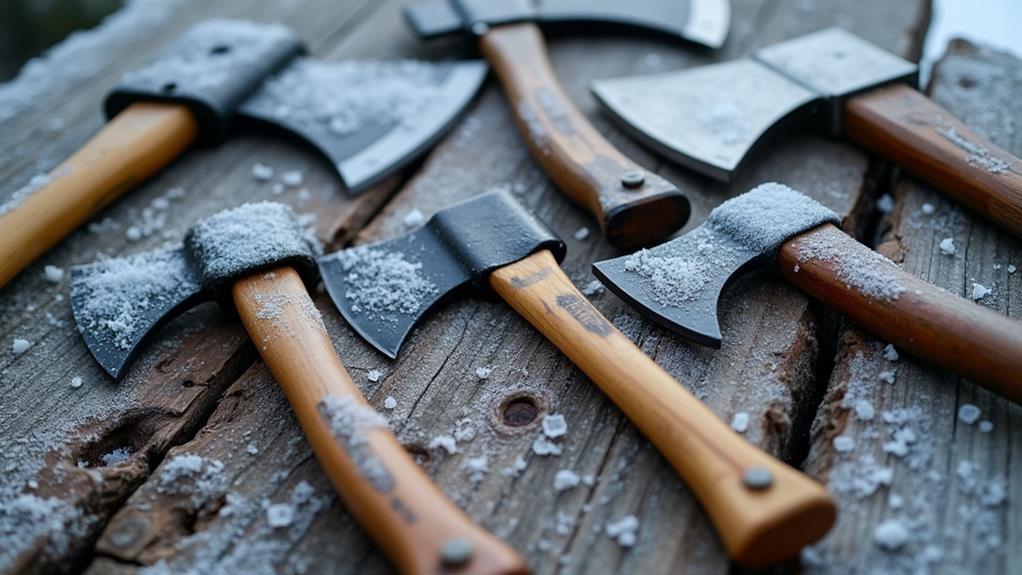
When selecting an axe for cutting through frozen wood, prioritize materials with low carbon content (below 0.5-0.6%) to improve toughness in cold temperatures and prevent brittleness. Opt for axes designed with a thicker geometry, as they handle shock loads better, which is crucial when chopping through dense, frozen logs.
A well-balanced axe with good weight distribution will optimize your swing power and efficiency. A steel blade that has undergone quality heat treatment will be less prone to brittleness, making it more reliable in extreme conditions. Modern steels with appropriate treatment significantly outperform older models.
User feedback is invaluable when choosing the best axes. Models like the Gransfors Bruks and Iltis Oxhead have demonstrated reliable performance in extreme cold, making them excellent options for your needs.
| Feature | Importance | Examples |
|---|---|---|
| Low Carbon Content | Improves toughness and prevents brittleness | Gransfors Bruks, Iltis Oxhead |
| Thicker Geometry | Handles shock loads better | Numerous models |
| Weight Distribution | Optimizes swing power and efficiency | Well-balanced axes |
| Heat Treatment | Reduces risk of brittleness in cold temperatures | Modern steel blades |
Axe Design and Material
When selecting an axe for cutting frozen wood, the handle material and blade sharpness are crucial considerations. Handles made from durable materials such as hickory or fiberglass offer a strong grip and minimize vibration. Equally important, maintaining a sharp blade ensures cleaner cuts and reduces the effort required to chop through tough, frozen wood.
Handle Material Selection
Why is handle material crucial when selecting the best axe for cutting frozen wood? The handle significantly impacts efficiency, comfort, and safety. Wooden handles, especially those made from hickory, are highly recommended. They excel in shock absorption, reducing hand strain during prolonged use and providing the durability needed to withstand the harsh impacts associated with chopping frozen wood.
| Handle Type | Benefits |
|---|---|
| Wooden | Excellent shock absorption, durable, repairable |
| Composite | Lightweight, but can become brittle in cold |
| Plastic | Affordable, but less durable |
| Steel | Strong, but can shatter in extreme cold |
| Fiberglass | Durable, but less comfortable |
Composite and plastic handles, while lightweight, risk becoming brittle in freezing temperatures, leading to potential breakage. Steel handles, despite their strength, can shatter in extreme cold, making them unreliable. In contrast, wooden handles can be easily repaired or replaced, extending their lifespan. Additionally, the weight and balance of wooden handles enhance control and power transfer during swings, which is crucial for effectively cutting through frozen wood.
Therefore, when selecting an axe for cutting frozen wood, prioritize a hickory or similarly robust wooden handle for optimal performance.
Blade Sharpness Importance
A razor-sharp blade is critical for efficiently cutting through frozen wood. When dealing with dense, icy fibers, a dull blade requires significantly more force, risking both damage to the axe and user fatigue. Thinner grinds on axes are particularly effective for this task, as they penetrate wood fibers more easily than thicker blades, which may struggle in cold conditions.
Regular sharpening is crucial to maintain the cutting performance of your axe. Even high-quality steel can dull quickly against hard, frozen wood, so it's important to keep the blade sharp, especially before winter use. High-carbon steel is an excellent choice for axes used in cold environments. It holds an edge longer and performs better when properly heat-treated, making it ideal for cutting frozen wood.
A well-maintained sharp edge not only improves cutting efficiency but also boosts safety by reducing the likelihood of slips and accidents.
To ensure your axe is always ready for the challenge, remember these key points:
- Use high-carbon steel for better edge retention.
- Regularly sharpen your blade, especially before winter.
- Opt for axes with thinner grinds for easier penetration.
- Maintain your axe to avoid user fatigue and damage.
- A sharp blade improves both performance and safety.
Value and Splitting Efficiency
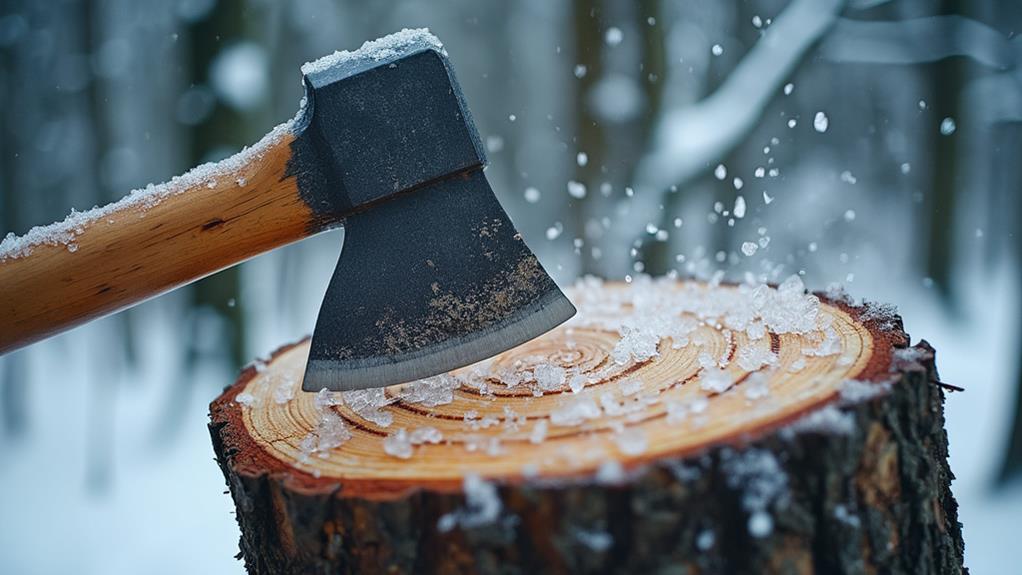
When tackling the challenge of splitting frozen wood, investing in a high-performance axe is crucial. High-quality axes designed for efficient splitting often feature a heavier head, which increases cutting power, making the task easier and more efficient.
A key factor in an axe's efficiency is its geometry. Axes with a thicker blade profile manage shock loads better, which is vital for dealing with the resistance of frozen wood. This design aspect not only improves splitting performance but also reduces the strain typically associated with the task.
Maintaining your axe is equally important. Regular sharpening and proper storage can significantly extend its lifespan and effectiveness, especially in cold temperatures.
Investing in a high-quality splitting axe provides superior value over time. Its durability and consistent performance mean fewer replacements, saving you money and effort in the long run. Therefore, when facing frozen wood, choose an axe that excels in both value and efficiency.
Conclusion
When it comes to cutting through frozen wood, the Gransfors Bruks Forest Axe and the Fiskars X27 are top choices. Opt for an axe with a hickory handle for improved shock absorption and a high-quality carbon steel blade for enhanced durability. Regular maintenance is essential to keep your axe in optimal condition. These axes deliver excellent performance, making your winter woodcutting tasks efficient and reliable. Happy chopping!