How to Train With an Axe for Increased Efficiency
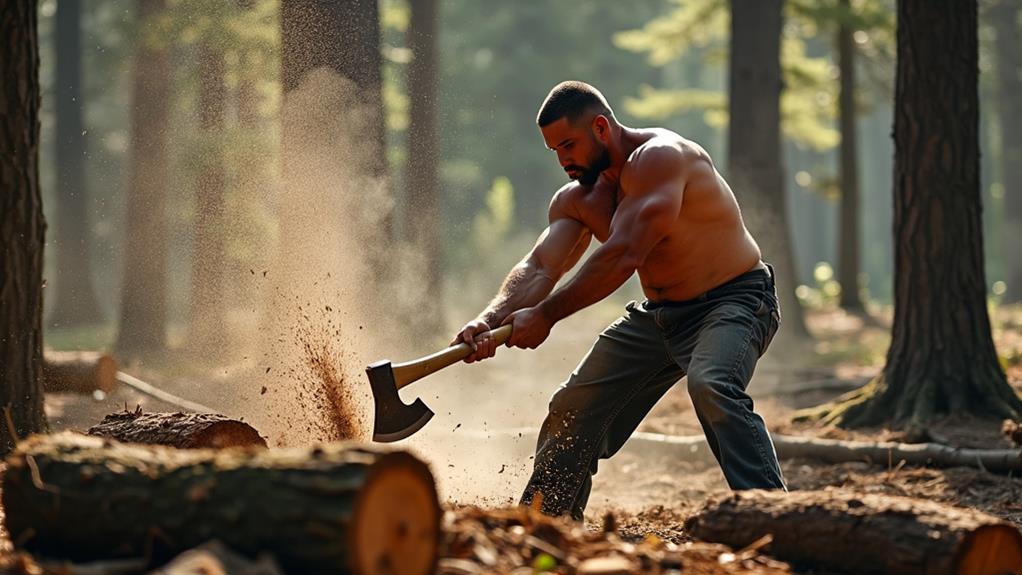
To train with an axe for increased efficiency, begin by selecting an axe that matches your height and strength for optimal control. Mastering technique and rhythm is essential for effective woodcutting. Practice guiding the axe head into the wood grain to enhance cutting efficiency, and use controlled movements to build muscle memory.
Regularly assess your form and seek feedback from experienced users. To truly elevate your axe skills, incorporate specific exercises like single-handed swings, precision strikes, and endurance chopping sessions.
Importance of Ax Skills
Developing ax skills enhances self-reliance and independence, providing a practical edge in survival activities like wood chopping. Beyond survival, mastering ax techniques significantly boosts physical fitness. Each swing requires a blend of mass and velocity, making wood chopping efficient while increasing stamina and general strength.
Incorporating ax training into your routine promotes functional fitness, strengthening daily-use muscles. It's a full-body workout that improves endurance and supports a healthier lifestyle. Proper ax handling and swinging techniques are vital for preventing fatigue and optimizing efficiency. By learning to balance the ax's weight and swing with precision, tasks become easier and more enjoyable.
Safety is paramount; understanding correct lifting and swinging techniques is crucial to avoid injuries. Regular practice builds physical strength and a sense of accomplishment, as evidenced by a growing firewood pile. These skills not only enhance independence but also integrate valuable, practical fitness into daily life, improving overall well-being.
Firewood Process Techniques
Having honed your ax skills, it's time to apply them to the firewood process, a task that demands both technique and endurance. This process involves six vital steps: felling, limbing, bucking, hauling, splitting, and stacking. Each step requires specific skills for optimum efficiency.
When hauling, use proper lifting techniques, such as squatting and maintaining a straight back, to prevent injury. You'll move approximately 24 tons to cut a cord of firewood, so consider this an intense full-body workout. Longer logs are easier to maneuver and require less vertical lifting force than shorter ones. Adjust the log's position on your shoulder to maintain balance and control.
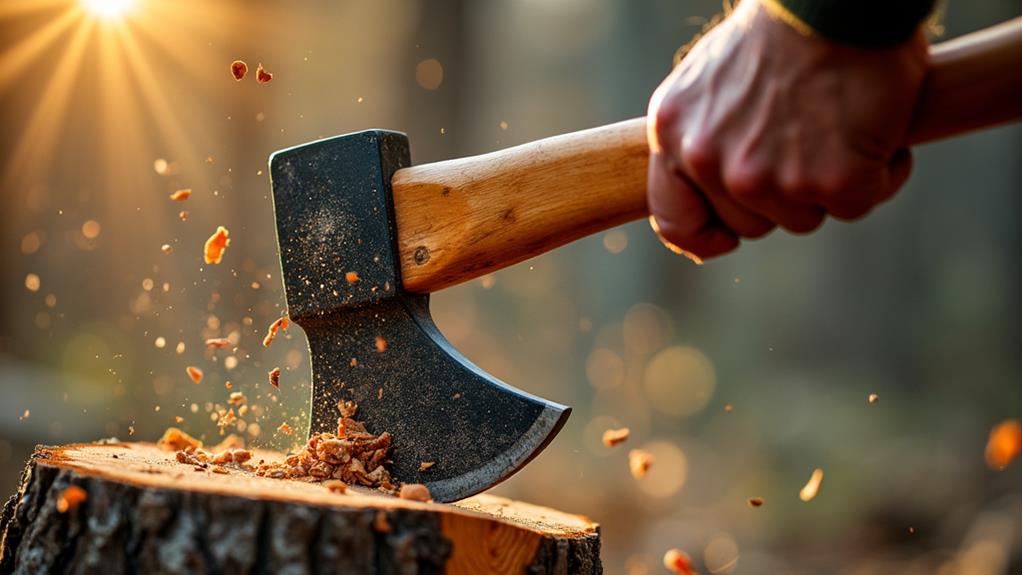
During splitting, guide the ax head into the grain of the wood to improve cutting efficiency and reduce effort. Always wear safety gear, including gloves and protective eyewear, to prevent injuries. Properly stacking the wood is crucial for effective drying and ease of use. Ensure the pile is stable and allows for adequate airflow.
Functional Fitness Benefits
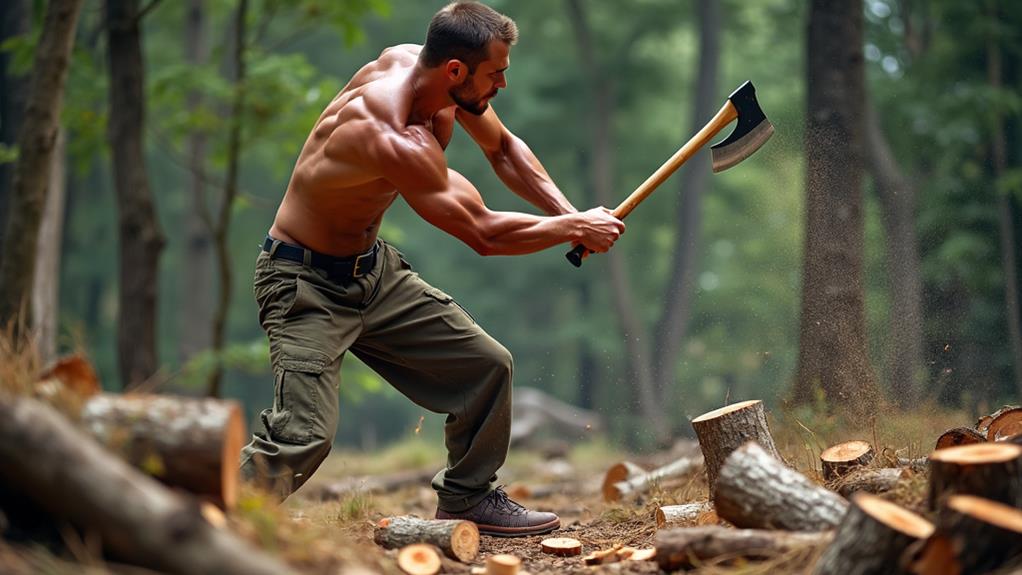
Training with an axe goes beyond chopping wood; it builds functional strength and enhances overall physical conditioning. You'll improve real-world strength and stamina, making daily tasks more manageable and efficient. Additionally, the dynamic movements involved help boost core stability and engage often overlooked muscle groups.
Enhancing Physical Conditioning
Engaging in wood chopping significantly enhances stamina and functional fitness, simplifying daily tasks. This activity involves more than just swinging an axe; it requires full-body engagement. A strong core stabilizes movements, preventing injury and maximizing power with each swing, which is essential for maintaining balance and control in both wood chopping and everyday activities.
The physical demands of chopping a cord of firewood, which cumulatively involves lifting approximately 24 tons, provide a rigorous workout. This activity builds endurance and functional strength, giving you the stamina to handle various physical challenges, from lifting groceries to playing sports or performing household chores. The improved conditioning from wood chopping leads to better performance and reduced fatigue in these tasks.
Additionally, regularly chopping wood outdoors enhances the enjoyment of fitness. The fresh air and natural setting make the activity more pleasant, promoting a healthier lifestyle overall. Watching your firewood pile grow offers tangible rewards and a sense of accomplishment, further motivating you to maintain your fitness routine.
Boosting Real-World Strength
Chopping wood isn't just about building muscle; it's about enhancing real-world strength by engaging multiple muscle groups simultaneously. When you swing an axe, you're not merely working your arms; you're also activating your core, legs, and back. This full-body exercise boosts functional strength, making everyday tasks more manageable and efficient.
The physical demands of chopping wood are substantial. Lifting and cutting a cord of firewood involves moving approximately 24 tons of material, which significantly increases your stamina and endurance. This activity isn't solely about brute force; it's about developing a resilient body capable of handling diverse physical challenges.
| Benefit | Activity | Muscle Groups Engaged |
|---|---|---|
| Improved Core Strength | Axe Swinging | Abs, Lower Back |
| Increased Endurance | Wood Lifting | Legs, Shoulders |
| Enhanced Balance | Log Splitting | Core, Stabilizers |
Regular axe work also enhances core stability and balance, essential for effective performance in many physical activities. Additionally, watching your firewood pile grow provides tangible rewards, fostering a sense of accomplishment. This not only keeps you motivated but also makes fitness enjoyable. So, pick up that axe and start chopping—your body and mind will thank you!
Safety Considerations
Prioritizing safety when handling an axe is crucial to minimize injury risks. Always begin by donning appropriate personal protective equipment (PPE), such as safety glasses, gloves, and steel-toed boots. This gear shields you from flying wood chips, accidental slips, and dropped axes.
Ensure your working area is clear of obstacles and distractions. A clutter-free space prevents tripping hazards and helps you focus on your task, reducing accident chances. Proper axe techniques are essential; keep both hands on the axe and maintain a stable stance to enhance control. This not only makes your swings more effective but also minimizes mishap risks.
Awareness of your surroundings is another key safety measure. Ensure no bystanders or pets are nearby who could be injured by errant swings or flying debris. Regularly inspect your axe for any signs of damage or wear. A well-maintained axe is safer to use and less likely to cause unexpected injuries.
Community Engagement
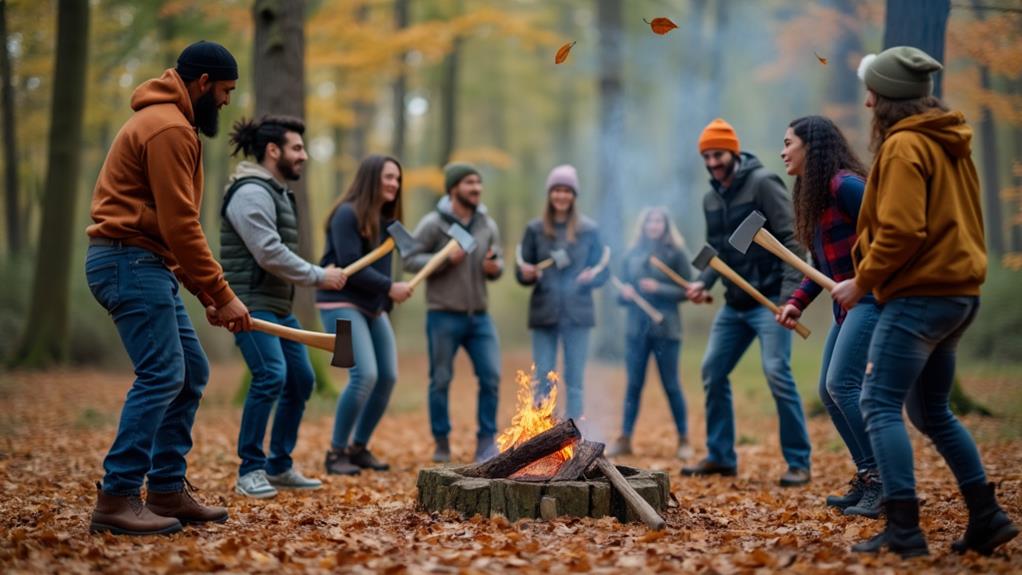
Engage with online communities through social media platforms to share experiences, tips, and techniques, fostering a supportive learning environment. Participate in local workshops or events to hone your skills and connect with like-minded enthusiasts. Follow reputable blogs and YouTube channels dedicated to axe skills for valuable resources and discussions on safety and technique.
Social Media Interaction
Utilizing social media can significantly enhance your axe training journey by connecting you with a community of enthusiasts and experts. Engaging with platforms like Twitter and Pinterest allows you to share experiences and tips, creating a supportive learning environment. Voting on Top Prepper Sites fosters collective growth and resource sharing, giving you access to valuable information about axe skills and safety.
Following experts and organizations dedicated to axe training provides regular updates, tutorials, and safety tips, keeping you informed and motivated. Participating in online challenges and discussions can further hone your skills through community feedback and diverse perspectives on techniques and practices.
| Platform | Activity | Benefit |
|---|---|---|
| Follow experts | Receive regular updates and tips | |
| Share experiences | Build a supportive community | |
| Top Prepper | Vote on sites | Access valuable information |
Sharing your progress and achievements on social media can inspire others to take up axe training, fostering a cycle of motivation and skill development within the community. By actively engaging on social media, you'll enhance your own skills while contributing to a vibrant community dedicated to axe training.
Knowledge Sharing Platforms
Exploring knowledge-sharing platforms can significantly enhance your axe training skills. Engaging with resources like YouTube and blogs offers valuable tutorials and essential safety tips, improving both your technique and confidence.
Here's how to maximize these resources:
- Skill Communities: These groups provide structured challenges and guidelines, fostering an environment where you can share best practices and learn from fellow axe enthusiasts.
- Social Media: Following accounts dedicated to axe training keeps you updated on the latest trends and community events, ensuring you're always informed.
- Literature: Reading books like "The Ax Book" or "Wildwood Wisdom" deepens your understanding of axe techniques and safety, enabling more effective practice.
Participating in local workshops or community events offers hands-on experience and the opportunity to connect with seasoned practitioners.
This shared learning environment not only improves your skills but also builds a supportive network around your training journey. Utilizing knowledge-sharing platforms effectively transforms solo practice into a community-driven experience, making your axe training both efficient and enjoyable. Embrace these resources to elevate your axe skills to new heights.
Chopping Fundamentals
Mastering the fundamentals of chopping with an axe involves understanding the balance between mass and velocity. Faster swings generate more kinetic energy, allowing for deeper cuts with less effort. This not only strengthens and tones muscles but also enhances chopping efficiency.
Proper technique is crucial. Guide the axe head into the wood with a rhythmic swing to maintain energy and accuracy. The length of the axe handle and the shape of the axe head significantly affect performance. Choosing the right tools tailored to your needs is essential for maximizing efficiency.
Observe experienced axe users: their relaxed movements rely on momentum, minimizing muscular effort while maximizing efficiency. This approach conserves energy and reduces injury risk.
Continuous practice is key. Focus on mastering speed and technique to chop effectively while maintaining control and safety. With dedication, your chopping will become more efficient, and your skills will improve significantly. Keep practicing, and you'll see improvements in both technique and physical endurance.
Conclusion
Enhancing your axe skills not only improves firewood processing efficiency but also offers significant functional fitness benefits. Prioritize safety by using proper gear and techniques. Engage with your community for tips and feedback. Focus on fundamentals such as guiding the axe head into the wood grain and maintaining controlled, consistent swings. By refining your form and rhythm, you'll see marked improvements. Consistent practice will make you a proficient and efficient axe user.