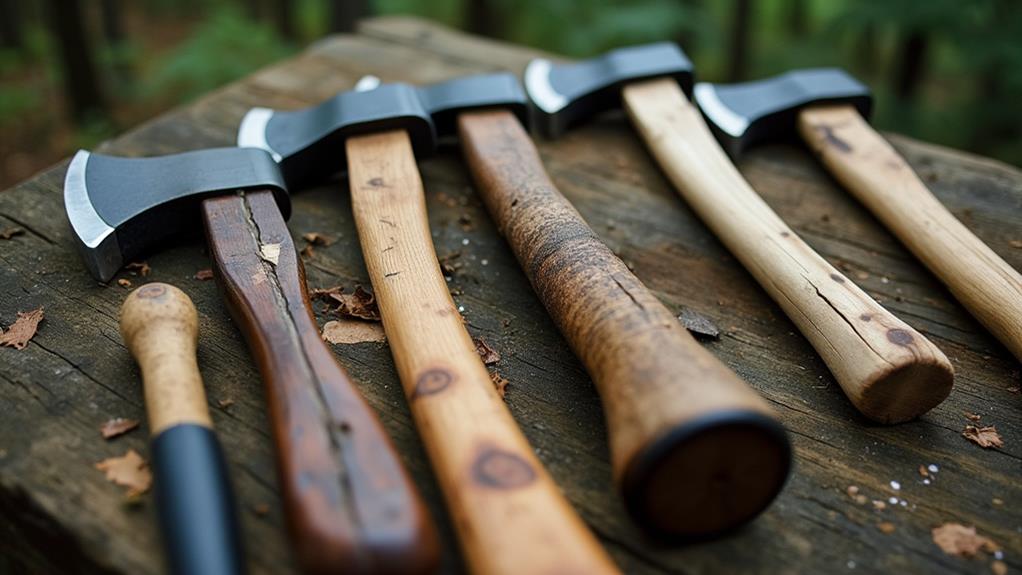
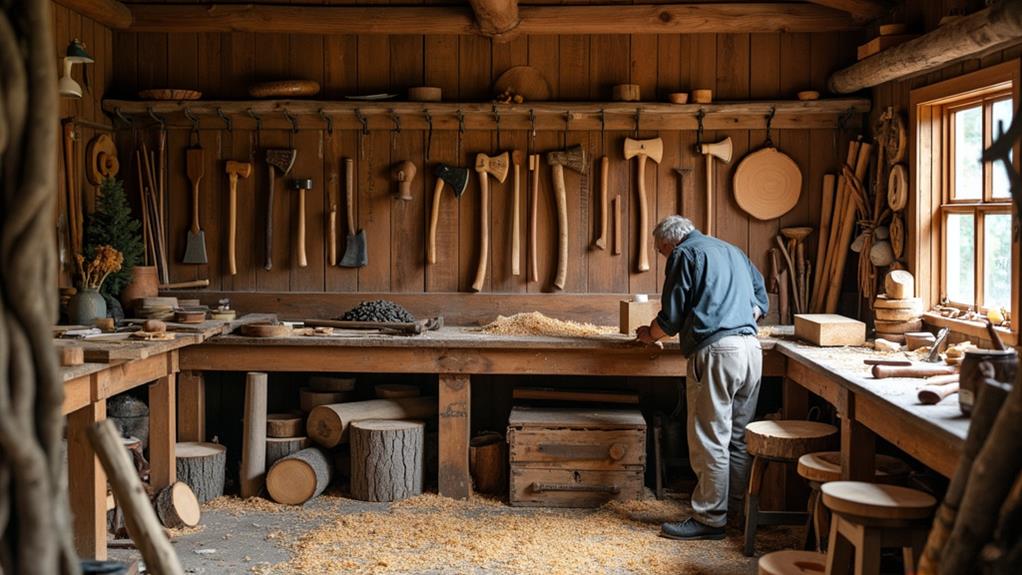
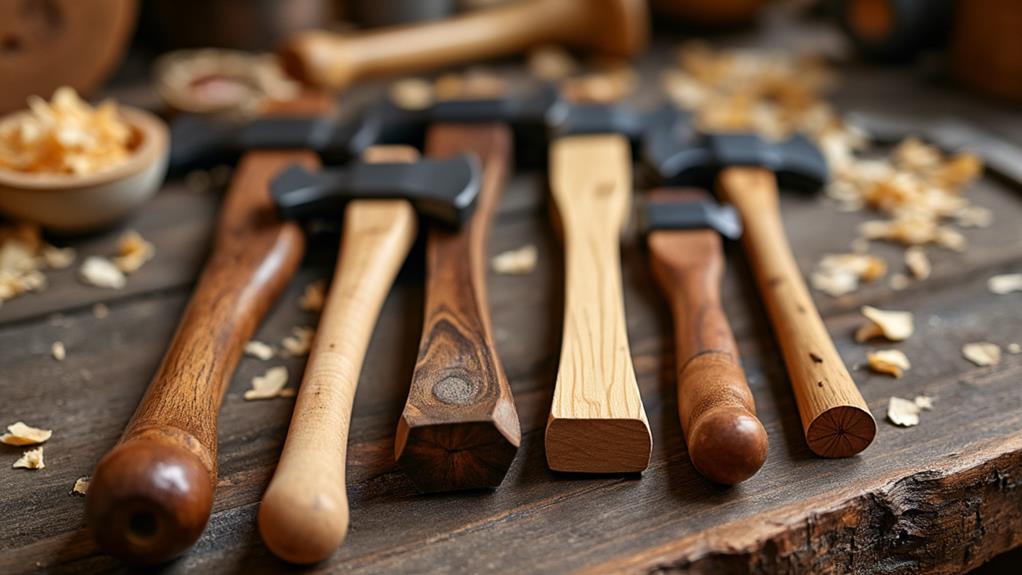
How to Choose an Axe for Different Wood Types
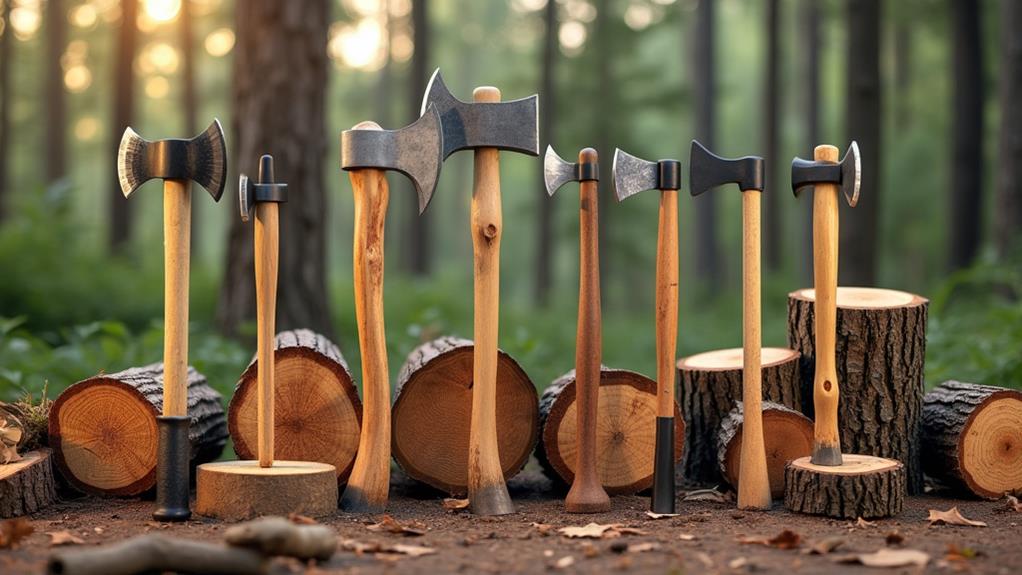
When selecting an axe, the type of wood you're working with should guide your choice. For softwoods like pine, a splitting axe with a wedge-shaped head is ideal for making the job easier and more efficient.
For hardwoods such as oak, a heavier splitting maul is required to effectively get the job done. If you need to fell small trees, a sharp, thin-bladed felling axe is recommended.
Additionally, consider factors like handle type and weight before making your decision.
Types of Axes
When selecting the right axe, understanding the different types can simplify your decision-making process. Each type is tailored to specific tasks and wood types, ensuring you have the appropriate tool for the job.
A hatchet is a small, lightweight axe, typically ranging from 10 to 14 inches in length. It's ideal for camping and chopping kindling, particularly practical for softer wood types.
For more demanding splitting tasks, a splitting axe is essential. It features a wedge-shaped blade designed to efficiently split logs, especially those made of medium to hard wood types like oak and hickory.
A felling axe is perfect for chopping down trees, weighing between 2 and 4 pounds with a sharp, thin blade. It's effective against softer woods such as pine.
For woodworking, a broad axe with its wide, single-beveled blade is ideal for hewing logs into flat surfaces, making it particularly useful for hardwoods.
Lastly, the double-bit axe offers versatility with two cutting edges, suitable for both felling and splitting tasks. Its balanced design makes it adaptable to different wood types and chopping tasks, providing flexibility in your work.
Handle Considerations
When choosing an axe, the handle is as crucial as the blade. Handle considerations are vital for ensuring both comfort and efficiency. Wooden handles, especially those made from hickory or ash, are highly preferred for their excellent shock absorption and comfort, particularly during extended use. Ergonomic designs play a key role by providing a better grip and reducing hand fatigue, essential for safe operation.
The handle length is another significant factor. For full-sized axes, a 36-inch handle generally suits individuals around six feet tall, but you can customize the length based on your height and preference. Proper weight distribution along the handle influences the axe's balance, greatly affecting your swing efficiency and control during chopping or splitting tasks.
Regular maintenance of the handle is crucial for prolonging the axe's lifespan. Always check for cracks and ensure the connection to the head is secure. This not only extends the life of your tool but also ensures safe operation.
Weight and Size
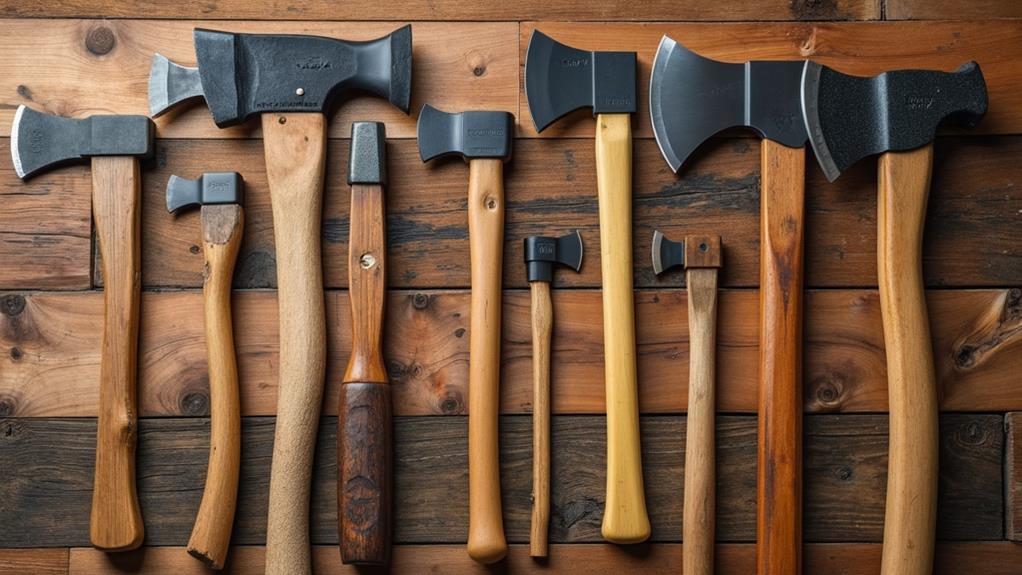
Selecting the right weight and size of an axe significantly impacts efficiency and comfort during use. Consider the weight of the axe head and the handle length when making your choice. Felling axes typically have heads weighing between two and four pounds, while splitting axes can weigh up to eight pounds for larger logs.
Beginners should start with an axe weighing no more than three pounds to maintain control and reduce fatigue. Handle length is another crucial factor. Full-sized felling axes usually measure 36 inches, but a 32-inch handle might be more comfortable and efficient for someone around six feet tall. Longer handles provide greater leverage and power, whereas shorter handles offer better precision. Personal preference and intended use are important considerations.
For smaller tasks, such as producing kindling, smaller axes or hand axes are more manageable. These typically weigh between 600 grams and 1.5 kg and have handle lengths of 45 to 65 cm.
If you need a chopping axe for camping, a smaller axe with a shorter handle will be easier to carry and use. Choosing an axe based on your specific needs will enhance your woodcutting experience.
Felling Axes
Felling axes are specifically designed for efficiently cutting down trees, featuring sharp, thin blades that slice through wood with ease.
Key aspects to consider when selecting a felling axe include:
- Blade Design: Opt for a sharp, thin blade with a flared shape to quickly remove significant material, making it easier to fell trees.
- Weight Range: Felling axe heads generally weigh between 2 to 4 pounds, offering a balance between power and control for effective handling.
- Handle Length: Handles are typically around 36 inches long, enhancing leverage and swing force to provide more power with each strike.
- Proper Technique: Always use both hands on the handle to maintain control and ensure safety. This technique maximizes leverage and helps you use the axe efficiently.
Felling axes, with their specialized design, provide the necessary power and control for felling trees.
The combination of a sharp, thin blade and a long handle ensures effective woodcutting.
Splitting Axes
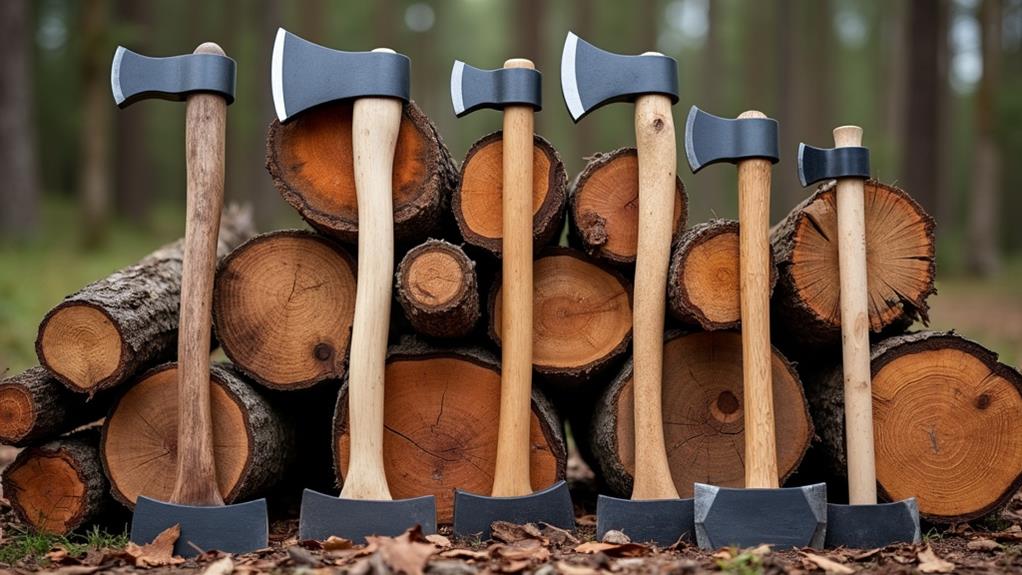
When choosing a splitting axe, focus on the wedge-shaped blade designed for effective one-strike splits. Consider the handle length, which ranges from 40 to 90 cm, to provide the leverage needed for powerful swings. Additionally, pay attention to the weight and balance, typically ranging from 1.5 to 3.5 kg, to ensure efficient wood splitting with minimal effort.
Blade Shape and Design
Choosing the right splitting axe starts with understanding the significance of blade shape and design. Splitting axes are specifically engineered to efficiently separate wood fibers, making them ideal for splitting logs along the grain. Their effectiveness lies in the wedge-shaped blade, which ensures clean and powerful penetration into the wood.
To ensure you're making the best choice, consider these four aspects:
- Wedge-Shaped Blade: This design maximizes splitting force, allowing the axe to drive deeper into logs with less effort. The flared shape helps push the wood apart as the blade penetrates.
- Heavier Axe Head: A heavier head, typically ranging from 1.5 to 3.5 kg, increases the power of your swing, enabling one-strike splits, especially on tougher and denser wood types.
- Longer Handles: These provide better control, essential for handling larger logs. Longer handles also help you maintain precision during your swing.
- Blade Sharpness: Keeping the blade sharp reduces friction, enhancing efficiency, particularly with dense wood.
Handle Length Options
Choosing the right handle length for splitting axes is crucial for both efficiency and comfort. Handle lengths typically range from 40 to 90 cm, and the choice should be based on your comfort and the size of the logs being split.
Longer handles, which can reach up to 90 cm, provide increased leverage and striking force, making them ideal for heavy-duty tasks involving larger logs. This added leverage can make splitting larger logs easier and more effective.
Conversely, shorter handles, closer to 40 cm, offer better precision and control, making them suitable for splitting smaller logs and kindling. Users who need more accuracy and manageability, especially with smaller wood types, will benefit from a shorter handle.
A standard splitting axe handle length is around 70 cm, balancing power and ease of use. Users may prefer different handle lengths based on their height and strength, with shorter individuals often opting for handles between 60 to 75 cm.
Always consider your comfort and the specific tasks you'll be undertaking.
Weight and Balance
While handle length significantly influences the efficiency and comfort of your splitting axe, the weight and balance are equally critical factors to consider. Splitting axes typically weigh between 1.5 to 3.5 kg (3.3 to 7.7 lbs). Heavier heads provide more power for splitting wood, but the key is finding a balance that allows for optimal performance and control.
A well-balanced axe reduces hand fatigue and increases efficiency. Here are four key factors to consider:
- Weight: Heavier axes offer more force but can be tiring for prolonged use. Choose a weight that feels comfortable for your strength and endurance.
- Balance: A well-balanced axe ensures better control and reduces the risk of injury. Test different models to find one that suits your personal preference.
- Handle Length: Handles between 40 to 90 cm (15.7 to 35.4 inches) improve leverage and striking force. Consider what length fits your strength and style.
- Comfort: Comfort directly impacts your efficiency. An axe that feels good in your hands will make splitting wood easier and safer.
Specialized Axes
Specialized axes are tailored for specific tasks, enhancing efficiency and precision in your work. Whether you need a broad axe for woodworking, a roofing axe for shingles, or a hunter's axe for outdoor activities, selecting the appropriate tool is crucial. Understanding the unique functions of these specialized axes will ensure you choose the right one for any project.
Types of Specialized Axes
Specialized axes are designed for specific tasks, each with unique features tailored to particular needs. Knowing the different types of axes helps you choose the right tool for cutting logs, splitting firewood, or even working on a roof.
- Roofing Axe: This versatile tool has two heads—one for cutting shingles and the other for hammering nails. It's essential for roofing, allowing you to perform multiple tasks without switching tools.
- Hunter's Axe: Featuring a longer handle and a narrower blade, this axe is ideal for outdoor activities. It's designed for both chopping wood and processing game, making it a versatile tool for hunters.
- Grub Axe: With an axe head on one side and an adze on the other, this tool excels at breaking up compacted soils and working in rough terrain. It's crucial for landscaping and gardening tasks that require versatility.
- Broad Axe: Known for its wide, single-beveled blade, the broad axe is designed for hewing. It transforms round-edged lumber into flat-edged timber, making it indispensable for traditional woodworking.
These specialized axes are crafted to meet specific needs, making your tasks more efficient and effective.
Choosing the Right Axe
Selecting the appropriate axe for different wood types can significantly enhance your efficiency and reduce physical strain. Here's how to choose the right tool based on the type of wood:
- Softwoods (e.g., pine): Use a splitting axe with a wedge-shaped head. This design allows for easy wood splitting with minimal effort.
- Hardwoods (e.g., oak, hickory): Opt for a heavier splitting maul, typically around 8 pounds. This tool provides the necessary force to penetrate dense wood fibers.
- Felling Small Trees: For hardwoods, a felling axe with a sharp, thin blade is ideal. It efficiently cuts against the grain without getting stuck.
- General-Purpose Tasks: A versatile hatchet or camp axe, weighing between 1 and 3 pounds, is perfect. These compact tools can handle both chopping and splitting smaller pieces of wood.
Here's a quick reference table to guide your selection:
| Wood Type | Axe Type | Key Feature |
|---|---|---|
| Softwoods | Splitting Axe | Wedge-shaped head |
| Hardwoods | Splitting Maul | Heavier weight |
| Hardwoods | Felling Axe | Sharp, thin blade |
| Multiple | Versatile Hatchet | Compact size |
Choosing the right axe can make all the difference in your wood-cutting tasks.
Conclusion
Choosing the right axe for different wood types ensures efficient cutting and reduces strain. For softwoods, opt for a splitting axe; for hardwoods, a splitting maul is more effective. Use a felling axe for small trees, and a versatile hatchet for general tasks. Consider the handle, weight, and size to match your needs. By selecting the appropriate tool, you'll make your work easier and more effective. Happy chopping!