How Minimalism Enhances Your Off-Grid Experience
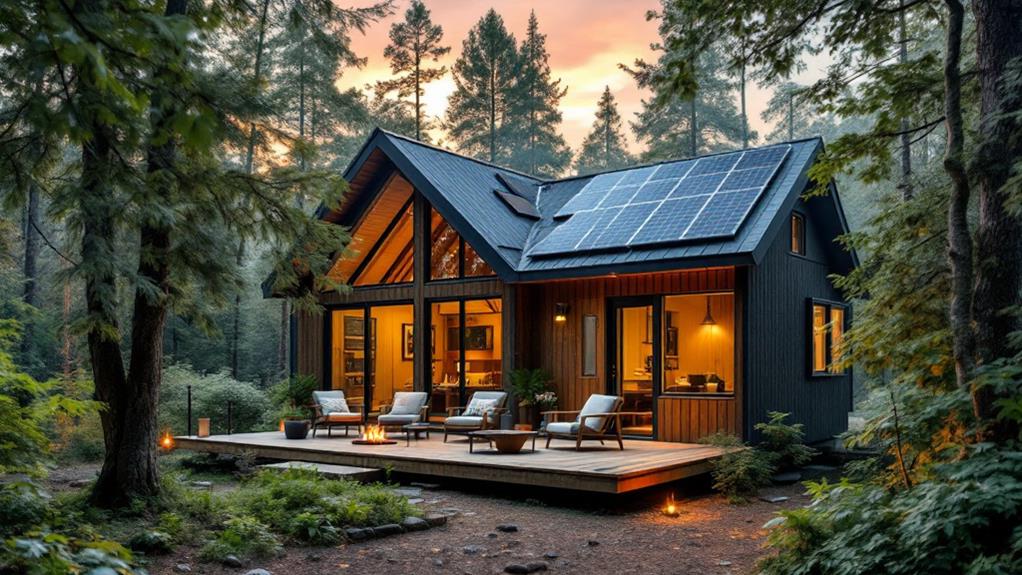
Minimalism enhances your off-grid experience by aligning perfectly with the principles of self-sufficiency and sustainability. It helps you declutter your space, simplify your life, and focus on what truly matters. By adopting a minimalist mindset, you'll maximize limited resources, reduce your environmental impact, and cultivate contentment through simplicity. You'll break free from consumerism's grip, allowing you to appreciate the essentials and develop a deeper connection with nature. This intentional approach leads to greater gratitude, enable, and a significant sense of accomplishment in your off-grid lifestyle. Embracing minimalism off-grid opens up a world of personal growth and self-discovery.
Defining Minimalism in Off-Grid Living
Embracing simplicity and functionality, minimalism in off-grid living goes beyond mere decluttering. It's a lifestyle choice that aligns perfectly with the principles of off-grid living, emphasizing the reduction of unnecessary possessions and the focus on what truly matters. When you're living off the grid, you're already forced to minimize your space, resources, and energy usage. Minimalism takes this a step further, encouraging you to evaluate every aspect of your life and home.
In an off-grid setting, minimalism means creating a living space that's not only functional but also serene and calming. It's about designing your home with intention, whether it's a tiny house or a more spacious dwelling. You'll find yourself prioritizing experiences over material possessions, practicing gratitude for what you have, and spending less time managing stuff.
Aligning Values With Lifestyle Choices
Through the convergence of minimalism and off-grid living, you'll find a powerful alignment of values and lifestyle choices. By adopting a minimalist lifestyle, you're naturally drawn to the principles of off-grid living, which emphasize self-sufficiency and sustainability. Your decision to live with less resonates deeply with the off-grid ethos, as you prioritize experiences over material possessions.
Embracing a minimalist approach to off-grid living allows you to focus on what truly matters. With fewer possessions, you'll reduce your environmental impact and simplify your life. This aligns perfectly with the sustainable lifestyle you're seeking. You'll find that owning less frees up resources for investing in essential off-grid systems, such as renewable energy and water management.
The minimalist mindset of intentionality and decluttering complements the efficient use of space in compact off-grid dwellings. As you uncover this lifestyle, you'll discover that living with less enhances your connection to nature and improves your mental health. By aligning your values with your lifestyle choices, you're creating a more fulfilling and purposeful off-grid experience.
Decluttering for Efficiency and Purpose
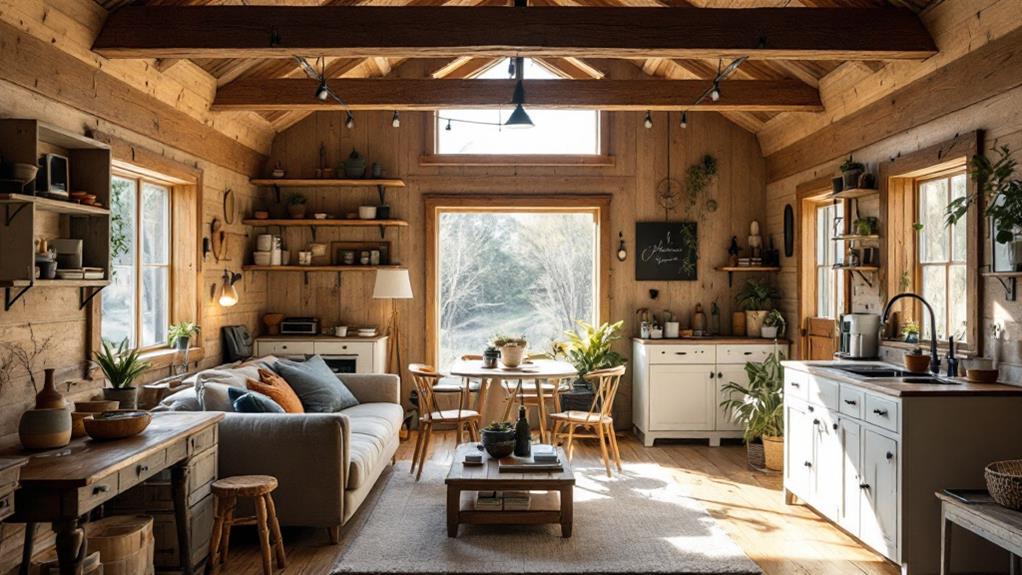
Decluttering is a cornerstone of both minimalism and efficient off-grid living. By removing unnecessary items from your off-grid space, you're not only freeing up crucial square footage but also reducing your energy demands. This minimalist approach aligns perfectly with the self-reliant ethos of living off grid.
When you bring less into your off-grid home, you're simplifying your life and easing the burden of maintenance and transportation. Take time to assess each possession critically, asking yourself if it truly serves a purpose in your sustainable lifestyle. By reducing clutter, you're emphasizing functionality and focusing on the core aspects of off-grid living.
Living off grid requires flexibility and adaptability. A rigorous decluttering process enhances your mobility, allowing you to easily adjust to changing circumstances. Remember, every item you keep requires energy to maintain and potentially transport. By adopting a minimalist mindset, you're promoting intentionality with your resources and streamlining your belongings for maximum efficiency. This approach not only frees up physical space but also mental clarity, enabling you to fully immerse in the off-grid experience.
Maximizing Limited Resources Mindfully
When you live off-grid, maximizing limited resources becomes a daily practice that's greatly enhanced by minimalist principles. In a tiny house or off-grid living situation, every item must serve a purpose, and you'll quickly learn to appreciate what truly matters. By adopting a minimalist mindset, you'll develop a deeper gratitude for the resources at your disposal, leading to more sustainable consumption habits.
Start small by carefully evaluating your energy, water, and food usage. Tiny homes are designed to maximize functional space while minimizing energy demands for heating, cooling, and lighting. This efficient use of resources not only reduces your ecological footprint but also lowers your stress levels as you become more self-reliant.
In grid living, it's easy to overlook the impact of excess consumption. However, off-grid living forces you to confront these issues head-on. By minimizing possessions and waste, you'll reduce strain on the surrounding environment and ecosystem. Embracing minimalism in your off-grid experience strengthens your ability to live sustainably while cultivating a deeper connection with nature and your immediate surroundings.
Cultivating Contentment Through Simplicity
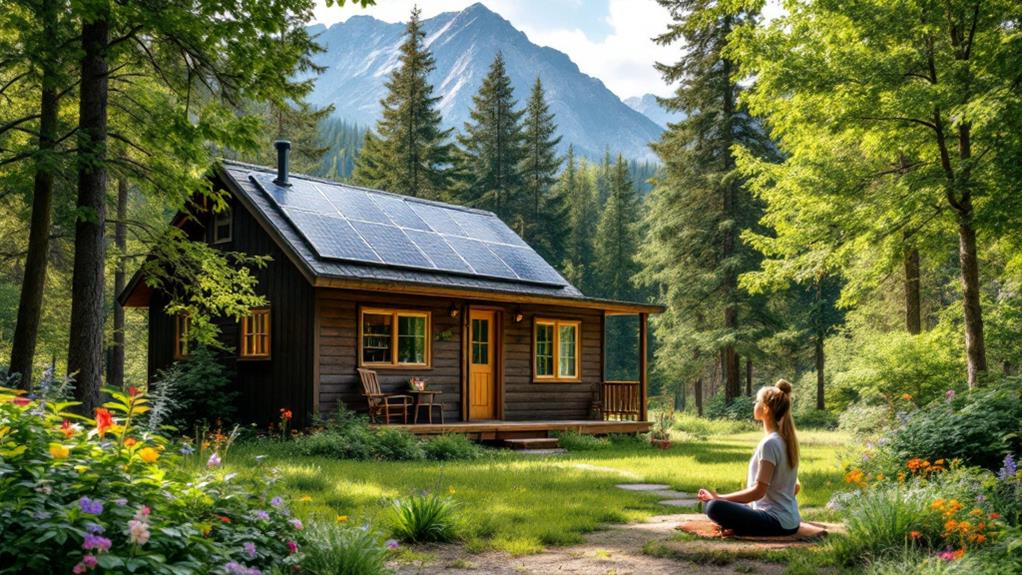
Simplicity lies at the heart of cultivating contentment in an off-grid minimalist lifestyle. By focusing on what truly matters, you'll find that each item you bring into your tiny home carries significance. This intentional approach often leads to a greater sense of gratitude and appreciation for the essentials, much like Henry David Thoreau experienced during his time at Walden Pond.
Stripping away unnecessary possessions will make it easier to create physical and mental space, allowing you to redirect your energy towards self-sufficiency and personal growth. As you adopt this lifestyle, you'll develop a heightened awareness of your natural surroundings and your interdependence with them. Whether you're tending to your garden or maintaining your composting toilet, each action becomes a mindful practice in resourcefulness.
The self-reliance required in off-grid minimalism can instill a profound sense of accomplishment and empowerment. By carefully considering each item you bring into your home, you'll cultivate a deeper connection with your possessions and the world around you. This intentional way of living nurtures contentment through simplicity, allowing you to focus on meaningful experiences and relationships rather than material accumulation.
Overcoming Consumerism's Grip Off-Grid
Breaking free from consumerism's grasp is a central challenge for those exploring off-grid minimalism. When you Live Off Grid, you naturally distance yourself from the constant bombardment of advertisements and societal pressures to accumulate possessions. This separation allows you to reassess your relationship with material goods and focus on what truly matters.
In your grid home, limited space and resources encourage a minimalist mindset. You'll find yourself carefully evaluating each purchase, opting to buy fewer items that last longer. This intentional approach not only saves time and energy but also promotes sustainability and personal fulfillment.
As you declutter your living space, tackle one area at a time. You'll uncover that excess belongings become burdensome in an off-grid setting, detracting from your self-sufficient experience. Adopt minimalism to break free from the cycle of always wanting more. Instead, cultivate gratitude for the essentials that support your well-being.
The isolation of off-grid living provides a unique opportunity to recalibrate your values. By reducing exposure to mainstream consumerist influences, you'll develop a deeper appreciation for simplicity and find greater contentment in your minimalist lifestyle.
Frequently Asked Questions
How Do You Balance Minimalism With Emergency Preparedness in an Off-Grid Setting?
You can balance minimalism with emergency preparedness by focusing on multipurpose items. Prioritize tool repurposing strategies and create minimalist first aid kits. Plan your off-grid power backup wisely, incorporating compact solar solutions. Implement water conservation methods to reduce storage needs. Choose minimalist cooking equipment that serves multiple functions. Consider versatile off-grid clothing options. Learn about minimalist natural medicine to reduce reliance on extensive supplies. By carefully selecting essential emergency supplies and maximizing their utility, you'll maintain a minimalist lifestyle while staying prepared.
Can Minimalism Help Reduce the Initial Costs of Setting up an Off-Grid Home?
Minimalism can greatly reduce your initial off-grid setup costs. You'll save by choosing compact furnishings and efficient appliances, while investing in sustainable materials and renewable energy. Opt for multi-purpose tools and focus on storage optimization to maximize space. By reducing consumables and minimizing transportation needs, you'll cut ongoing expenses too. Embracing minimalism not only lowers your upfront costs but also promotes a more sustainable and efficient off-grid lifestyle in the long run.
What Are Some Challenges of Maintaining a Minimalist Lifestyle While Living Off-Grid?
You'll face several challenges maintaining a minimalist lifestyle off-grid. Limited storage space forces you to make tough decluttering decisions. You'll need to adapt your possessions and shift to a minimalist mindset. Shifting minimalist habits can be tricky as you balance necessities versus wants. Embracing multifunctional items becomes essential. You'll also need to tackle minimalist waste management creatively. Despite these obstacles, you'll find that overcoming them enhances your off-grid experience, making you more resourceful and self-reliant in the process.
How Does Minimalism Impact Social Connections in an Off-Grid Community?
When you welcome minimalism in an off-grid community, you'll find it nurtures stronger community bonds. You'll focus on shared resources utilization and engage in minimalist social activities. By eliminating excess possessions, you'll create space for deeper interpersonal connections. You'll adopt simplified communication methods and practice collaborative problem-solving. This lifestyle encourages shared skills development, as you learn from and teach one another. Ultimately, minimalism in an off-grid setting cultivates a more interconnected and supportive community, enhancing your overall social experience.
Are There Specific Minimalist Techniques for Managing Off-Grid Energy and Water Systems?
To manage off-grid energy and water systems efficiently, you'll want to focus on energy storage optimization and water conservation strategies. Invest in space-efficient appliances and off-grid lighting systems to reduce consumption. Investigate minimalist power generation techniques like solar or wind. Implement sustainable water treatment methods to maximize your resources. Don't forget minimalist heating solutions for colder months. Discover off-grid cooking techniques that use less energy. By adopting these approaches, you'll create a more sustainable and self-sufficient living environment.