Homeschooling and Education Options for Off-Grid Families
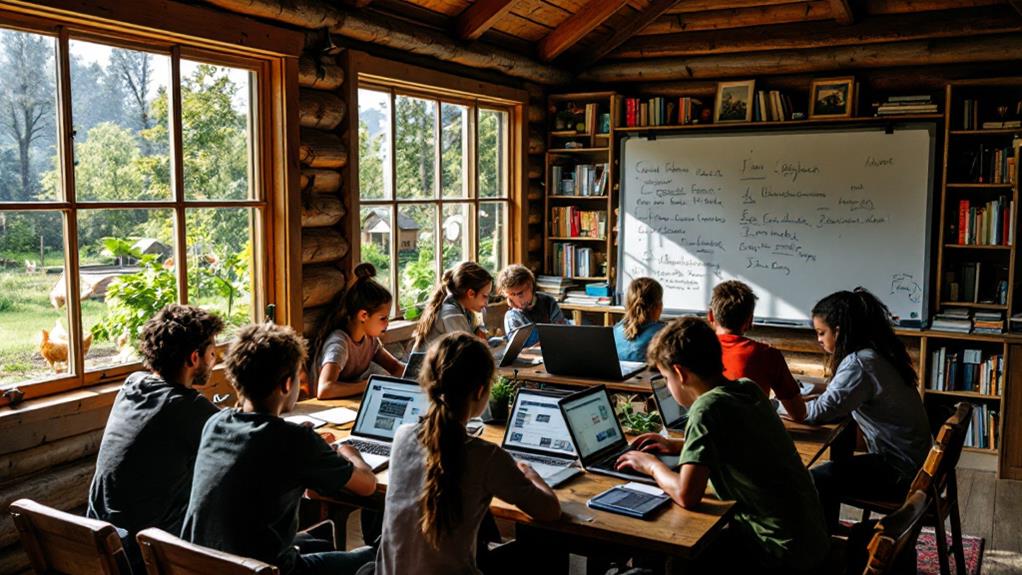
Off-grid homeschooling presents unique challenges, but it offers exciting opportunities for personalized education. You'll face limited resources and connectivity, but can harness nature-based learning and hands-on experiences. Develop a comprehensive curriculum that integrates academic subjects with practical homesteading skills. Utilize offline materials, satellite internet, and portable power solutions to access educational resources. Connect with local homeschooling networks and online communities for socialization and support. Understand legal requirements and keep thorough records. With creativity and dedication, you can provide a rich, well-rounded education customized to your family's off-grid lifestyle. Exploring these options further will reveal the full potential of off-grid homeschooling.
Challenges of Off-Grid Homeschooling
Off-grid homeschooling presents a unique set of challenges for families seeking an alternative educational path. You'll need to plan extensively for educational resources, as they're often limited in off-grid settings. Without reliable Internet, you'll face restrictions on using online learning platforms, which can significantly impact your children's access to information and interactive learning experiences.
Living off-grid means you'll need to adapt to extreme weather conditions that can disrupt your homeschooling schedule and outdoor activities. This unpredictability can make it difficult to maintain a consistent learning environment for your kids out of school. Additionally, you may struggle with providing extracurricular activities and social interactions due to isolation from larger communities.
To succeed in off-grid living and homeschooling, you'll need to develop strong problem-solving skills and adaptability. You'll have to find creative solutions for accessing educational materials, organizing social events with other local homeschooling families, and ensuring your children's social development. Despite these challenges, off-grid homeschooling can offer a unique and rewarding educational experience if you're prepared to maneuver its intricacies.
Benefits of Nature-Based Learning
Nature-based learning offers a wealth of benefits for off-grid homeschooling families. By incorporating outdoor activities into your curriculum, you'll provide your children with hands-on exploration opportunities that cultivate a deeper understanding and appreciation for the natural world. This approach aligns perfectly with your off-grid lifestyle, allowing you to seamlessly integrate academic studies with sustainable living practices.
You'll find that nature-based learning enhances your children's creativity, problem-solving abilities, and overall academic performance. As they engage in activities like gardening, animal husbandry, and wilderness skills, they'll develop practical life skills and self-reliance that are essential for off-grid living. Additionally, this approach to homeschooling has been linked to improved mental and physical health outcomes, including reduced stress, increased physical activity, and enhanced cognitive functioning.
Accessing Educational Resources Off-Grid
Accessing educational resources while living off-grid presents five unique challenges for homeschooling families. You'll need to carefully plan and prepare for limited electricity and internet connectivity, which can hinder digital learning opportunities. To overcome these obstacles, you'll have to rely heavily on physical books and alternative power sources.
As an off-grid homeschooler, you'll face the challenge of traveling long distances to acquire educational supplies and materials. It's pivotal to build a comprehensive physical library of resources within your small living quarters to meet your child's education needs. To guarantee you're meeting educational requirements and homeschooling laws, consider using state-approved lesson plans, textbooks, and workbooks.
Developing an offline curriculum is essential for off-grid families. You'll need to be creative in finding resources for parents and implementing learning strategies that don't rely on constant internet access. By focusing on nature-based learning and hands-on experiences, you can provide a rich educational environment despite technological limitations. Remember to stay informed about your state's educational requirements and adapt your approach accordingly to ensure your child receives a well-rounded education in your off-grid setting.
Technology Solutions for Remote Education
While living off-grid presents unique challenges for homeschooling families, technology solutions are revolutionizing to bridge the gap in remote education. You'll find that satellite internet providers like Starlink offer high-speed, low-latency connections, enabling access to online resources and virtual classrooms. Portable solar generators and batteries can power your devices, ensuring uninterrupted learning even without grid electricity.
To make the most of these technological advancements, consider:
- Using cloud-based storage and productivity apps
- Downloading offline learning materials
- Leveraging video conferencing tools for virtual classes
Cloud-based storage solutions like Google Drive and Microsoft Office 365 allow you to access and collaborate on work from anywhere with an internet connection. When connectivity is limited, rely on offline learning materials such as pre-downloaded videos, interactive lessons, and e-books to supplement your curriculum. Video conferencing tools and messaging apps facilitate virtual group classes, tutoring sessions, and social interaction, helping your children stay connected with peers and educators.
Socialization and Community Engagement

Socialization often tops the list of concerns for off-grid homeschooling families. However, you don't need to worry about your children's social development if you're intentional about creating opportunities for interaction. By engaging with local homeschooling networks and exploring creative solutions, you can ensure your kids learn meaningful social skills while enjoying the benefits of homesteading.
To address socialization concerns, connect with other off-grid families in your area. Participate in local events, volunteer together, and collaborate on shared resources. Every family can contribute unique skills and experiences, enriching the overall homeschooling journey. Consider organizing field trips, co-ops, and extracurricular activities to provide diverse social experiences for your children.
- Join or create a local homeschool group
- Attend community events and workshops
- Organize regular playdates or study groups
- Participate in online forums or virtual classes
- Encourage your children to pursue hobbies or sports
Legal Considerations for Off-Grid Homeschooling
Legal compliance is an essential aspect of off-grid homeschooling that families must handle carefully. You'll need to thoroughly research and understand the specific legal requirements in your area, as homeschool regulations vary widely across countries, states, and regions. Even if you're living off-grid, it's pivotal to comply with local homeschool laws to avoid potential scrutiny or sanctions from authorities.
To guarantee you're meeting all legal requirements, consider these steps:
- Familiarize yourself with required paperwork, documentation, and annual testing or reporting for homeschoolers in your area.
- Seek guidance from experienced homeschoolers, local support groups, and education offices to maneuver the legal terrain.
- Maintain comprehensive records of curriculum, progress, and educational activities to demonstrate compliance if questioned by authorities.
Developing Teaching Skills

How can parents who choose to homeschool off-grid develop effective teaching skills? The good news is that formal teaching qualifications aren't required for homeschooling. Instead, you can focus on building your abilities through free online resources and classes. Don't feel pressured to create your own curriculum from scratch. Utilize pre-designed homeschool programs, state-approved lesson plans, textbooks, and workbooks to guarantee a thorough education for your child.
Take advantage of online and local community-based homeschooling support to enhance your teaching methods and access educational materials. Incorporate hands-on experiences and emphasize practical, real-world skills to complement academic subjects. This approach will help your child develop a well-rounded education customized to their unique needs and interests.
Continuously assess and adapt your teaching methods to ensure you're providing the best possible education. Remember, homeschool curriculum options are plentiful, so explore different resources to find what works best for your family. By leveraging available tools and support, you'll be well-equipped to provide a quality education while living off-grid.
Integrating Homesteading Into Curriculum
Off-grid families have a unique opportunity to integrate homesteading into their homeschool curriculum, creating a rich, hands-on learning environment. By incorporating practical tasks like gardening, animal care, and DIY projects, you'll provide your kids with real-world experiences that public school can't match. This approach helps develop critical thinking and problem-solving skills, cultivating self-sufficiency and independence.
To successfully integrate homesteading into your curriculum:
- Make sure to balance educational activities with homestead responsibilities
- Collaborate with other homeschooling families for support and socialization
- Tailor your curriculum to prepare kids for the unique challenges of off-grid living
Efficient time management and flexible scheduling are pivotal to make this integration work. You'll need to adapt your school day to accommodate both learning and homesteading tasks. By focusing on self-reliance and real-world skills, you're preparing your children for a lifestyle that's different from the mainstream. Remember, the goal is to create a well-rounded education that combines academic knowledge with practical skills. This approach will make your homeschooling experience more engaging and relevant to your off-grid lifestyle.
Frequently Asked Questions
What Are Different Homeschooling Options?
When considering homeschooling options, you'll need to assess your child's learning style and plan your curriculum accordingly. Traditional homeschooling offers structured lessons, while unschooling follows your child's interests. Online programs provide virtual classrooms, and co-op homeschooling allows shared teaching responsibilities. Don't forget to prioritize social interaction and extracurricular activities. Hybrid options combine homeschooling with part-time school enrollment. Join support groups to connect with other homeschooling families and access meaningful resources for your educational expedition.
What Is the Strictest State for Homeschooling?
You'll find New York to be the strictest state for homeschooling. Its rigorous homeschooling regulations demand detailed learning plans, frequent progress reports, and adherence to specific curriculum guidelines. New York's homeschooling requirements include intense supervision and oversight policies. While homeschooling regulations by state vary, New York stands out for its thorough approach. You'll need to be prepared for extensive documentation and regular check-ins with local education authorities. Pennsylvania and Rhode Island also have exceptionally strict homeschooling oversight policies.
What Is the Financial Burden of Homeschooling?
When you're considering homeschooling, you'll find the financial burden varies. You'll save on transportation and avoid tuition, but you'll need to invest in curriculum costs and learning materials. Instructional time investments may impact your income if you stay home to teach. However, you can often offset expenses with tuition tax credits in some areas. Overall, you'll likely spend less than traditional schooling, with annual costs ranging from $600 to $1,200 per child compared to public school expenses.
Is There a Downside to Homeschooling?
Yes, there are downsides to homeschooling you should consider. You might face challenges with social isolation and limited socialization opportunities for your child. There's often a lack of structure compared to traditional schools, which can be difficult for some children. You'll likely have reduced access to extracurriculars, potentially limiting your child's exposure to diverse activities. Additionally, there's a risk of delayed development in certain social or academic areas if you're not careful to address these potential gaps.