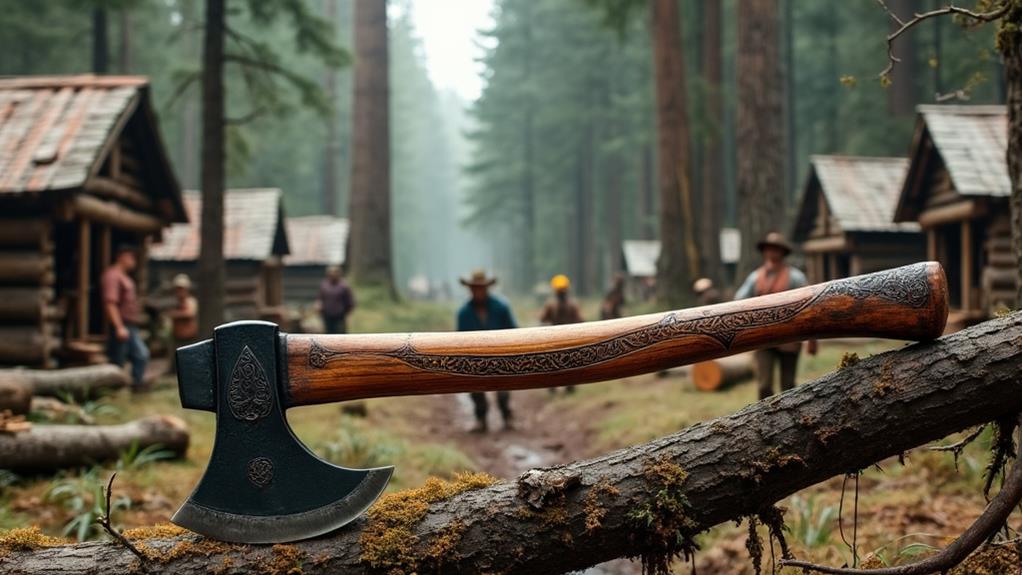
History of the Axe: From Ancient Tools to Modern Use
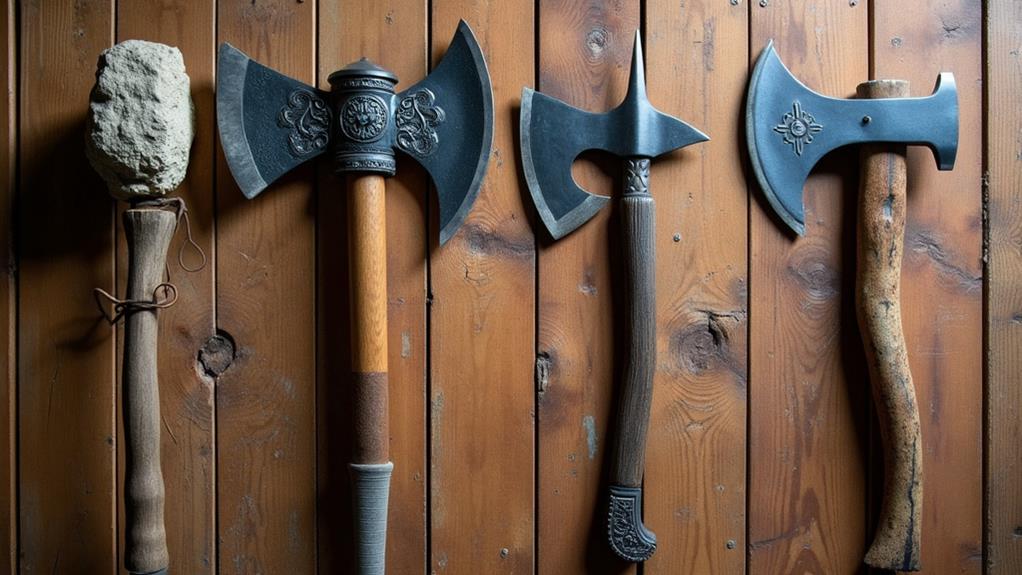
Imagine holding a tool that has been integral to human history for over a million years—the axe. This simple stone implement evolved through time, showcasing human ingenuity and adaptation. Early versions were merely hand-held stones, but the innovation of hafting, or attaching a handle, provided better leverage and utility.
As societies transitioned from using stone to bronze and iron, the axe's functions diversified, influencing areas such as agriculture and warfare. Modern axes, crafted with precision and advanced materials, still retain echoes of their ancient counterparts. What drove these transformations, and how did such a fundamental tool shape civilizations?
Early Stone Axes
The story of the axe begins with the early stone axes, which emerged around 1.6 million years ago during the Oldowan culture. These early axes, primarily known as hand axes, were crafted from stone and served as essential cutting tools. Their design included simple handheld stones, versatile for tasks like butchering and digging.
Among these early axes, variations such as core axes made from unpolished flint and flake axes used for preparing animal skins were common. These tools highlight the ingenuity of early humans in tool-making, representing a significant leap in the ability to manipulate natural resources for survival.
As time progressed, the sophistication of stone axes improved. By approximately 3700-3200 BC, advanced designs like the Lihult axe, crafted from polished greenstone, began to appear. These axes showcased advancements in both design and functionality.
Moreover, evidence of ground-edge axes aligns with human migration events, such as the movement to Australia. These stone axes were vital for adapting to new environments, proving their indispensable role in early human history.
Hafted Axes Emergence
Imagine holding an axe that's not just a stone in your hand but a finely crafted tool with a wooden handle, significantly enhancing its efficiency. This innovation, known as hafted axes, emerged during the Mesolithic period around 6000 BC.
By attaching a sharp stone blade to a wooden handle using birch-tar and rawhide, early humans greatly improved the tool's effectiveness.
With a wooden handle, hafted axes allowed for greater force application and precision in cutting tasks compared to earlier hand axes. This improvement made a substantial difference in daily activities such as clearing land for agriculture, crafting wooden tools and structures, and hunting.
The emergence of hafted axes marked a critical evolutionary step in tool-making. It wasn't just about having a sharper blade; it was about combining materials to create a more efficient and versatile tool.
This advancement showcased the ingenuity of early humans and their ability to innovate, laying the groundwork for future technological developments. Understanding this innovation highlights the profound impact that the simple enhancement of a wooden handle had on human progress.
Neolithic Axe Factories
During the Neolithic epoch, axe factories in Europe, such as those in Great Langdale and Spiennes, became centers of advanced tool-making. These sites produced thousands of ground stone axes, demonstrating the craftsmanship of the era. Utilizing local stone materials, these factories created durable and functional axes for various purposes.
Specialized techniques were employed to craft axes with polished surfaces and well-defined edges, marking a significant evolution in tool design and manufacturing. These high-quality tools weren't only essential for local use but also played a crucial role in emerging trade networks, being highly sought after for agricultural and woodworking activities.
The establishment of Neolithic axe factories reflects a societal shift towards permanent settlements and complex economies. As communities prioritized agriculture and resource management, the production of reliable tools became fundamental. These factories were central to that transformation, driving the progress that shaped Neolithic societies.
Metal Axes Evolution
The evolution of metal axes began in the Bronze Age, significantly improving their functionality. The introduction of socketed axes during this period enhanced their durability and ease of handling. In the Iron Age, axes became even stronger and more versatile, making them essential tools for both labor and warfare.
Bronze Age Innovations
The transition from stone to metal axes during the Bronze Age, approximately 3300 to 1200 BC, revolutionized tool-making. The introduction of bronze, an alloy of copper and tin, allowed for the casting of axes in molds, enabling mass production and greater uniformity.
This era saw the development of socketed axes, such as the Celt and palstave, which featured decorative patterns and superior functionality compared to earlier shaft-hole designs. Bronze axes had thinner blades and sharper cutting edges, enhancing their efficiency in agricultural tasks and warfare.
These improvements not only boosted the tools' performance but also influenced their design, leading to more specialized forms. Socketed bronze axes were easier to attach to handles, providing better stability and control.
As the Bronze Age transitioned to the Iron Age around 1200 BC, ironworking techniques further enhanced the strength and durability of axes. Iron tools evolved from their bronze predecessors, reflecting continuous advancements in metallurgy and tool-making.
The innovations of the Bronze Age laid a solid foundation for future developments in axe technology, significantly impacting their use in agriculture, combat, and other sectors.
Socketed Axe Design
The introduction of socketed axe designs around 2000 BC marked a significant leap in the efficiency and functionality of metal axes. This innovation facilitated the mass production of axes and improved their usability. The socketed design, featuring a hollowed-out head that fit securely over the handle, provided a more robust attachment, enhancing the tool's effectiveness.
Bronze socketed axes represented a major advancement in metalworking techniques. Molds used in the casting process enabled the creation of intricate patterns and decorative designs, transforming these axes into both functional tools and works of art. By the Iron Age, socketed axes had further evolved. Iron, being stronger and more durable than bronze, made these tools more versatile and reliable, extending their application from agriculture to warfare.
The table below summarizes the impact of these advancements across different periods:
| Time Period | Material | Impact on Society |
|---|---|---|
| 2000 BC | Bronze | Facilitated mass production |
| 1500 BC | Bronze | Enabled intricate, decorative designs |
| 500 BC | Iron | Provided increased strength and durability |
| 300 BC | Iron | Became widely used in warfare |
| 100 AD | Iron | Became essential in agriculture |
The adaptability and continuous improvement of socketed axe designs reflect ongoing technological progress, cementing their status as indispensable tools throughout history.
Iron Age Advancements
The Iron Age revolutionized axe production by replacing bronze with iron, significantly enhancing the strength and durability of these essential tools. This transition led to the development of various axe types, including felling and battle axes, crucial for both agricultural and combat purposes.
Advances in ironworking techniques allowed for the creation of superior axe heads with sharper cutting edges and thicker blades, making them more efficient and versatile. Unlike the primarily functional axes of the Bronze Age, the Iron Age introduced specialized iron axes.
For example, the pollaxe was specifically designed for combat, while the adze was optimized for woodworking. This specialization indicated a growing demand for tailored tools in warfare and industry.
The shift to iron axes marked a significant technological advancement and laid the groundwork for future progress in metallurgy and tool-making. The innovations of the Iron Age influenced axe designs well into the medieval period and beyond, shaping the development of tools for centuries.
Bronze and Iron Axes
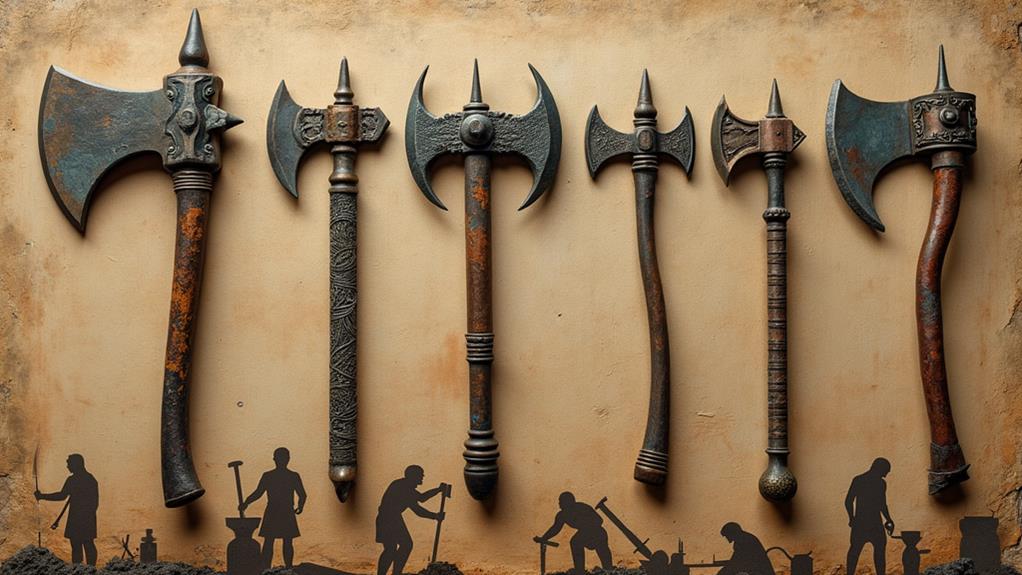
The transition from bronze to iron axes marked a significant technological and functional advancement. The Bronze Age saw the introduction of mass-produced, socketed axes that were easier to attach to handles. In contrast, the Iron Age brought stronger and more versatile tools, significantly impacting both labor and combat. These improvements in axe design reflect broader technological progress that influenced agricultural practices and warfare strategies.
Bronze Age Advancements
The Bronze Age, starting around 3300 BCE, marked a significant evolution in tool-making, particularly in the production of axes. The shift from stone to bronze allowed for the creation of more efficient and durable cutting tools. Bronze axes, characterized by thinner blades and sharper edges, were a substantial improvement over their stone counterparts, making them superior for tasks like woodworking and cutting.
One notable innovation during this period was the development of socketed axes. This design allowed for more secure and versatile attachment to wooden handles, increasing their effectiveness across various applications, from construction to daily chores.
Here's a brief comparison to highlight the differences:
| Feature | Stone Axes | Bronze Axes |
|---|---|---|
| Material | Stone | Bronze |
| Blade Thickness | Thick | Thin |
| Edge Sharpness | Less pronounced | Pronounced |
| Handle Attachment | Basic | Socketed |
The introduction of bronze axes marked a pivotal advancement in tool-making technology. These innovations laid the groundwork for more sophisticated tools and techniques, setting the stage for further developments in the Iron Age. The enhanced efficiency and functionality of bronze axes revolutionized task performance, making them indispensable tools of the era.
Iron Age Innovations
Iron Age innovations in axe technology marked a transformative period in tool-making advancements. Beginning around 1200 BCE, the adoption of iron axes revolutionized the industry. Iron and steel offered superior strength and durability compared to the earlier bronze axes, which had been widely used from 3300 to 1200 BCE.
Iron Age axe makers utilized forging techniques to produce thinner blades with more pronounced edges, significantly enhancing efficiency and performance. While bronze axes, often cast in molds, had facilitated mass production and functional designs like socketed axes, the transition to iron opened up even greater possibilities.
Specialized axes emerged, including palstaves and distinct combat-specific designs. Longer-handled battle axes, for example, became popular in warfare, demonstrating the versatility of iron axes for various applications.
These advancements weren't solely about stronger materials but also about the evolution of design to meet specific tasks. The Iron Age didn't just improve the tools themselves; it fundamentally altered the practices of axe makers, paving the way for future innovations.
Technological Progression
Building on the innovations of earlier periods, the technological progression from bronze to iron axes showcases remarkable advancements in both material and design.
During the Bronze Age (circa 3300 – 1200 BC), axes made from bronze marked a notable shift from stone tools. Bronze axes allowed for mass production and improved functionality, transforming how societies approached both labor and combat.
One notable innovation of the Bronze Age was the introduction of socketed axes. These designs facilitated easier attachment to handles compared to earlier shaft-holed axes, enhancing the reliability and effectiveness of the tool.
As the Bronze Age transitioned to the Iron Age around 1200 BC, the production of iron axes brought about even stronger and more durable tools. Iron axes offered greater versatility and were better suited for multiple applications, from agricultural tasks to military endeavors.
Forging techniques developed during the Iron Age allowed for the creation of thinner blades and pronounced edges, which markedly differentiated axes from hammers. This evolution in axe design, driven by technological progression, resulted in specialized axes tailored for specific tasks, ultimately increasing efficiency in both agricultural and military contexts.
The refinement of materials and craftsmanship during these periods laid the groundwork for the modern tools we use today.
Structure and Mechanics
The efficiency and adaptability of an axe are fundamentally tied to its structure and mechanics. An axe primarily comprises two components: the head and the handle. The axe head, the cutting element, features either shallow wedge angles for cutting or deeper wedge angles for splitting, ensuring it meets various applications such as chopping wood or splitting logs.
The handle, or haft, serves as a lever to amplify the force exerted at the cutting edge. Traditional handles are typically made from hardwoods like hickory or ash, which offer a robust grip and smooth swinging motion. Modern handles, however, often utilize materials such as plastic or fiberglass, providing enhanced durability and reduced weight.
The handle's structure includes distinct parts like the shoulder, belly, grip, and knob, each contributing to the overall functionality of the tool. Most axes are double beveled, making them versatile for a range of tasks.
Specialized axes, like broadaxes, have single bevel blades designed for specific purposes, such as hewing. A comprehensive understanding of these structural elements and mechanics is essential for effectively using an axe, whether for general woodcutting or specialized carpentry.
Types and Variants
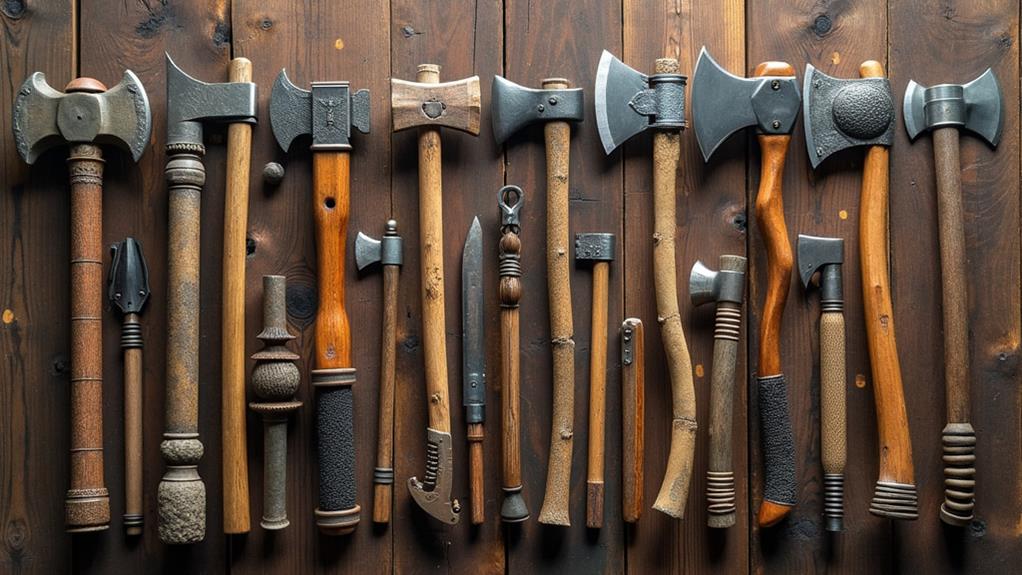
As you explore the types and variants of axes, you'll discover that each is designed for specific tasks. Felling axes and splitting axes handle wood differently, while broad axes and hatchets offer precision and versatility. Specialized tools like the Pulaski and cultural variants emphasize unique applications and regional craftsmanship.
Felling and Splitting Axes
Felling and splitting axes are specialized tools designed for distinct tasks in wood processing. Felling axes feature a sharp bit and a shallower wedge angle, making them highly effective for cutting across wood grain to fell trees and process lumber. Their precision in slicing through wood fibers ensures efficient tree cutting and lumber processing.
In contrast, splitting axes have a wedge-shaped bit with a broader head and a deeper wedge angle, optimized for splitting wood fibers along the grain. This design makes them ideal for splitting logs into firewood with minimal effort. The deep wedge angle allows the splitting axe to penetrate logs efficiently, enhancing wood processing productivity.
Broad Axes and Hatchets
Broad axes and hatchets are essential tools, each designed for specific woodworking and outdoor tasks. The broad axe, featuring a chisel-shaped bit, excels in precision hewing, making it ideal for shaping timber into beams or planks. Its wider blade angle, compared to standard felling axes, ensures precise cuts, while wooden handles offer a comfortable grip, allowing for extended use without strain.
Hatchets, in contrast, are compact and lightweight, designed for one-handed use. They're indispensable for camping tasks such as chopping kindling or processing small logs. Additionally, hatchets can serve as weapons in survival situations, providing both utility and safety.
Modern hatchets often feature high-quality steel blades and reinforced handles, ensuring durability and a secure grip even in challenging conditions. Both broad axes and hatchets have significantly evolved over time. Today's versions incorporate advanced materials that enhance their performance and longevity. Whether you're engaged in fine woodworking or need a reliable tool for outdoor activities, these tools remain fundamental for various cutting tasks.
Specialized and Cultural Variants
Throughout history, axes have evolved into specialized variants tailored to specific tasks and cultural needs. As axes became more refined, different types emerged to address distinct functions. Early hand axes, used without handles, highlight initial tool design evolution, but the development of hafted axes, designed for one-handed use, introduced greater control and efficiency.
Specialized axes such as the felling axe, with its sharp bit for cutting across wood grain, and the splitting axe, featuring a wedge-shaped bit for splitting wood along the grain, demonstrate the tool's adaptation for forestry. Broadaxes, with chisel-shaped bits, are perfect for precision hewing, exemplifying the diversity of woodworking tasks.
In contemporary use, the hatchet, a small, lightweight axe ideal for camping and travel, showcases the practical adaptability of axes. More specialized tools like the Pulaski, combining an axe and mattock, and the slater's axe, designed for cutting roofing slate, reflect the versatility and targeted functionality in specific trades.
Culturally, axes held symbolic meaning and were sometimes used as throwing axes in warfare or ceremonial contexts. These specialized axes not only fulfilled practical purposes but also carried cultural significance, marking their place in history.
Axes in Culture
Axes have played crucial roles in numerous cultures, reflecting both symbolic and practical significance. From the moment they were crafted, axes quickly assumed cultural importance beyond their utility.
In Minoan Crete, double axes, known as labrys, held significant religious meaning and were often used in ceremonial practices. These tools weren't just for cutting wood; they were central to historical rituals and carried immense symbolic weight.
In Norway, the coat of arms prominently features an axe, symbolizing the legacy of King Olaf II. This underscores the cultural importance of axes in Norwegian history. Folklore from multiple cultures also attributes protective powers to axes, believing they can safeguard against lightning and witches. This further highlights their symbolic significance in mythology.
Elaborate axes from the late Neolithic period often represented status and were closely tied to religious rituals. McLeod's analysis emphasizes the axe's cultural importance in shaping American history, representing strength, hard work, and the connection between humans and nature.
| Culture | Symbolic Meaning | Practical Use |
|---|---|---|
| Minoan Crete | Religious, ceremonial | Ceremonial practices |
| Norway | Legacy of King Olaf II | National symbol |
| Multiple | Protective powers in folklore | Mythological beliefs |
| Late Neolithic | Status representation, religious | Social hierarchy |
| American | Strength, hard work, connection to nature | Cultural evolution |
Axes have undoubtedly shaped and mirrored the values of societies throughout history.
Axes as Weapons
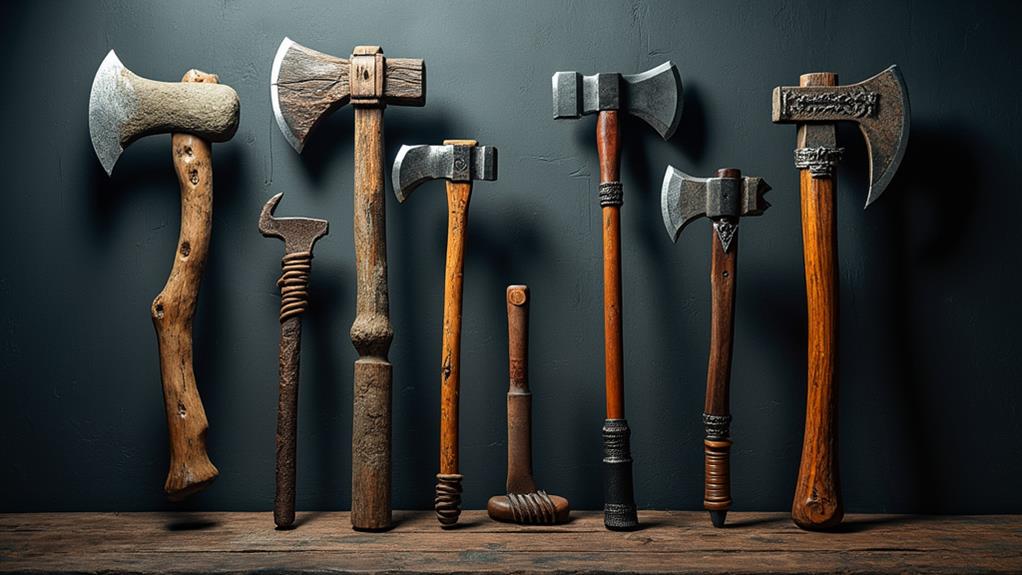
Axes have held significant cultural and symbolic importance throughout history and have also proven to be formidable weapons in various historical contexts. As melee weapons, axes have been used since ancient times, with different designs like the battle axe and tomahawk playing crucial roles in combat.
During the early medieval period (400-500 AD), the throwing axe became notable among Teutonic tribes and Franks, showcasing the transformation of axes from utilitarian tools to specialized weapons. Viking axes, featuring longer handles, were designed for powerful strikes. These axes served dual purposes in the Viking era, being essential for both everyday tasks and fierce combat.
The medieval period further advanced the development of axes as weapons, with specialized designs like the pollaxe emerging specifically for foot combat. These innovations demonstrate how axes evolved to meet the tactical demands of warfare.
Even today, the relevance of axes as weapons persists. Modern tactical axes are crafted with precision for military and law enforcement use, reflecting their ongoing effectiveness. From ancient battlefields to contemporary operations, the axe remains a symbol of both tradition and lethal efficiency in combat.
Modern Use and Craftsmanship
In the modern era, axes have transitioned from their historical uses in warfare and large-scale forestry to more specialized roles in farming, outdoor activities, and craftsmanship. Today, axes are designed for tasks such as chopping firewood, clearing brush, and camping. This shift highlights a broader trend from mass production to the creation of niche, high-quality tools.
Although the number of axe manufacturers in the USA has dwindled from over 600 to just a few, the remaining companies focus on producing superior products. Innovations like ergonomic handles and anti-vibration technology enhance the usability and comfort of modern axes.
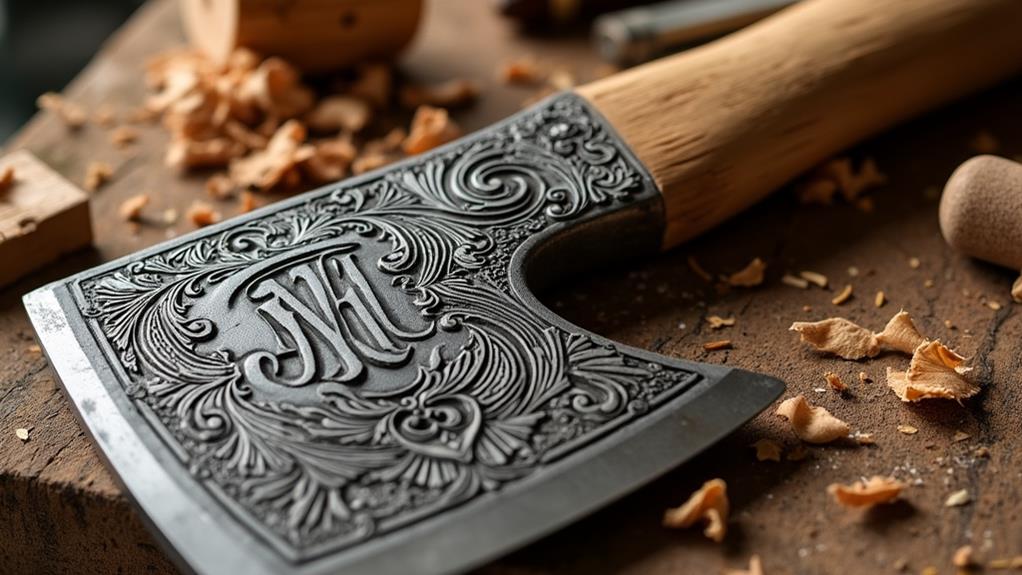
There has also been a resurgence in traditional craftsmanship, leading to the rise of boutique axe makers. These artisans blend utility with aesthetic appeal, creating premium axes inspired by historical designs. They use high-quality materials, such as superior steel alloys for blades and durable hardwoods for handles, ensuring these tools are both reliable and long-lasting.
When searching for an axe today, you'll find options that combine modern technology with time-honored craftsmanship, resulting in tools that aren't only functional but also works of art.
Conclusion
You've journeyed through the axe's remarkable history, from primitive stone tools to today's advanced designs. Each era introduced innovations that reflect human ingenuity and societal evolution. Today, axes symbolize craftsmanship and tradition. Whether you're using one to chop wood or admiring its historical significance, the axe stands as a testament to our ability to adapt and improve. So, the next time you see an axe, remember its rich and multifaceted story.