DIY Water Filtration Systems for Off-Grid Living
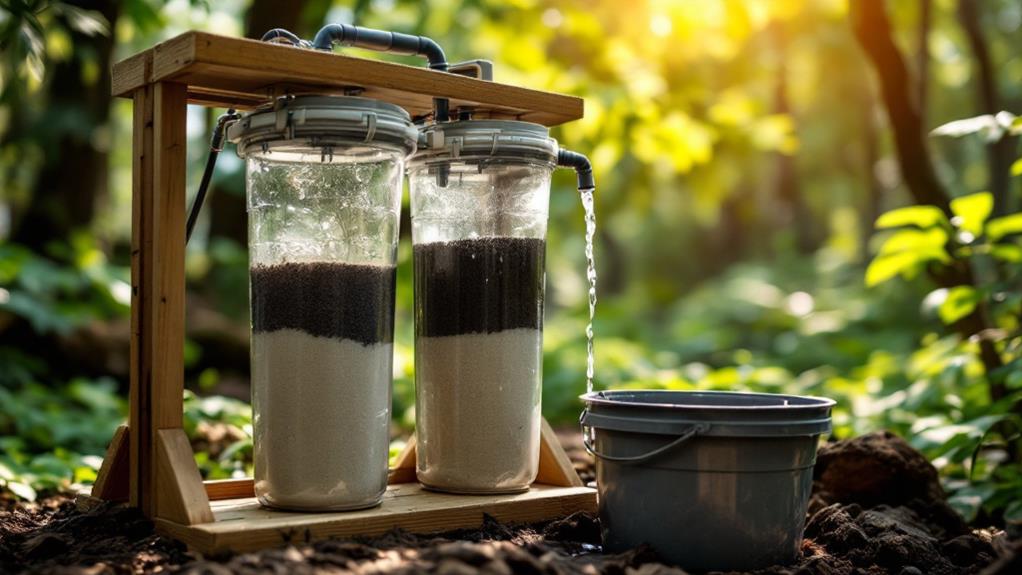
You can build your own off-grid water filtration system using simple components like food-grade buckets, Black Berkey filters, and a spigot. Start by selecting a reliable water source, such as groundwater or spring water. Create a gravity-fed system by drilling holes in the buckets for filters and a spigot. Install Black Berkey filters in the top bucket and connect it to the bottom bucket with the spigot. This DIY setup can purify up to 6,000 gallons of water, removing bacteria, parasites, and chemical contaminants. Remember to maintain your system regularly and practice sustainable water management. Uncover how to enhance your off-grid water independence with advanced techniques and sustainable practices.
Understanding Off-Grid Water Systems
When it comes to off-grid living, understanding water systems is crucial for establishing a sustainable and independent lifestyle. Off-grid water systems are designed to operate autonomously, providing clean and purified water without relying on traditional electricity and water supply networks. These systems are perfect for tiny houses or remote homes seeking self-sufficiency.
The core components of an off-grid water system typically include a water pump, filters, a storage tank, and filter elements. These systems leverage advanced filtration technology to handle larger water volumes, effectively separating different water uses to prolong filter life. By installing an off-grid water system, you'll gain independence from the regular water supply and enjoy a reliable source of clean water.
Companies specializing in off-grid water systems offer expert guidance and support throughout the installation, maintenance, and operation process. This guarantees you'll have the knowledge and resources to manage your self-sufficient water filtration setup effectively. With proper understanding and implementation, you can create a sustainable water solution that meets your off-grid living needs while maintaining high-quality water standards.
Selecting Water Sources
Selecting the right water source is critical for your DIY water filtration system. When choosing a water source, you'll need to contemplate the level of protection from contamination and the potential purification efforts required. Ground water, especially from deep wells, offers the best natural protection against surface contaminants. However, it's not entirely free from impurities, as it may contain heavy metals, microorganisms, nitrates, or fluoride.
If you're considering spring or shallow well water, keep in mind that while it's more protected than surface water, it still requires careful testing and evaluation of the surrounding environment. Surface water sources like lakes and rivers are the most vulnerable to contamination and will likely require aggressive purification measures.
To guarantee desirable Water Quality, you should always test your chosen source, regardless of its origin. This will help you determine the specific contaminants present and guide your filtration system design. Remember, the more protected your water source, the less intensive your purification process will need to be. By selecting the most suitable water source for your situation, you'll set a solid foundation for your DIY water filtration system.
Essential Components for DIY Filtration
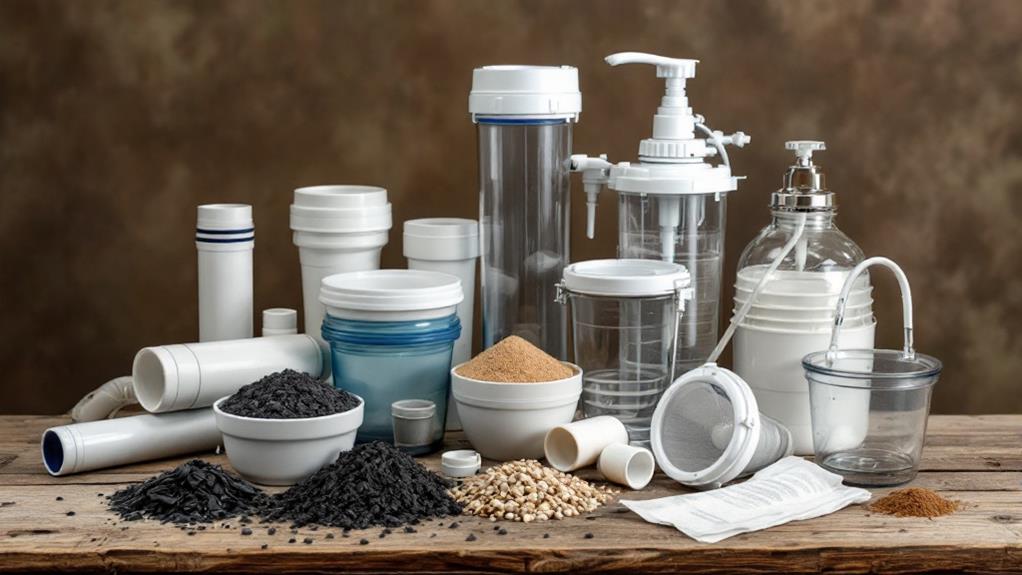
Now that you've chosen your water source, it's time to focus on the key components of your DIY filtration system. The heart of your setup will be two Black Berkey® filters, which can purify up to 6,000 gallons of water and remove a wide range of contaminants. These filters use activated carbon technology to guarantee your water is safe and clean.
You'll need two 5-gallon food-grade buckets with lids and a water spigot to create your Water Systems. Drilling holes in the buckets is essential for properly installing the filters and spigot. Don't forget to position the rubber gaskets correctly during installation to prevent any leaks in your system.
The beauty of this DIY approach is that you can assemble the entire filtration system in less than an hour. This provides you with a dependable and cost-effective way to produce purified water off-grid. By combining these indispensable components, you're creating a steadfast filtration system that can handle various water sources and assure a steady supply of clean water for your off-grid living needs.
Gravity-Fed Filtration Methods
Gravity-fed filtration systems stand out as an efficient and reliable method for DIY water purification. These systems harness the power of gravity to draw water through various filter media, eliminating the need for electricity and making them ideal for off-grid living. You'll find that gravity-fed filtration offers several advantages, including minimal maintenance and long-term effectiveness.
When designing your DIY gravity-fed system, consider incorporating these key components:
- Ceramic or sediment filters to remove bacteria, cysts, and some heavy metals
- Activated carbon filters to adsorb organic compounds and improve taste
- Slow sand filters for natural biological purification
- Multiple stages of filtration for comprehensive water treatment
Popular options like Berkey water filters utilize gravity-fed filtration principles, but you can create your own system using readily available materials. By combining different filter media, you'll achieve a robust purification process that addresses various contaminants. Remember, gravity-fed filtration systems are particularly well-suited for off-grid applications due to their minimal energy requirements and low maintenance needs. With proper design and upkeep, you'll enjoy clean, safe drinking water without relying on external power sources or complex machinery.
Chemical Purification Techniques

When it comes to chemical purification techniques, you'll find a range of options for treating water on the go or in emergency situations. Chlorine-based compounds like household bleach are effective at killing harmful microorganisms, but you'll need to be careful with dosage and contact time. Chlorine dioxide tablets or solutions offer another option that won't leave a chlorine taste or odor.
If you're looking to purify the water from pathogens quickly, iodine tablets can work, though they may impart a bitter taste and aren't as effective against certain microbes as chlorine-based treatments. It is crucial to recognize that while these chemical methods can disinfect water, they won't remove dissolved contaminants like heavy metals or fluoride.
For a more in-depth approach, you might consider combining chemical purification with other methods. Remember that boiling water can concentrate certain pollutants, so it's not always the best solution. While chemical disinfection is simple and portable, it doesn't provide the same level of contaminant removal as advanced filtration or distillation techniques. Choose your method based on your specific needs and the quality of your water source.
Solar Disinfection Options
In recent years, solar disinfection has emerged as a simple yet effective method for purifying water. This technique, known as SODIS, utilizes the power of solar energy to eliminate harmful pathogens in water, making it safe for consumption. SODIS is an eco-friendly, low-cost option for off-grid water purification.
To implement SODIS, you'll need clear plastic or glass bottles with a capacity of 1-2 liters. Fill these bottles with water that's free of turbidity and place them in direct sunlight. The UV rays will work their magic, damaging the DNA of bacteria, viruses, and protozoa.
- Choose clean, transparent bottles
- Fill them with clear water
- Expose to direct sunlight for 6 hours on sunny days
- In cloudy weather, leave for 2 consecutive days
SODIS is an attractive option for off-grid living as it doesn't require chemicals or electricity. By employing the sun's power, you're embracing a sustainable solution for safe drinking water. Remember, this method works best with water that's already relatively clean, so pre-filtering may be necessary in some cases.
Berkey Filtration Systems Overview
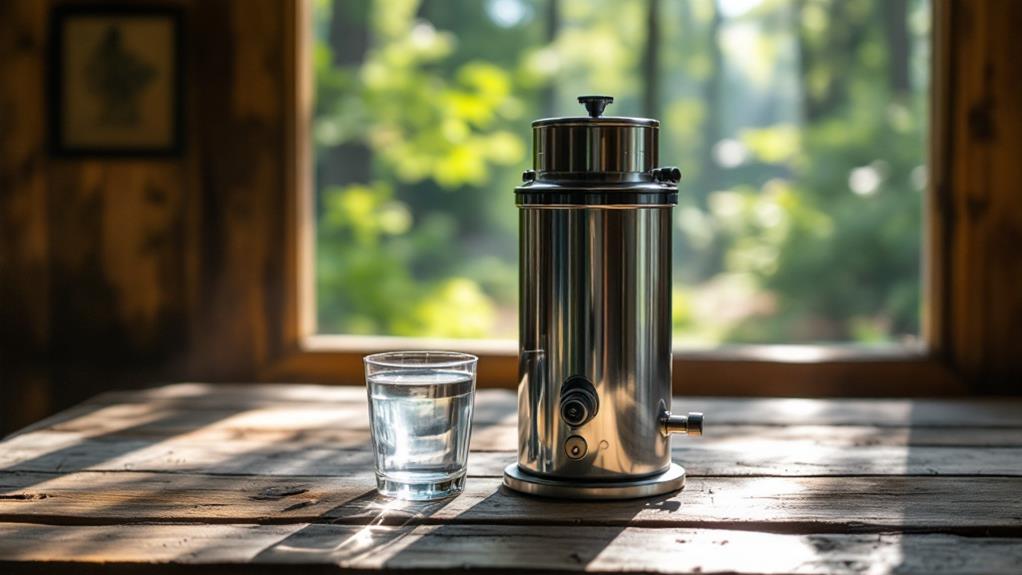
While solar disinfection offers a simple solution for water purification, Berkey filtration systems provide a more exhaustive, extensive, thorough, and complete approach to off-grid water treatment. These gravity-fed, countertop filters are designed to purify water without electricity, making them ideal for off-grid living and emergency preparedness.
You'll find Berkey water purification systems available in various sizes, from the compact Travel Berkey to the larger Royal Berkey, allowing you to choose the best option for your household needs. The heart of these systems lies in their proprietary Black Berkey filtration elements, which can effectively remove pathogenic bacteria, cysts, parasites, and a wide range of chemical contaminants from your water.
One of the most cost-effective aspects of Berkey filters is their longevity. Each Black Berkey element can purify up to 6,000 gallons of water before needing replacement. This means you'll have a reliable source of clean drinking water for an extended period, even in off-grid situations. With their ability to function without electricity or plumbing, Berkey systems offer a versatile and dependable solution for your water purification needs.
Building a Bucket Filter System
Building a DIY bucket filter system offers a cost-effective and efficient way to purify water off-grid. You'll need food-grade buckets, Black Berkey® water filters, and a spigot to create this gravity-fed filtration system. It's vital to use only food-grade buckets, not those from hardware stores, to safeguard the safety of your drinking water.
To assemble your bucket filter system:
- Drill holes in the top bucket for the filter shafts
- Create an opening for the spigot in the bottom bucket
- Install the Black Berkey® filters in the top bucket
- Connect the two buckets and attach the spigot
The top bucket houses the filters, allowing unfiltered water to pass through them into the bottom bucket. This simple setup can be completed in less than an hour, providing you with a reliable off-grid water purification solution.
Two Black Berkey® filters can purify up to 6,000 gallons of water, costing only about 2 cents per gallon. This makes the bucket filter system an inexpensive and long-lasting option for guaranteeing clean drinking water. With minimal effort, you can have a steady supply of purified water for your off-grid living needs.
Maintaining Your Off-Grid Water System
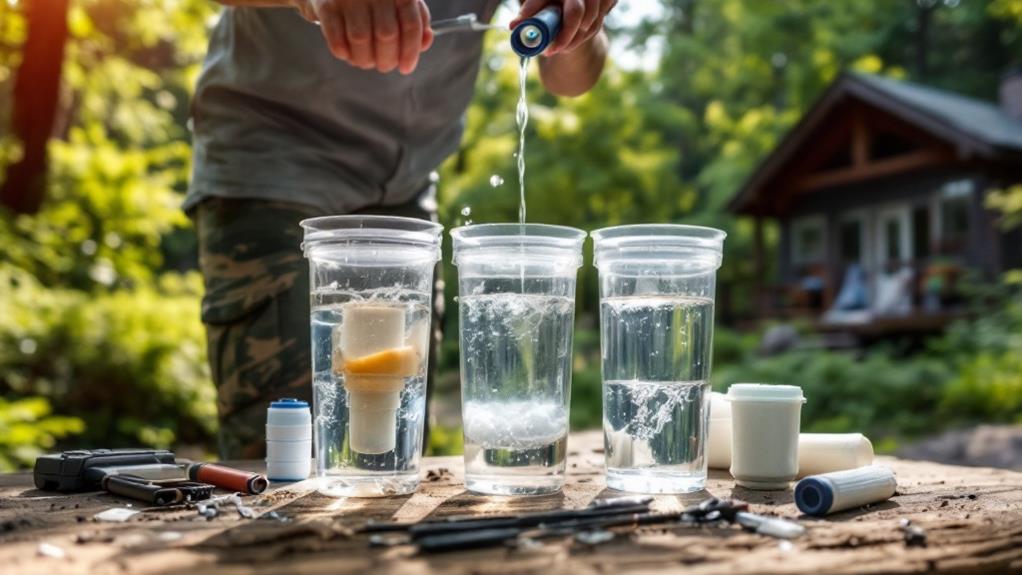
Once you've built your DIY bucket filter system, it's important to keep it in top shape. Regular maintenance guarantees you'll have access to clean water for years to come. Start by inspecting your system's components frequently, including filters, gaskets, and spigots. This will help you identify any potential issues before they become serious problems.
Make sure to replace your Black Berkey® filters as recommended, typically after every 6,000 gallons of use. This maintains ideal water purification performance. Don't forget to clean your storage containers periodically with mild soap and water to prevent biofilm buildup.
Keep an eye on your water flow rate and pressure, adjusting the system as needed for efficient delivery. Protect your off-grid water system from environmental factors like freezing temperatures and direct sunlight to extend its lifespan.
Sustainable Water Management Practices
Sustainability is key when managing your off-grid water system. By implementing efficient practices, you'll reduce your dependence on external water supplies and guarantee a reliable source for your needs. To achieve this, consider the following strategies:
- Harvest rainwater: Install a collection system to capture and store rainwater, providing a sustainable water source for various household uses.
- Recycle greywater: Set up a system to reuse water from showers, sinks, and washing machines for irrigation, reducing overall consumption.
- Design your terrain: Choose drought-tolerant and native plants to minimize water requirements for outdoor areas.
- Use water-efficient appliances: Install low-flow showerheads, toilets, and other fixtures to conserve water and reduce demand on your system.
Remember to regularly monitor and maintain your off-grid water system, including checking for leaks and cleaning filter elements. This ensures long-term efficiency and reliability. By adopting these sustainable water management practices, you'll not only conserve this precious resource but also enhance the self-sufficiency of your off-grid lifestyle. With proper planning and implementation, you can create a sturdy and eco-friendly water system that meets your needs while minimizing environmental impact.
Frequently Asked Questions
What Is the Best Water Filter for Off-Grid Living?
For off-grid living, you'll find the Berkey water filter system to be an excellent choice. It's a sustainable water treatment solution that offers efficient filtration methods without electricity. You can also consider gravity-fed filters like the Big Berkey or Royal Berkey for handling large volumes. If you're looking for alternatives, UV light purifiers and solar-powered distillation systems are great options. Don't forget about portable chemical disinfection methods like iodine tablets for emergencies.
How to Purify Water in a Large Water Tank Off-Grid?
To purify water in a large off-grid tank, you'll want to deliberate a solar-powered UV disinfection system. It's effective and chemical-free. Alternatively, you can install a gravity-fed multi-stage filter or implement slow sand filtration. Don't forget about water storage maintenance and regular water quality testing to guarantee your system's effectiveness. If you need the highest purity, a solar or wood-fired distillation system can remove virtually all contaminants. Remember, periodic testing is vital for safe, clean water.
How to Make a Water Filter in Rural Areas?
To make a water filter in rural areas, you can start by exploring low-cost filtration methods. Consider setting up rainwater harvesting systems to collect and store water. You'll want to use readily available materials like buckets, sand, and gravel to create a simple filtration system. Don't forget to include activated charcoal for better purification. Remember to boil or use chlorine tablets to guarantee the water is safe to drink after filtration.
How to Make a Cheap Water Filtration System?
You can make a cheap water filtration system using gravity-driven filtration or simple sand filtration. For gravity-driven filtration, stack two buckets with filters between them and add a spigot. For sand filtration, layer gravel, sand, and activated charcoal in a container with holes. Both methods are cost-effective and easy to set up. You'll need to maintain and clean your system regularly to guarantee it continues to provide safe drinking water.