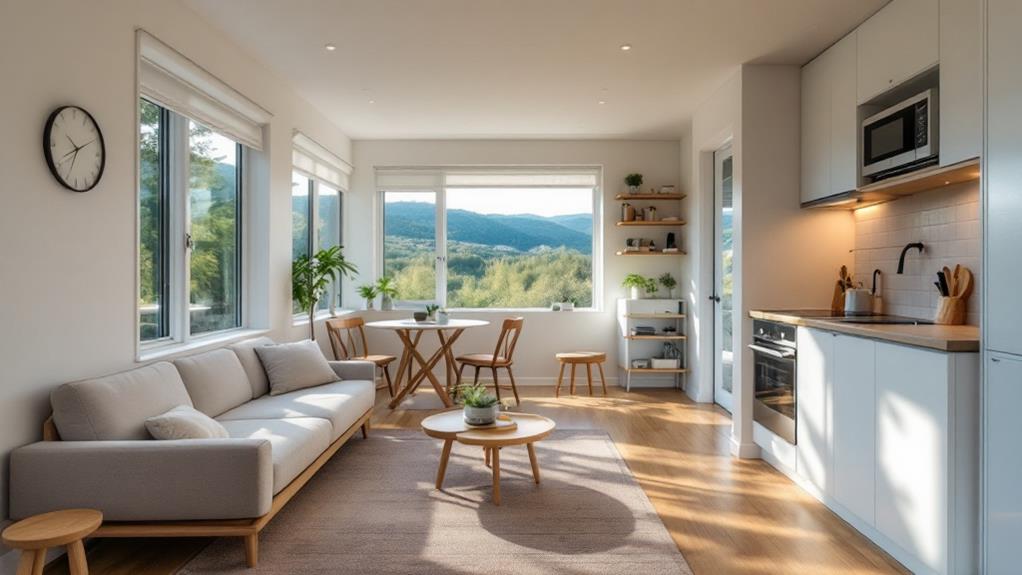
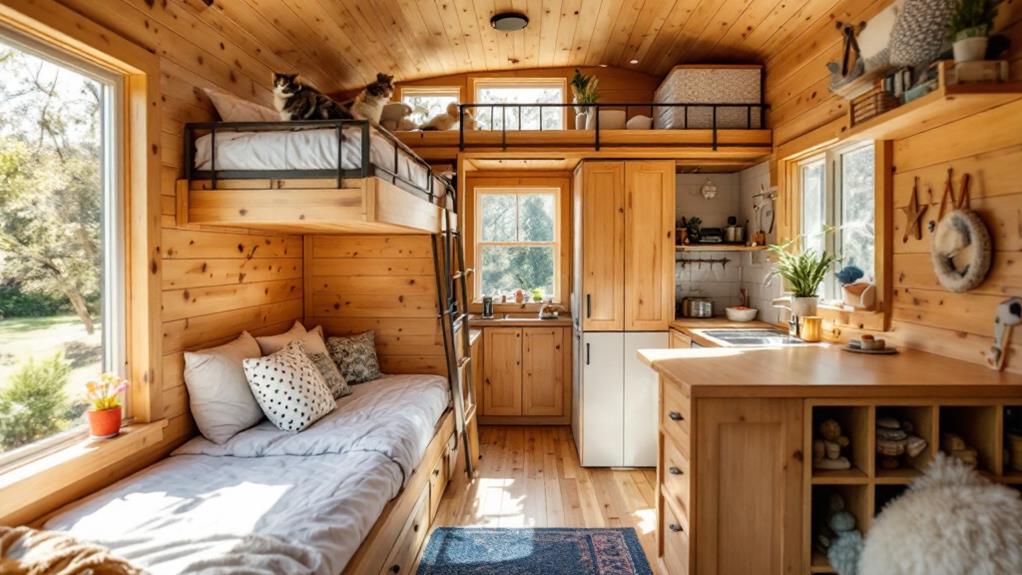
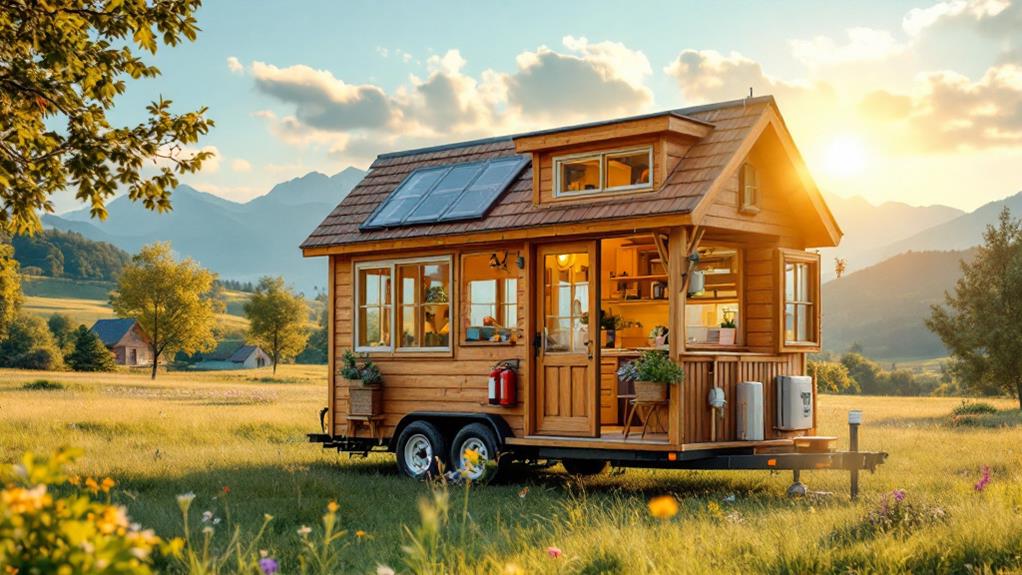
Comparison of the Cost of Living in a Tiny Home vs. Traditional Home
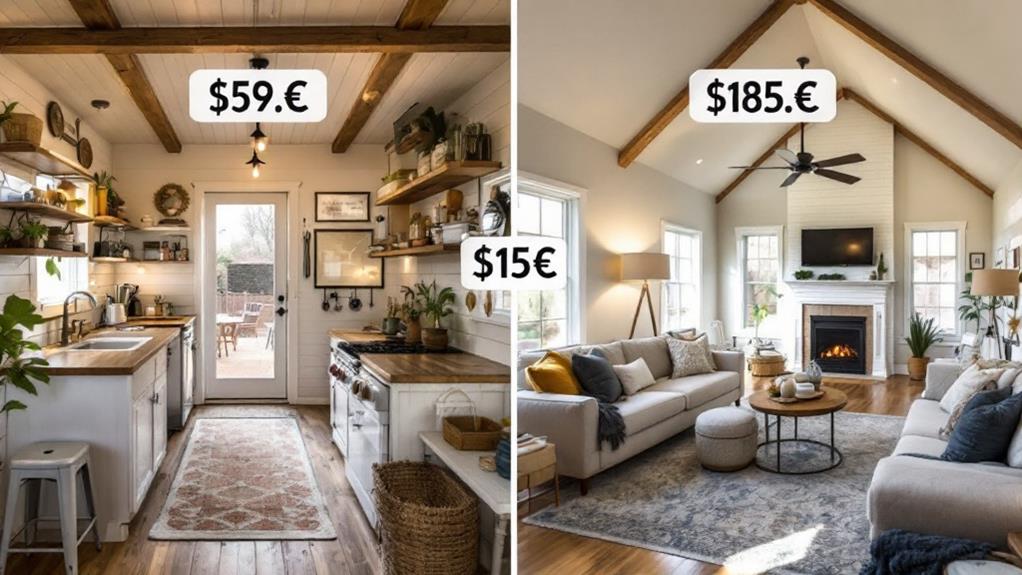
When comparing the cost of living in a tiny home vs. a traditional home, you'll find significant differences. Tiny homes typically cost $30,000 to $60,000 to build, while traditional homes average $300,000. You'll enjoy lower utility bills, reduced maintenance costs, and smaller property taxes with a tiny home. However, you may face challenges with financing, zoning regulations, and finding suitable land. Long-term, tiny homes can offer greater financial flexibility and freedom, but their resale value may be less predictable. Your lifestyle adaptations in a tiny home can lead to additional savings on daily expenses. To fully grasp the financial implications, it's crucial to ponder both short-term and long-term factors.
Initial Investment and Construction Costs
When considering a tiny home versus a traditional house, the initial investment and construction costs stand out as a major difference. The average cost to build a tiny home ranges from $30,000 to $60,000, which is markedly lower than the $300,000 average for a traditional home. This considerable difference in upfront investment makes tiny homes an attractive option for those looking to reduce their housing expenses.
Tiny home costs are further reduced due to their smaller square footage, resulting in 30-50% lower cost per square foot compared to traditional homes. This cost savings extends beyond the initial build, as you'll likely pay less in property taxes and utility bills, including heating and cooling expenses. However, it's important to factor in additional costs such as permits and zoning approvals, which can add an average of $1,380 to your investment.
If you're considering a trailer-based tiny home, you'll benefit from lower foundation costs of $5,000 to $8,000, compared to the higher expenses associated with a traditional home's permanent foundation. While building a custom tiny home can be cheaper than buying a pre-built model, be aware that mistakes during construction may lead to additional costs. Overall, the financial benefits of choosing a tiny home can be substantial.
Ongoing Expenses and Utilities
While the initial investment in a tiny home is considerably lower, the long-term financial benefits become even more apparent when examining ongoing expenses and utilities. You'll find that tiny homes typically offer significant savings across various cost categories.
Utility costs are often substantially reduced in tiny homes due to their energy-efficient designs and smaller spaces. You'll spend less on heating, cooling, and electricity, which can lead to noticeable monthly savings. Maintenance and repair costs are also generally lower for tiny homes, thanks to their simplified systems and compact size.
Property taxes are another area where you'll see savings, as tiny homes are assessed based on their smaller size and lower value. You may also benefit from reduced insurance premiums, as the replacement cost for a tiny home is typically less than that of a traditional house.
Land and Property Considerations
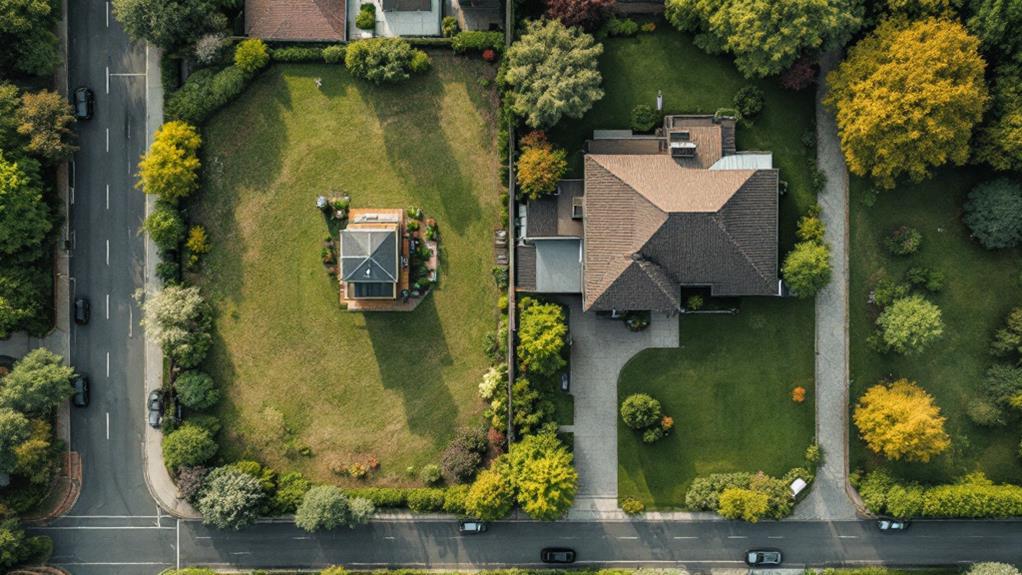
Land and property considerations play an essential role in the overall cost comparison between tiny homes and traditional houses. When you're contemplating a tiny home, you'll need to factor in the cost of a piece of land, which isn't typically included in the initial price. Unlike traditional houses, where land and utilities are often bundled into the purchase, you'll need to buy or lease land separately for your tiny home.
If you're opting for raw land, you'll face additional costs for connecting to local utilities, digging a well, and setting up power. These expenses can greatly impact the overall cost of a tiny home. However, if your tiny home is on wheels, you might only need RV hookups, which can be less expensive.
Zoning laws and regulations can also affect where you can place your tiny home, potentially limiting your options and increasing costs. When comparing the cost of a tiny home to buying a traditional home, remember to account for these land-related expenses. The limited space in a tiny home may seem cost-effective, but the need to secure and develop a suitable property can offset some of those savings.
Financing Options and Terms
For financing options and terms, tiny homes and traditional houses differ markedly. When buying a tiny home, you'll likely investigate personal loans, RV loans, or specialized tiny home lenders. These loans typically have terms ranging from 10 to 30 years, with interest rates generally higher than traditional mortgages. You'll need to prepare for down payments of 10% to 20% of the total cost.
In contrast, traditional home buyers often opt for 15-year or 30-year fixed-rate mortgages. These loans require larger down payments, usually 20% or more, but offer lower interest rates compared to tiny home financing. The established nature of the traditional housing market contributes to more favorable terms for buyers.
If you're considering a tiny home, you might examine alternative financing methods like crowdfunding or even cash purchases to avoid the challenges of securing traditional mortgage loans. These options can provide more flexibility but may require significant upfront capital.
Ultimately, your choice between tiny home and traditional home financing will depend on your financial situation, credit history, and long-term housing goals. Carefully weigh the pros and cons of each option before making your decision.
Maintenance and Repair Expenditures
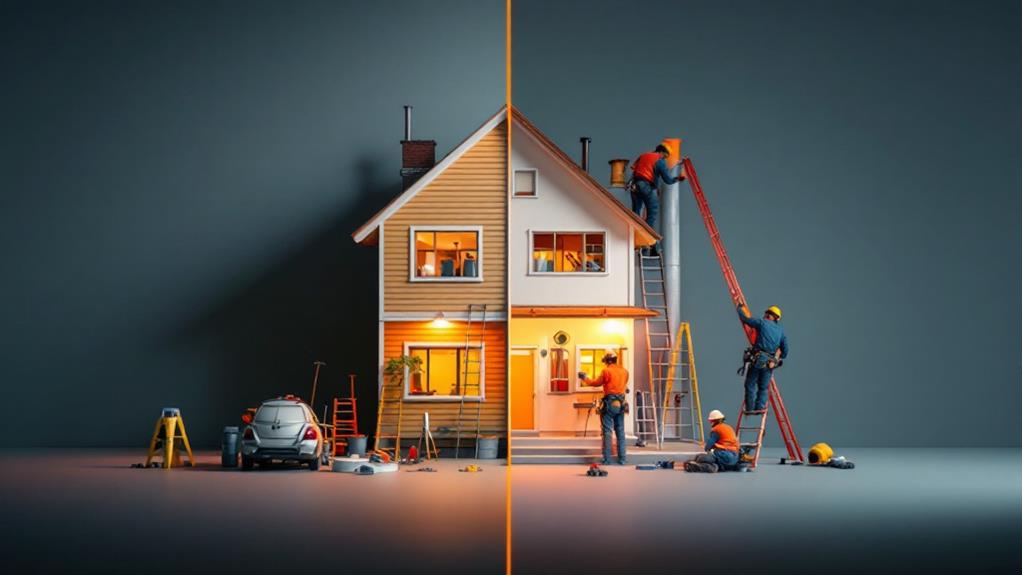
The financial burden of upkeep varies greatly between tiny and traditional homes. When you own a tiny home, you'll likely spend less on maintenance and repair costs compared to a traditional house. On average, tiny home owners allocate about 1% of their home's value annually for upkeep, while traditional homeowners might spend up to 4%.
The smaller size of tiny homes translates to fewer systems and appliances, reducing potential repair issues and overall maintenance expenses. You'll find that the simplified layouts and accessibility make DIY repairs and routine maintenance tasks easier and more cost-effective. This can save you money on professional services and allow you to address issues promptly.
However, it's important to remember that regular inspections and proactive maintenance are still necessary for tiny homes. By staying on top of potential problems, you can prevent costly issues from developing in the future. While the overall maintenance costs are lower for tiny homes, you shouldn't neglect routine upkeep. By taking a proactive approach, you can maintain your tiny home in good condition and continue to enjoy its cost-effective living solution for years to come.
Resale Value and Market Trends
While maintenance costs play a significant role in your long-term expenses, it's equally important to ponder the resale value of your tiny home. The market trends for tiny homes are still changing, making it challenging to predict their long-term appreciation compared to traditional homes. However, there are factors you should consider when evaluating your tiny home's potential resale value.
If your tiny home is on a foundation, it may appreciate faster than those on wheels, as it aligns more closely with traditional real estate. Your home's location and accessibility will tremendously impact its marketability. Customization can be a double-edged sword: unique features might attract some buyers but deter others. As a tiny home owner, you'll need to balance personalization with broad appeal.
Keep in mind that potential home buyers may have concerns about the long-term viability of tiny homes. This uncertainty can influence market trends and affect resale values. To maximize your tiny home's resale potential, focus on quality construction, smart design choices, and choosing a desirable location. By staying informed about market trends and adapting accordingly, you'll be better positioned to maneuver the emerging tiny home real estate market.
Lifestyle Adaptations and Savings
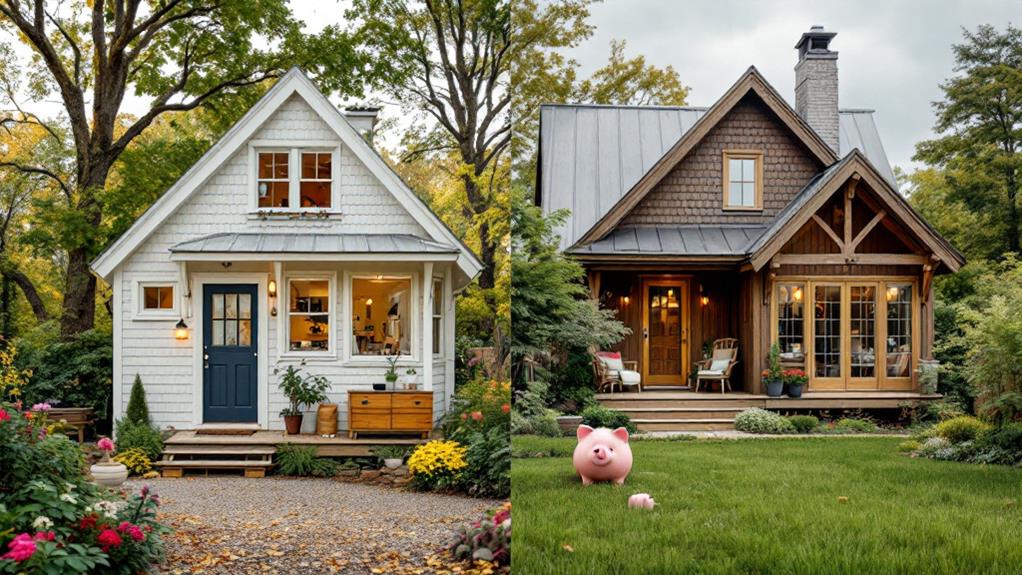
Living in a tiny home requires three vital lifestyle adaptations that can lead to substantial savings. First, you'll need to embrace a minimalist lifestyle, downsizing your possessions to fit within a smaller living space. This decluttering process helps you focus on essentials and reduces unnecessary spending on material goods.
Second, you'll learn to make efficient use of every square foot in your tiny house. Creative storage solutions and multi-functional furniture become essential, maximizing your limited space while minimizing the need for additional purchases.
Third, you'll adopt a simpler lifestyle overall. Tiny living often encourages outdoor activities and community engagement, reducing reliance on expensive entertainment options. You'll likely cook more at home and consume less energy, further lowering your daily expenses.
These adaptations in Tiny Houses vs Traditional homes can help you save money in various ways. With less space to heat, cool, and maintain, your utility bills and upkeep costs will be considerably lower. Additionally, the reduced environmental impact of tiny living may lead to long-term savings through sustainable practices and potentially lower taxes or insurance premiums.
Long-Term Financial Implications
Over the long term, choosing a tiny home over a traditional house can greatly impact your financial future. When comparing the cost of living, tiny homes offer significant advantages in reduced expenses. You'll likely pay less in property taxes, utility bills, and maintenance costs, freeing up more of your income for savings or investments.
This financial flexibility can accelerate your debt repayment, allowing you to become debt-free faster than if you were living in a larger, more expensive home. Additionally, the minimalist lifestyle associated with tiny living naturally leads to lower spending on furnishings and home-related items, further reducing your overall expenses.
Contrary to popular belief, tiny homes can appreciate in value similarly to traditional homes, especially those built on foundations. This means you're not sacrificing long-term equity by downsizing. Importantly, the ability to relocate your tiny home offers unique financial benefits, such as the option to move to areas with a lower cost of living.
When considering the long-term costs, a tiny home can provide substantial financial advantages over traditional homes, potentially setting you on a path to greater financial security and freedom.
Frequently Asked Questions
Is It Really Cheaper to Live in a Tiny House?
Yes, it's generally cheaper to live in a tiny house. You'll likely save on mortgage payments, utility bills, maintenance costs, and property taxes. Your homeowner's insurance may also be lower. However, consider other expenses like transportation, food, entertainment, healthcare, and retirement planning, which won't necessarily decrease. While the initial costs are lower, you'll need to weigh the long-term financial implications. Remember, lifestyle changes may be necessary to fully benefit from tiny home living's cost-saving potential.
What Are the Biggest Drawbacks of Living in a Tiny House?
You'll face several drawbacks when living in a tiny house. Lack of storage space and difficulty entertaining guests can be frustrating. You might encounter zoning regulation challenges and parking accessibility issues. There's also a perceived social stigma and reduced privacy. Heating and cooling inefficiency, along with water usage limitations, can be problematic. You'll need to contemplate resale value concerns and the substantial ability to expand. These factors can profoundly impact your daily life and long-term satisfaction with tiny house living.
How Much Does It Cost to Make a Tiny Home Livable?
To make a tiny home livable, you'll need to examine various costs. These include construction permits, land acquisition, and utility costs. You'll also need to budget for design and layout planning, kitchen configuration, and bathroom facilities. Don't forget about furnishing requirements and storage optimization. If you're going off-grid, factor in energy solutions. Maintenance expenses will be ongoing. While initial costs vary, expect to spend $30,000 to $60,000 for a basic livable tiny home, with additional costs for customization and amenities.
Are Tiny Homes Cheaper Than Mobile Homes?
No, tiny homes aren't typically cheaper than mobile homes. You'll face higher construction material costs and zoning regulations impact. While you may enjoy energy efficiency advantages and off-grid living feasibility, you'll still encounter challenges like storage space constraints and accessibility limitations. Don't forget to examine monthly utility costs, climate control challenges, and maintenance requirements. Resale value concerns might also affect your decision. Overall, mobile homes often provide a more cost-effective option for compact living, despite tiny homes' unique benefits.