Comparing Modern and Antique Axes
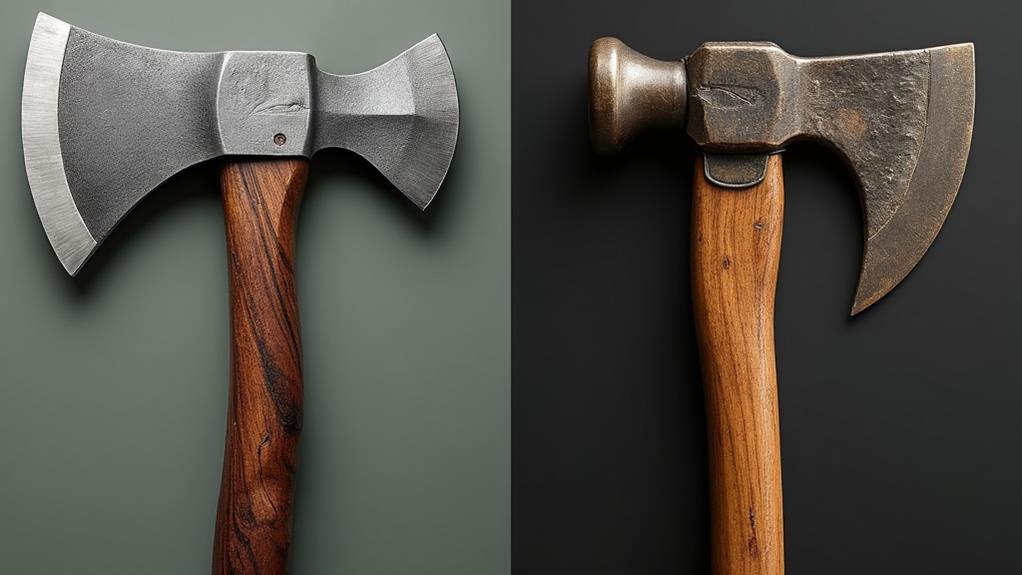
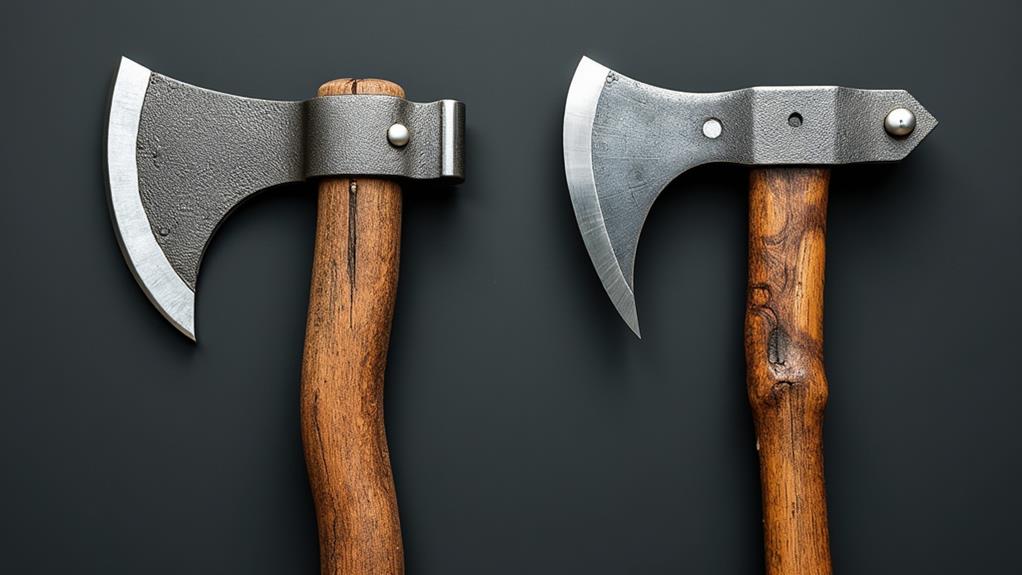
When comparing modern and antique axes, distinct differences in materials and craftsmanship become evident. Antique axes, often constructed from high-carbon steel, offer superior edge retention and durability. In contrast, many modern axes utilize steel with lower carbon content, which can affect their overall performance.
The specialized techniques used in crafting vintage axes add historical value and allure for collectors. While modern axes bring convenience and innovative designs, the heritage and functionality of antique axes hold a unique appeal.
Curious about how these differences impact their use and collectibility? Let's explore further.
Historical Significance
Axes played a crucial role in shaping early American life, particularly before the invention of the chainsaw in the mid-1920s. Over 300 million acres of timber were cut using axes, highlighting their indispensable role in the timber industry. For early settlers, the axe was more than a tool—it was a lifeline. It provided means for constructing shelter, clearing farmland, generating heat, and offering protection, thereby shaping the agrarian lifestyle of North America.
During the late 19th and early 20th centuries, the demand for axes surged, leading to the rise of over 1,000 axe manufacturers across North America. This period marked the zenith of craftsmanship, as each axe was carefully designed and forged to meet specific needs. Innovations such as the double-bit axe, which emerged in Pennsylvania between 1840 and 1850, exemplified advancements in functionality and specialization.
Vintage axes from this era, like those produced by the Spiller Axe Company, reflect a lineage of dedication and skill. Spanning 153 years until 1965, this legacy demonstrates the high level of craftsmanship despite eventual decline due to reduced demand and efficiency challenges.
Exploring these historical axes offers a glimpse into the ingenuity that shaped early American life.
Notable Axe Brands
When examining notable axe brands, the Spiller Axe stands out for its long-standing legacy and superior tempering. The Black Raven Axe from Kelly Axe Manufacturing is distinguished by its intricate etchings and high collector value. Brands like True Temper, Plumb, and vintage Wetterlings also command high market value due to their exceptional steel quality and craftsmanship.
Spiller Axe Heritage
The Spiller Axe Heritage pays homage to over a century of expert craftsmanship and innovative design. Established by Samuel Spiller in 1813, the Spiller axe quickly became a cornerstone of American axes, renowned for its unique tempering technique. This technique balanced softness for easy filing with hardness for superior edge retention, making Spiller axes a preferred choice for early settlers and timber workers.
For 153 years, Spiller axes were manufactured in Oakland, Maine, before the company ceased operations in 1965 due to declining demand and increased manufacturing efficiency. Throughout its history, the Spiller axe was marketed under various names, such as Choppers Choice and Pine Tree Clean Cut Axe, each symbolizing the enduring appeal of these vintage tools.
One significant innovation from Spiller was the introduction of double-bit axes between 1840 and 1850. This advancement highlighted the company's dedication to meeting the evolving needs of its users.
Despite the company's closure, the legacy of Spiller axes endures. Collectors and enthusiasts highly value these vintage axes not only for their functionality but also for their historical significance in the American axe-making tradition.
Black Raven Prestige
Following the legacy of the Spiller Axe Heritage, another iconic name in the world of vintage axes is the Black Raven Axe, introduced by the Kelly Axe Manufacturing Company in 1904. Renowned for its premium quality and intricate etchings, the Black Raven remains a highly coveted collectible among enthusiasts. This vintage axe comes in various forms, including single-bit, double-bit, hatchets, and even scythes, showcasing its versatility for a range of cutting needs.
Collectors particularly value the Black Raven for its historical significance and exceptional craftsmanship. The distinctive logo, featuring "Huros Perfection Steel," signifies the high quality of the axe, adding to its allure.
In pristine condition, a Black Raven can exceed $1,000 at auctions, highlighting the significant impact that condition has on its market value. The intricate designs and rich historical context of the Black Raven Axe have cemented its legacy, making it a central topic in discussions about vintage axe collecting and appreciation.
Owning a Black Raven isn't just about having a tool; it's about possessing a piece of history.
Market Impact Analysis
The market for vintage axes is thriving today, fueled by collectors' appreciation for the craftsmanship and heritage of notable brands. Vintage American axes, such as those from the Kelly Axe Manufacturing Company, are particularly sought after. The Black Raven Axe, introduced in 1904, is a prime example. With its intricate designs and high-quality craftsmanship, these axes can command prices exceeding $1,000 at auctions.
The market landscape has been shaped significantly by over 1,000 axe makers that emerged in North America during the late 19th and early 20th centuries. This industrial boom increased competition and led to the establishment of iconic brands like True Temper and Collins. These brands are known for their superior craftsmanship and historical significance, making well-preserved examples highly desirable among collectors.
Online platforms and auction houses play a vital role in keeping the market for vintage axes active. They provide easy access for enthusiasts to buy and sell these historical tools.
While modern axes have their place, the enduring appeal of axes like Kelly Works World's Finest highlights the lasting impact of vintage American craftsmanship on today's market. Collectors continue to cherish these pieces, ensuring their legacy endures.
Axe Collecting Culture
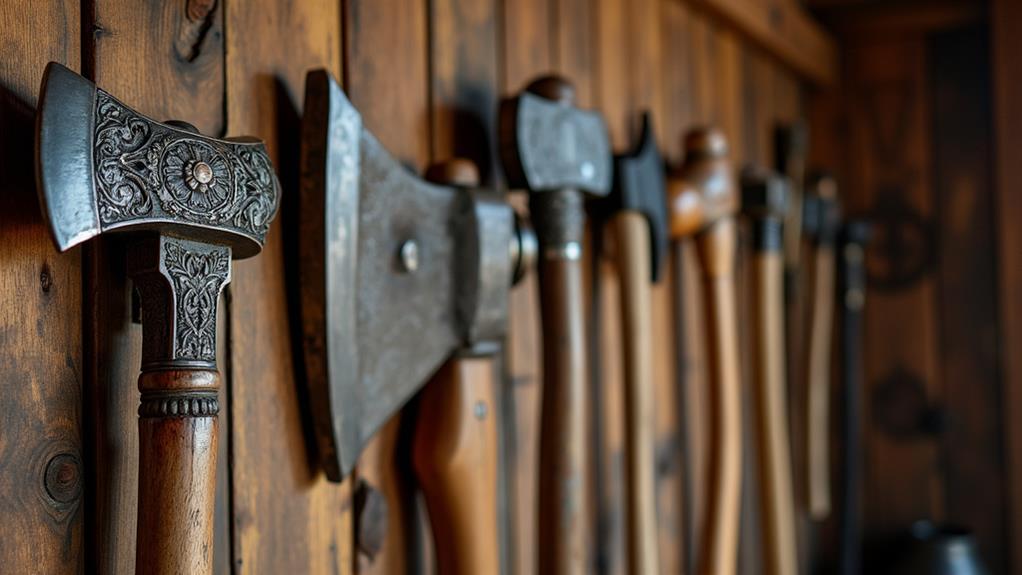
Vintage axe collecting has evolved into a vibrant culture, fueled by enthusiasts who value the superior steel quality and edge retention of older tools. What might start as a practical need for a reliable axe can soon turn into a deep fascination with the world of vintage axes.
The craftsmanship and historical significance behind these tools are captivating. Brands like Spiller and Black Raven, renowned for their exceptional craftsmanship, often become cherished items in a collector's arsenal.
Restoring old axes goes beyond aesthetics; it's a process that enhances your appreciation for their craftsmanship. As you work to bring an antique axe back to life, you uncover stories and details that connect you to its past. This shared enthusiasm fosters a lively community where collectors exchange knowledge and experiences through online forums and discussions.
The condition significantly impacts the value of vintage axes. Pristine models, like certain Black Raven axes, can sell for over $1,000 at auctions, while hidden gems can be found at flea markets for just a few dollars. Ongoing research and documentation within the axe collecting community ensure that the legacy of these tools remains well-preserved and appreciated.
Steel Composition
When comparing modern and antique axes, you'll notice that vintage models often utilized higher carbon steel, which significantly enhances edge retention. Modern axes, however, typically use steel with lower carbon content, leading to different durability and performance characteristics. Understanding these variations in steel composition is essential for predicting how each axe will perform and maintain its edge over time.
High Carbon Content
You might be surprised to learn that the carbon content in steel significantly impacts an axe's performance. Comparing vintage axes to modern ones reveals a notable difference in high carbon steel composition. Vintage North American axes often feature a carbon content between 0.72% and 0.93%. This high carbon steel contributes to superior edge retention and durability, making these tools remarkably efficient and long-lasting.
For instance, the Fagersta Overcoat Axe contains about 1% carbon, along with specific balances of manganese and iron, enhancing its cutting efficiency and longevity. In contrast, modern axes, like those from Gransfors Bruk, typically use steel similar to 1055, which has around 0.55% carbon. While still effective, these modern axes don't retain their edges as long as their vintage counterparts.
User experiences often highlight that vintage axes maintain sharpness longer due to their superior steel composition. The shift to using hypoeutectoid steel in contemporary axe manufacturing reflects a change in design priorities, impacting performance and user satisfaction.
This underscores the benefits of high carbon steel in vintage axes. Whether for chopping wood or carving, vintage axes set a high bar for durability and edge retention.
Steel Formulations
Understanding steel formulations in axes provides valuable insights into their performance and longevity. Vintage axes typically utilized higher carbon steel, with carbon content ranging between 0.72% and 0.93%, resulting in superior edge retention. For instance, historical formulations like those found in the Fagersta Overcoat Axe included approximately 1% carbon and 0.25% manganese, emphasizing durability and sharpness.
In contrast, modern axes, such as those produced by Gransfors Bruk, often use steel similar to 1055, which has a lower carbon content of about 0.55%. This makes modern axes more cost-effective but can affect performance metrics like edge retention. The use of hypoeutectoid steel has become more common in contemporary axe production, differing from the traditional high-carbon compositions prevalent in antique axes.
Durability Factors
Durability in axes primarily depends on their steel composition, making it a critical factor to consider. Vintage North American axes often used high-carbon steel, with carbon content ranging between 0.72% and 0.93%. This high carbon content significantly enhances edge retention and overall durability, allowing these axes to maintain a sharp edge longer—essential for demanding tasks and extended use.
In contrast, modern Gransfors Bruk axes use steel similar to 1055, which contains about 0.55% carbon. This lower carbon content results in different performance metrics and edge retention capabilities. While these modern axes are still effective, they generally don't match the edge retention and durability of their vintage counterparts.
Vintage axe manufacturing often involved overcoating high-carbon steel with softer steel. This technique improved both durability and performance over time, making these axes highly sought after by serious users and collectors.
Changes in manufacturing techniques and steel formulations over the decades have led to noticeable differences in the durability and performance of modern axes compared to vintage ones. Understanding these differences can help you choose the right axe for your needs.
Maintenance Practices
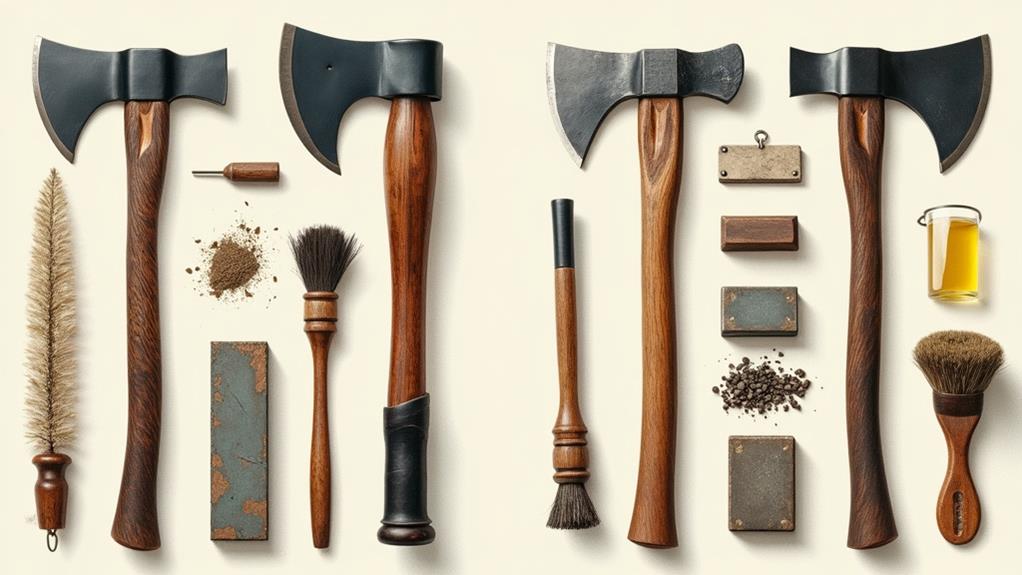
Maintaining an axe, whether modern or vintage, requires a combination of sharpening, cleaning, and proper storage. Vintage axes often demand more effort to sharpen due to their hardness. Using knife sharpening stones is recommended for effective upkeep. Regular sharpening ensures the edge remains keen, which is crucial given the construction method of vintage axes, where high carbon steel is layered with softer steel. This specific build necessitates extra care to maintain the edge and prevent rust.
Modern axes mightn't require the same level of effort, but consistent maintenance is still crucial. Regular cleaning and oiling are fundamental practices for both types. These actions ensure your axe remains in optimal working condition and extends its lifespan.
Vintage axes may pose more challenges, as standard files often prove ineffective on their harder steel. Investing in specialized sharpening tools designed for these older, more robust metals will make a significant difference.
Regardless of the type, always store your axe in a dry place to prevent rust and deterioration. With diligent care, your axe will perform reliably for years to come.
Market Trends
Maintaining your axe ensures its longevity and performance, but understanding market trends surrounding these tools offers valuable insights. The vintage axe market remains vibrant, with collectible axes often fetching over $1,000 at auctions, particularly for well-preserved examples. Brands like True Temper and Kelly are highly sought after, with stamped axes commanding premium prices due to their authenticity and historical significance.
Approximately two-thirds of vintage axes are sourced from flea markets, providing greater accessibility compared to auction sites. However, this doesn't diminish their value. The condition of the axe head is crucial in determining market value, with collectors favoring well-preserved heads and avoiding those with excessive wear, rust, or damage.
In recent years, there's been a noticeable shift toward traditional craftsmanship, contributing to the increased interest in vintage axes. Unlike modern, mass-produced alternatives, vintage axes reflect a level of quality and craftsmanship that many consumers now prefer.
This growing appreciation for traditional methods has driven up demand and market value, making vintage axes not just tools but prized collectibles.
Conclusion
You've delved into the fascinating world of axes, appreciating both modern innovations and the historical craftsmanship of antique models. By understanding their historical significance, notable brands, collecting culture, and differences in steel composition, you can make informed decisions about maintenance and market trends. Whether you're a seasoned collector or just curious, the blend of heritage and functionality in antique axes will surely resonate, proving that some tools truly stand the test of time.