Axe Vs. Hatchet: Which Tool Is Best for Off-Grid Living?
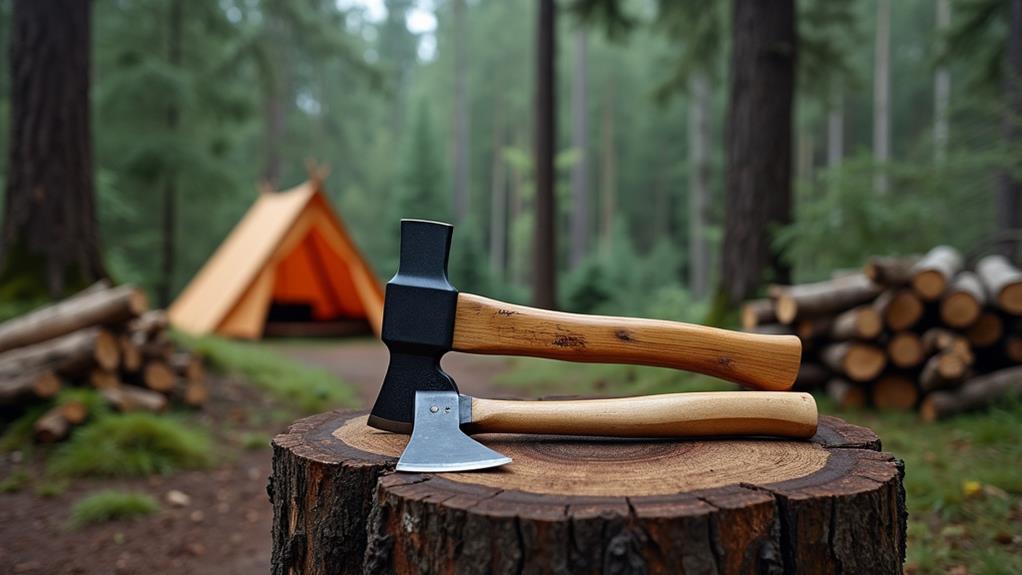
When preparing for off-grid living, the choice between an axe and a hatchet can significantly impact your efficiency and safety. Axes are essential for heavy-duty tasks such as felling trees and splitting large logs, which are crucial for building shelters and maintaining warmth. Conversely, hatchets offer the convenience of one-handed use, making them ideal for gathering kindling and detailed carving work.
Each tool has its unique advantages and limitations. So, how do you decide which is best for your needs?
Let's examine the key factors that could influence your choice.
History of Axes and Hatchets
Axes and hatchets have a rich history that dates back to the early days of human evolution. The initial hand axe, created by Homo habilis, marked a significant leap in tool-making. This primitive yet revolutionary tool served multiple purposes, from chopping wood to scraping hides, laying the groundwork for future advancements in tools. These early hand axes were crucial for survival and significantly contributed to the development of human civilization.
As time progressed, the role of the axe expanded beyond mere survival. Axes became indispensable in construction, warfare, and exploration. Their design evolved to meet different needs. Generally, axes grew heavier and more suited for larger tasks, while the hatchet, being lighter and more versatile, became ideal for smaller jobs. Both tools, however, remained central to human activity.
In modern times, the materials used in axe and hatchet production have seen tremendous improvements. The introduction of durable materials, such as 1050 High Carbon Tool Steel, has made these tools more effective and long-lasting than ever before.
This evolution underscores the significance of axes and hatchets throughout history, showcasing their enduring relevance in various aspects of human life, including chopping wood for off-grid living.
Types and Features
When choosing between axes and hatchets for off-grid living, understanding their types and features is crucial. Axes are designed for two-handed use with longer handles, making them ideal for heavy-duty tasks like splitting wood and felling trees. Their length provides significant leverage, allowing them to chop through large logs efficiently.
In contrast, hatchets are one-handed tools suited for smaller tasks in confined spaces. They're versatile enough for felling smaller trees, gathering kindling, and even field dressing animals.
Both axes and hatchets are often made from high-quality materials. Blades crafted from 1050 High Carbon Tool Steel ensure durability and resilience under rigorous use. Handles made from hickory or rubber offer excellent shock absorption, reducing strain on the user's hands and arms.
The curved handle design found in many axes and hatchets helps deflect impact shock, enhancing comfort and control. Although tomahawks resemble hatchets, they're primarily designed as weapons and lack the efficiency needed for wood chopping or utility tasks.
For off-grid living, focusing on the right axes and hatchets will provide the durability and functionality required for survival and daily activities.
Practical Uses
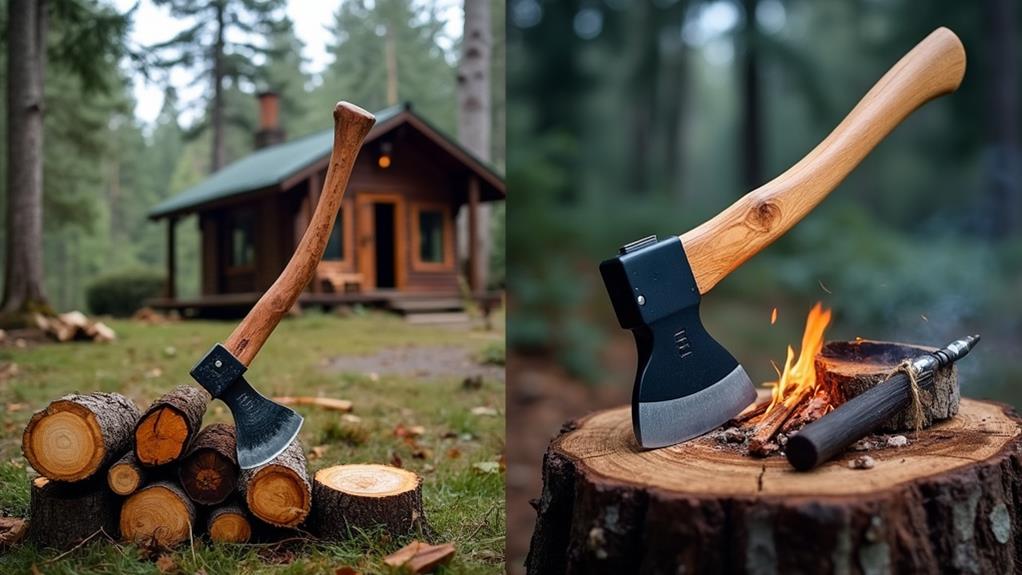
Understanding the practical uses of axes and hatchets can make off-grid living more manageable, whether you're building a shelter or prepping firewood. An axe is ideal for chopping large trees and splitting logs, making it vital for serious chopping tasks. When constructing a shelter or needing substantial firewood, an axe is the go-to tool, designed for heavy-duty work and providing the necessary force and leverage.
Conversely, a hatchet is incredibly versatile and portable, making it suitable for smaller tasks. It's perfect for preparing kindling and carving, essential for cooking and crafting. In off-grid settings, a hatchet's lightweight nature allows for quick, on-the-go tasks like clearing trails and gathering firewood.
In emergency situations, a hatchet's multiple uses become invaluable. Whether field dressing animals or performing minor repairs, the hatchet proves to be an essential tool, enhancing its practicality for off-grid survival. Its compact size makes it easier to carry, ensuring preparedness.
Both the hatchet and the axe have unique strengths. Knowing when to use each can greatly improve your off-grid living experience.
Maintenance Tips
Proper maintenance of your axe and hatchet ensures they remain reliable tools for off-grid living.
Regular upkeep is essential for optimal performance when you need them most. Here's how to keep your tools in top condition:
- Sharpen the blade: Regularly sharpen the blade every few months or as needed to maintain cutting efficiency. A sharp blade enhances performance and makes tasks easier.
- Clean after use: Always clean your axe or hatchet after each use. Remove sap, dirt, and moisture to prevent corrosion, which can deteriorate the blade and axe head over time.
- Store properly: Store your tools in a dry environment and use blade covers to prevent rust and accidents.
- Inspect the handle: Regularly check the handle for signs of wear or damage. Repair or replace it as needed to ensure safe handling.
Using durable materials like hickory for handles and 1050 High Carbon Tool Steel for blades will enhance longevity and shock absorption.
Safety and Handling
Mastering proper grip techniques is essential for the safe and effective use of both axes and hatchets. Hatchets, due to their smaller size, offer easier control and a lower risk of injury for beginners. In contrast, axes require more skill and precision to handle safely. Always use blade covers during transport and wear appropriate safety gear to minimize risks and ensure a safe experience.
Proper Grip Techniques
Proper grip techniques are essential for safely and effectively handling an axe or hatchet. When cutting wood, maintaining control over your tool is crucial for both efficiency and safety.
For axes, always use an overhand grip. Place your dominant hand near the axe head and your other hand at the end of the handle. This grip generates more force and stability, enhancing your chopping efficiency.
For hatchets, a pinch grip is most effective. Hold the hatchet around the head with your thumb and index finger, providing better maneuverability, especially in confined spaces.
Always position your feet shoulder-width apart to ensure a stable stance. This improves balance and reduces the risk of accidents while swinging the tool.
Key Points:
- Axes: Overhand grip with both hands for increased force and control.
- Hatchets: Pinch grip for superior maneuverability.
- Stance: Feet shoulder-width apart for better balance.
- Aim: Target a specific spot on the wood to ensure a clear swing path.
Risk Mitigation Strategies
Mastering the proper grip techniques for handling axes and hatchets is crucial for ensuring safety. To mitigate risks effectively, always wear appropriate safety gear, such as gloves and eye protection, to minimize the risk of injury from flying debris or accidental slips.
A proper grip is indispensable for reducing the likelihood of accidents. Short-handled axes and hatchets can be more challenging to control, but the right technique can ensure safe handling. For novice users, hatchets are generally safer due to their lighter weight and smaller size. However, maintaining a firm, controlled grip is essential for all users. Always store your axes and hatchets with blade covers or sheaths when not in use to prevent unintended cuts and injuries during transport.
Regular maintenance is another critical safety measure. Keeping your tools sharp and well-maintained ensures efficient performance and reduces the risk of mishaps. Proper storage also prevents rust and damage, which can compromise safety.
Conclusion
When choosing between an axe and a hatchet for off-grid living, it depends on your specific needs. Axes are ideal for heavy-duty tasks like chopping large trees and splitting logs, making them perfect for building shelters and stockpiling firewood. Hatchets, on the other hand, excel in quick, one-handed tasks such as gathering kindling and carving. Understanding each tool's strengths and maintaining them properly will enhance your efficiency and safety, making off-grid living more manageable.