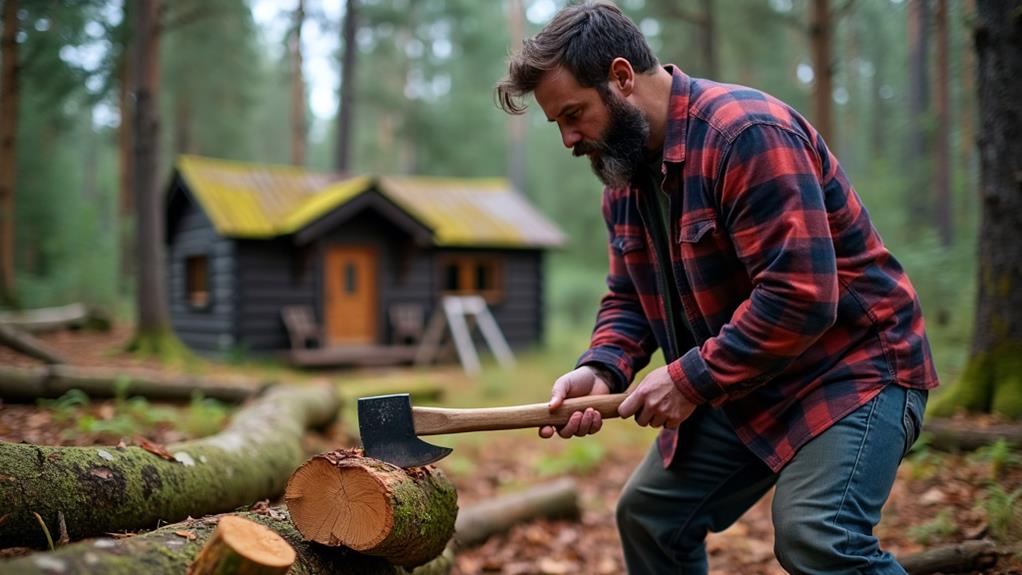
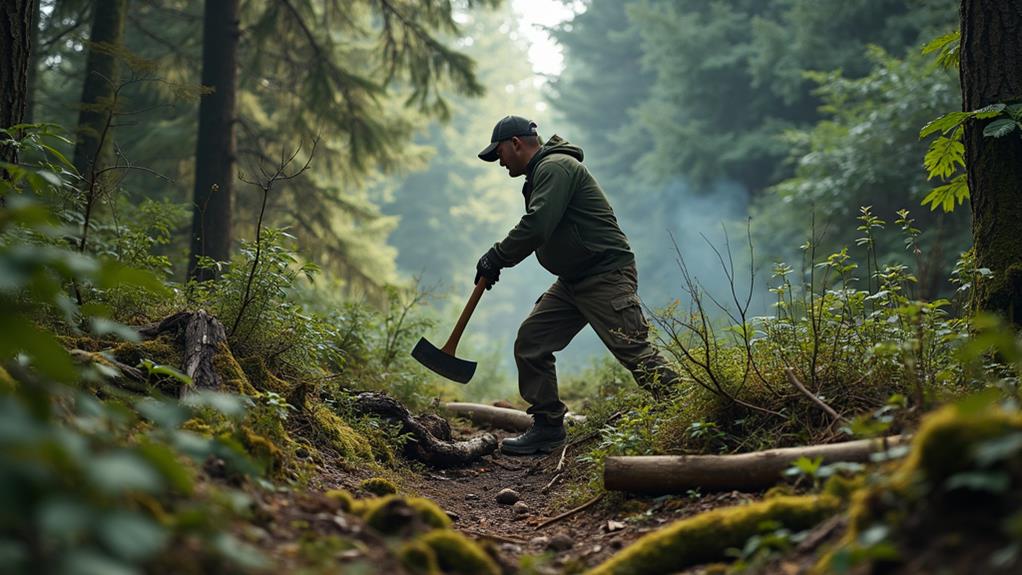
Axe Techniques for Building Log Cabins
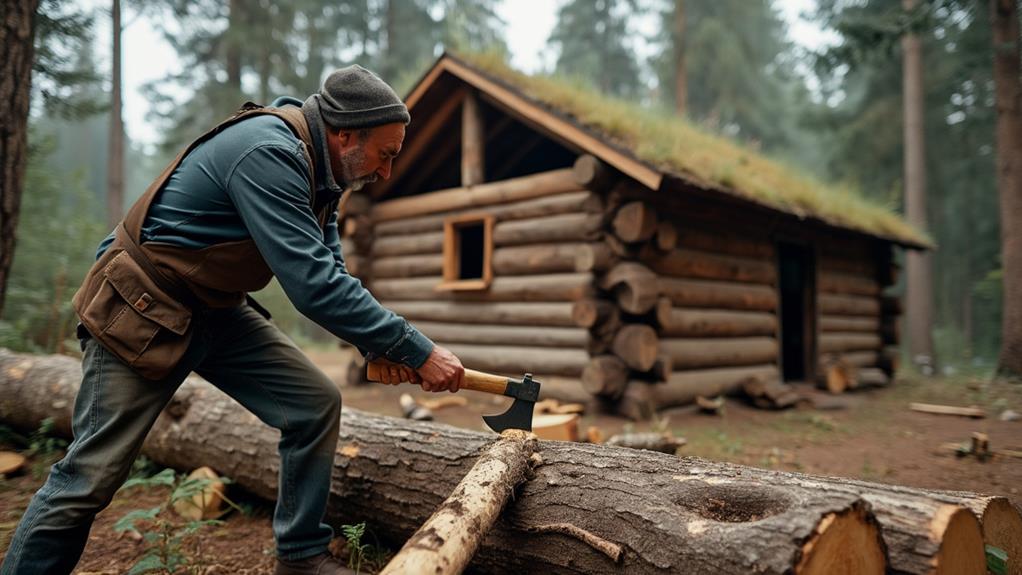
Mastering axe techniques is crucial when building a log cabin. Start with log preparation, choosing the optimal days for cutting to avoid complications. Debark logs using tools like draw knives and hatchets, each with its own nuances. Employ jump chopping for efficient log splitting. Safety is paramount—keep your tools sharp and use proper body mechanics. Adapt your approach to weather conditions and maintain flexibility in your design.
Curious about how these elements come together? Let's explore further.
Log Preparation
Efficient log preparation is crucial for a successful log cabin construction. Careful planning, especially considering weather conditions, is essential. Rain can disrupt your schedule, so it's important to choose dry days for log preparation to avoid delays.
When splitting logs, aim to split them in half. This technique not only makes handling easier but also improves stability, particularly for flooring applications. Ensure you debark the logs, as bark, especially flaky bark on older logs, can complicate the preparation process significantly.
Use refined techniques like jump chopping cautiously. While it can create a rough surface on the logs, it isn't ideal for flooring. Focus on achieving a smoother finish to ensure a solid foundation for your cabin.
Be mindful of knots and stringy textures in the logs, as these features can complicate the splitting process. If you encounter such issues, consider using alternative materials or methods to maintain efficiency.
Weather Impact
When constructing a log cabin, rainy weather can significantly hinder your progress. Wet logs become heavier and more challenging to handle, affecting both safety and efficiency. Consistent weather conditions are crucial for maintaining a steady workflow and preventing delays.
Rain Delays Progress
While rain provides essential hydration to forests, it significantly disrupts log cabin construction. Wet logs become slippery and challenging to handle, heightening the risk of accidents during splitting and movement. This necessitates effective strategies for maintaining productivity in rainy conditions. For example, setting up covered workspaces allows work on smaller tasks to continue during downpours.
Effective moisture management is equally crucial. Wet logs complicate debarking and splitting, so using tarps or temporary shelters to keep logs dry is advisable. This prevents moisture from compromising the wood's integrity and quality.
If prolonged rain is anticipated, reconsidering some materials may be necessary. Using standard lumber for flooring, for instance, can help keep the project moving forward despite the weather.
Inclement weather often leads to a backlog of logs needing processing, which can significantly affect overall efficiency. By planning ahead and implementing these strategies, you can mitigate rain-induced delays and keep your log cabin construction on schedule.
Conditions Affect Stability
Weather conditions significantly influence the stability and progress of log cabin construction. Rainy weather poses substantial challenges, as wet logs are heavier and harder to maneuver, raising safety concerns. Moisture complicates the debarking process, as wet bark adheres more stubbornly to the wood, making removal difficult.
Beyond handling issues, damp conditions affect construction accuracy and consistency. Interruptions due to rain can make it harder to maintain precision when resuming work, potentially compromising the cabin's stability.
Adverse weather may also necessitate changes in materials and techniques, potentially delaying the project. Planning around the weather and mitigating these factors can enhance the stability and durability of your log cabin. Understanding these impacts is crucial for effective and safe construction.
Log Handling Tips
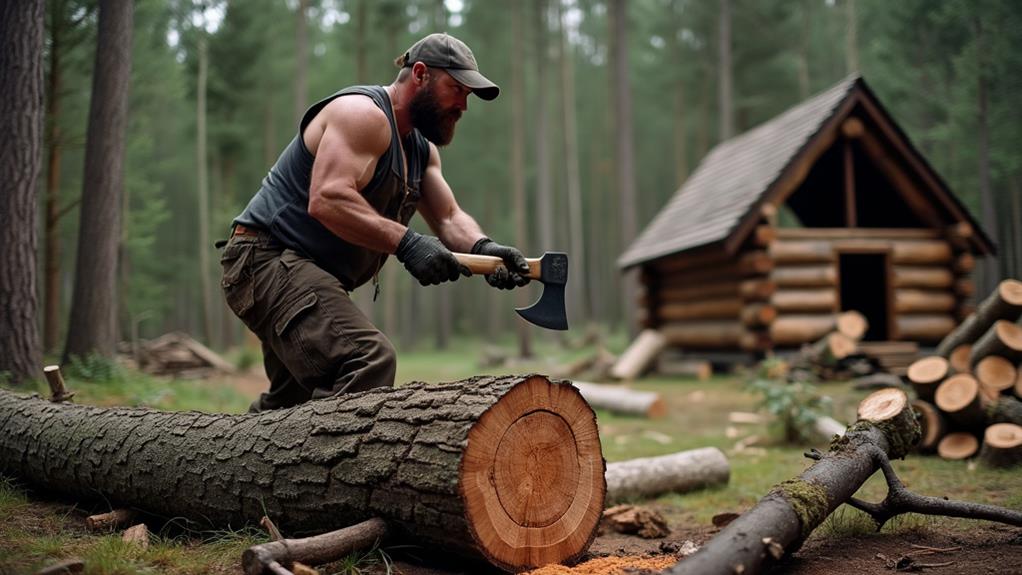
Before constructing your log cabin, proper log handling is essential for safety and efficiency. Start by familiarizing yourself with effective log transportation methods. Using a log carrier or skid can make moving heavy logs less strenuous.
For log storage, keep your logs off the ground to prevent moisture damage and rot. Stacking them on a raised platform or using a log rack ensures they stay dry and last longer.
Selecting the right logs is equally important. Pay attention to factors like texture and condition. Avoid logs with excessive stringy fibers or numerous knots, as these imperfections can complicate the splitting process. Opt for logs that are relatively straight and free of major defects.
When splitting heavy logs, consider halving them initially to make them easier to handle, especially in tight spaces. You might also find the jump chopping technique effective, but it can leave a rough surface that will need smoothing later.
If you consistently face issues, reassess your technique or consider alternative materials like standard lumber for a smoother construction process.
Debarking Techniques
When debarking logs, using tools like a drawknife or debarking spud can significantly improve efficiency. Weather conditions play a crucial role, so aim to work in dry weather to avoid complications. Older logs, which tend to be more stable and less moist, require careful handling to achieve a smooth finish without damaging the wood.
Efficient Debarking Tools
Efficient debarking is crucial for building log cabins, and using the right tools can significantly streamline the process. Successful bark removal not only enhances the logs' appearance but also prevents rot and ensures even drying.
Here are three essential tools for effective debarking:
- Draw Knives: These versatile tools offer excellent control, allowing you to maintain a consistent angle and apply even pressure. This minimizes the risk of tearing the bark and ensures a smooth surface.
- Hatchets: Ideal for smaller logs, hatchets enable quick bark removal. They're lightweight and easy to handle, making them suitable for precision work.
- Debarking Spuds: Essential for larger logs, debarking spuds use your strength to peel off substantial sections of bark with minimal effort, enhancing overall efficiency.
To maximize efficiency, debark logs promptly after cutting, as bark is easier to remove before it dries and adheres firmly to the wood. Using the appropriate tools and techniques won't only improve the logs' appearance but also promote even drying and prevent rot.
Impact of Weather
Efficient debarking tools can streamline the process, but weather conditions significantly affect their performance. Rain, for example, makes logs slippery, complicating debarking and raising the risk of accidents. Effective weather adaptation strategies and moisture management techniques are crucial in these scenarios.
In wet conditions, maintain a firm grip on your tools and slow your movements for better control, reducing the risk of slipping. Jump chopping, though useful, can lead to rough surfaces if not executed carefully, especially in the rain. Practicing your technique in varied weather helps you adapt and refine your approach.
Seasonal preparation is also essential. In colder months, logs can freeze, making the bark more brittle and easier to remove but harder to handle. Ensure you have the appropriate tools and dress warmly. Conversely, summer heat can dry out the bark, making it tougher to strip.
Here's a quick guide to adapt your debarking techniques to different weather conditions:
| Weather Condition | Adaptation Strategy | Key Technique |
|---|---|---|
| Rainy | Secure grip | Slow, controlled movements |
| Cold/Frozen | Warm clothing | Steady, deliberate chopping |
| Hot/Dry | Hydrate and rest | Consistent, even strokes |
| Windy | Stable stance | Short, controlled strokes |
| Humid | Moisture control | Careful, precise peeling |
Handling Older Logs
Debarking older logs can present unique challenges, but with the right techniques, you can manage them effectively. Start by using a drawknife or bark spud to carefully remove flaky bark without damaging the wood underneath, as any damage can affect the final finish and structural integrity.
Here are some essential log selection and preservation tips to consider:
- Moisture Content: Always check the moisture content of older logs. Excessive moisture can make debarking more difficult and invite issues like mold or rot. Aim to debark logs soon after felling to prevent the bark from adhering too tightly.
- Grain Direction: For logs with a stringy texture, work along the grain to avoid tearing. This ensures a smoother debarking process and maintains the wood's quality.
- Inspection for Imperfections: Regularly inspect older logs for knots and imperfections, as these can complicate the debarking process and affect the final product's quality. Removing these imperfections will make your work easier and more efficient.
Splitting Challenges
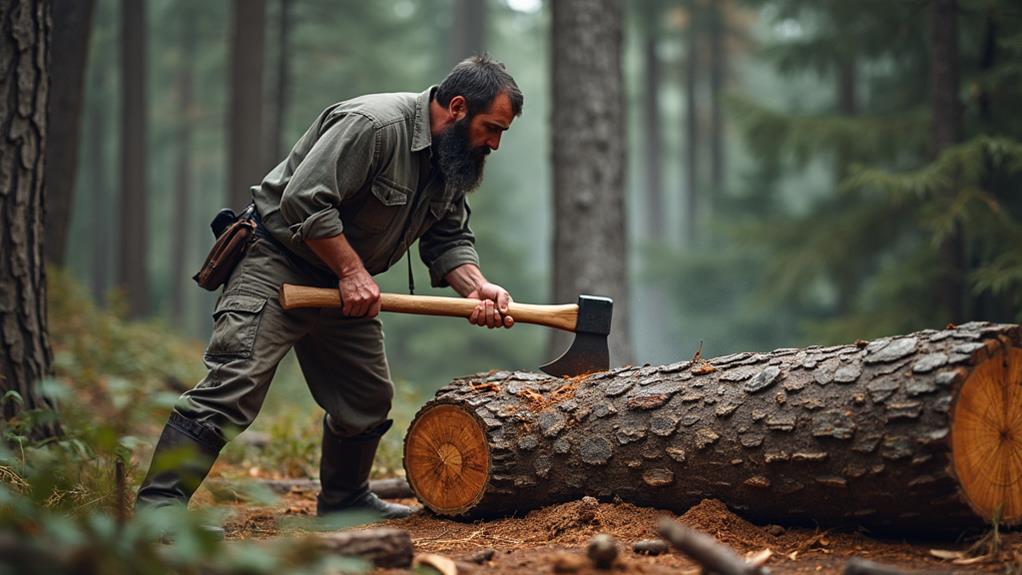
Splitting logs for your log cabin can be daunting, especially when knots and stringy textures impede your axe's effectiveness. These challenges can cause your axe to glance off target, making the process both frustrating and time-consuming.
To overcome these obstacles, improving your accuracy is essential. Regular practice will enhance your consistency, even after breaks. Start by assessing the log for knots and stringy areas and plan your cuts accordingly. Often, it's better to begin splitting from the sides rather than the center, especially with larger or more stubborn logs. This approach helps avoid complications and speeds up the process.
Weather conditions also play a significant role. Rain can make logs slippery and harder to handle, potentially causing delays. Keep an eye on the forecast and choose your workdays wisely.
Jump Chopping
Jump chopping for splitting logs leverages the additional force from the height of your swing, making it effective for tough logs. Always prioritize safety by maintaining a solid stance and proper balance to prevent accidents. While this technique may leave rough surfaces, smoothing them out afterward ensures your logs are ready for cabin construction.
Efficient Splitting Methods
Ever wondered how to make log splitting more efficient? Jump chopping can streamline your log cabin construction by allowing you to split logs faster and with less effort. This method leverages the weight of your axe for powerful downward strikes, making the process quicker than traditional methods.
To truly optimize jump chopping efficiency, focus on your stance and alignment to ensure each swing is effective and keeps you balanced. Practicing jump chopping is crucial for refining your technique. Begin with smaller, simpler logs to build your skills. Over time, you'll gain better control and precision, enabling you to handle larger logs confidently.
Here's a quick guide to improve your jump chopping practice:
- Stance and Alignment: Stand firmly with feet shoulder-width apart. Ensure your axe is aligned with the log for maximum impact.
- Log Positioning: Split logs from the side rather than the end. This approach enhances stability and minimizes issues from knots and stringy textures.
- Consistent Practice: Regularly practice jump chopping to maintain and improve your skills, especially after breaks from log work.
Safety Precautions
Before you start jump chopping, prioritize safety to prevent accidents and injuries. Ensure your axe is sharp and well-maintained; dull blades can lead to ineffective cuts and increase the risk of accidents. Regular maintenance, including sharpening and inspecting for damage, is essential for safe and efficient chopping.
Always wear appropriate safety gear. Eye protection is crucial to shield against flying debris, and gloves protect your hands from splinters and blisters. Safety gear isn't optional; it's a fundamental part of your chopping routine.
Your stance is equally important. Maintain a stable stance with your feet firmly planted to prevent slipping or losing balance. Solid footing provides better control over your axe, reducing the risk of mishaps.
Additionally, engage your legs and core for power rather than relying solely on your arms. This not only reduces fatigue but also improves control and precision. Proper body mechanics are essential for executing the technique safely and effectively.
Surface Finish Quality
After ensuring your safety with proper precautions, let's focus on the surface finish quality achievable through jump chopping. This technique, while effective for splitting logs, often leaves a rough surface due to the impact and angle of the axe.
To improve this, follow these steps:
- Refine with Extra Cuts: After jump chopping, use finer, controlled cuts to smooth the surface. This helps achieve a more even finish, making subsequent log fitting easier.
- Maintain Your Axe: Regularly sharpen and maintain your axe. A well-maintained axe can greatly improve the surface finish quality. Dull blades create more splintered and uneven surfaces.
- Analyze the Wood Grain: Before starting, examine the log's natural grain and texture. Understanding the wood grain helps anticipate the surface result and adjust your technique accordingly.
- Surface Treatment Options: Consider sanding or planing the wood to smooth out any remaining roughness. These additional steps can significantly enhance the surface finish.
Practicing consistency in your striking technique is vital. Any deviations can lead to uneven surfaces, complicating the fitting process.
Surface Smoothing
When smoothing the surface of split logs, aim for a consistent finish by employing techniques like jump chopping or hand planing to reduce roughness. These methods are essential for enhancing the aesthetic appeal and finish consistency of your log cabin.
Begin by debarking the logs to prevent pest infestations and improve adhesion for any finishes you plan to apply later. Achieving a smooth surface can be challenging due to natural imperfections like stringy textures or knots. Practice on multiple logs to refine your technique and build confidence.
Use a sharp axe or hand planer for superior surface quality—this will make the logs easier to handle and result in a more visually appealing cabin. Weather conditions are crucial for surface smoothing. Damp logs are harder to cut and shape, so aim to work on dry days. Pay attention to the log's grain and work with it, not against it, to avoid unnecessary splintering.
Cabin Construction
Cabin construction begins with a solid foundation, ensuring your log cabin stands the test of time. Properly debarking your logs is crucial to prevent moisture retention and enhance stability, which is essential for a durable structure.
The jump chopping technique can be effective for splitting logs, but it often results in a rough surface. To improve aesthetics, you'll need to smooth these surfaces afterward.
When selecting materials, consider the following:
- Log Aesthetics: Smooth, well-debarked logs not only look better but also enhance the structural stability of your cabin.
- Cabin Insulation: Properly fitted logs with minimal gaps help maintain a cozy interior, reducing the need for additional insulation.
- Material Selection: If log splitting proves difficult, using standard lumber for interior flooring can simplify the construction process.
Weather conditions significantly affect your progress. Rain can make handling and processing logs challenging, so plan your work around favorable weather.
Experience and technique are vital; practice ensures accuracy and effective management of stringy textures. By focusing on these aspects, you'll create a beautiful, well-insulated log cabin built to withstand the elements.
Design Flexibility
Design flexibility is essential when constructing a log cabin, allowing for adjustments based on available materials and unforeseen challenges. As you progress, your initial design can evolve to address issues such as logs splitting during flooring preparation, prompting a switch to standard lumber. This adaptability ensures your project remains on track despite material limitations.
Material selection plays a critical role in the overall design evolution of your cabin. Utilizing various log sizes and types can enhance both the structural integrity and aesthetic appeal of your cabin. These choices reflect your skill level and accommodate different construction techniques, making the process smoother.
Aesthetic considerations also benefit from flexibility. Adding features like a front deck can significantly enhance your cabin's functionality and charm, providing a comfortable outdoor living space. This adaptability allows for continuous refinement and improvement of your design throughout the construction process.
Documenting each step of your construction process offers valuable insights into your design decisions and adaptations. This record highlights the importance of flexibility in achieving your desired cabin outcome and can serve as a guide for future projects.
Future Improvements
Improving your axe techniques can significantly enhance both the quality and efficiency of your log cabin construction. By perfecting methods like jump chopping, you can achieve smoother finishes on your logs, which not only elevates the aesthetic appeal but also accelerates the splitting process, leading to substantial efficiency gains.
To ensure continuous improvement, consider the following practices:
- Consistent Practice: Regularly practice hitting your marks, especially after breaks, to maintain technique consistency and avoid compromising the quality of your log work.
- Refine Techniques: Tackle challenges like stringy textures and knots by making precise adjustments to your movements. These small refinements can prevent issues and increase your efficiency.
- Video Documentation: Record your progress with videos. Reviewing these can help you reflect on and improve your techniques for future projects.
Additionally, consider using alternate flooring materials, such as standard lumber, to simplify construction. This approach can reduce the complexities associated with log splitting and further enhance the overall efficiency of your build.
Conclusion
Mastering axe techniques and adapting to weather conditions are crucial for building a beautiful and sturdy log cabin. Prioritize safety by using sharp tools and maintaining proper body mechanics. Employ effective methods for debarking and splitting logs, and keep your cabin design flexible to enhance its integrity. With dedication and attention to detail, you'll create a cozy and lasting retreat. Stay safe and happy building!