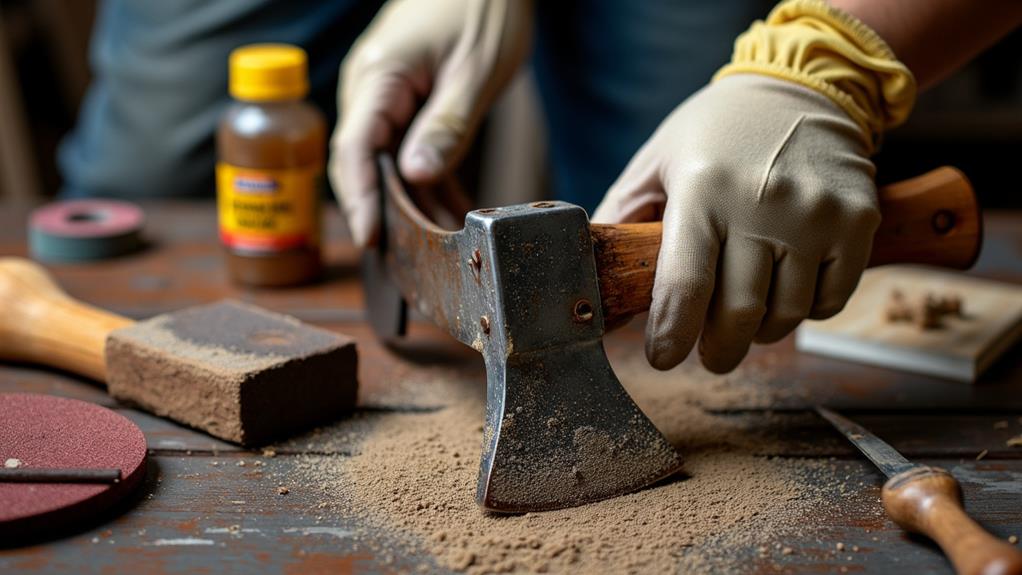
Axe Care: Preventing Rust and Corrosion
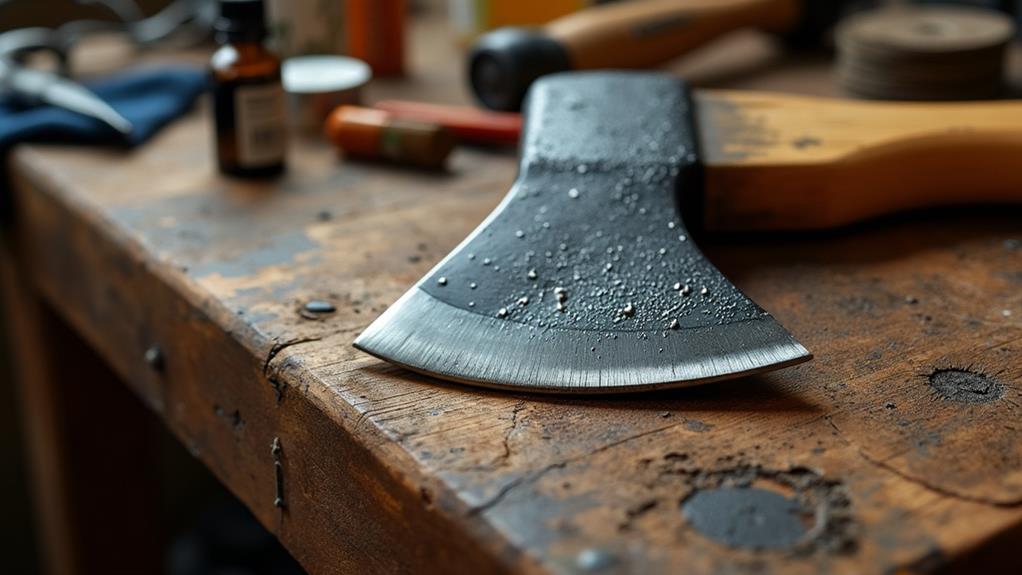
Maintaining your axe involves more than just sharpening the blade; preventing rust and corrosion is equally important. Regularly cleaning the axe head after each use can make a significant difference. Consider using a vinegar and salt mixture for deeper cleaning, as it is surprisingly effective.
However, cleaning alone isn't sufficient; applying protective coatings like boiled linseed oil and wax can form a barrier against moisture. Proper storage is also crucial. Here are some fundamental tips to keep your axe rust-free and ready for use.
Regular Cleaning and Maintenance
Regular cleaning and maintenance of your axe are essential to prevent rust and corrosion. After each use, wipe down your axe with a cloth to remove any moisture and dirt, as even seasoned firewood can retain 15-20% moisture. This simple step is crucial for rust prevention.
Once cleaned, apply a thin layer of oil or wax to provide a protective coating against rust. For light maintenance, a quick spray of oil suffices. However, if you notice heavy pitch or rust, use fine steel wool to clean the blade.
Always inspect your axe for signs of rust or damage during this process. Spotting issues early allows for prompt resolution, maintaining the axe's efficiency and safety. Engaging with the community to share maintenance experiences can be beneficial. You'll gain valuable tips that can improve your routine.
Consistent oiling not only prevents rust but also enhances cutting performance and prolongs the axe's lifespan. By making regular cleaning and maintenance a habit, you ensure your axe remains in top condition.
Proper Storage Practices
After confirming your axe is clean and well-maintained, the next crucial step is proper storage. To protect your axe from rust and corrosion, focus on minimizing moisture exposure and maintaining a stable environment. Here are four key practices to follow:
- Store in a Dry, Climate-Controlled Environment: A dry, climate-controlled space minimizes moisture, a primary cause of rust. Avoid damp basements or outdoor sheds where humidity levels fluctuate.
- Use Leather Sheaths: Rubber covers can trap moisture and accelerate rusting. Leather sheaths allow your axe to breathe while offering protection.
- Avoid Temperature Fluctuations: Significant temperature changes can cause condensation on your stored axe, promoting rust. Avoid storing your axe in places like vehicle trunks where temperature fluctuations are common.
- Regularly Inspect Your Axe: Periodically check your stored axe for signs of rust or damage. Early detection allows for timely maintenance and prevents minor issues from escalating.
For added protection, consider placing silica gel pouches in your storage area to absorb humidity.
Protective Coatings and Oils
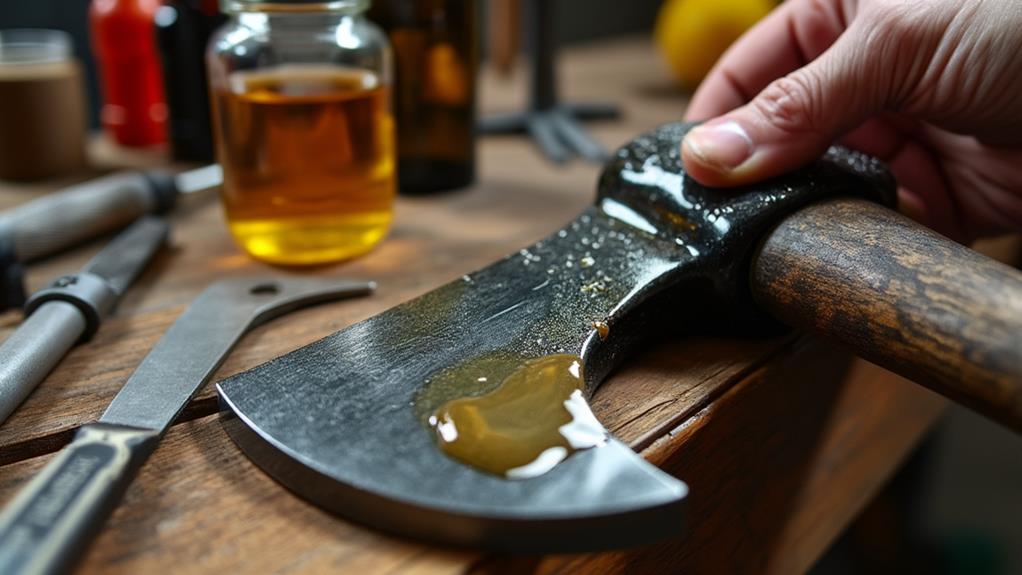
Proper coatings and oils are crucial for long-term maintenance of your axe. For wooden handles, boiled linseed oil (BLO) is ideal, offering a durable protective layer. Apply a small amount to the handle and allow it to soak in.
For metal parts, wax is excellent for rust protection. You can create your own by melting beeswax and mixing it with mineral spirits, forming a strong moisture barrier, particularly on wear points prone to rust.
For convenience, synthetic sprays like G96 or general-purpose gun oils are effective. Spray a thin layer on the metal parts, avoiding excessive contact with the wooden handle. Regular application of these coatings will help prevent rust and extend your axe's lifespan.
For a more durable barrier, consider clear lacquer or heavy-duty spray paint. These options offer aesthetic flexibility but may need periodic reapplication, especially with frequent use.
Blade Sharpening Tips
Regularly sharpening your axe is essential for both efficiency and safety. Use a sharpening stone or file, maintaining a consistent angle of 20 to 25 degrees, and always move the tool in one direction to avoid damage. After sharpening, inspect the blade for rust or chips and apply a light coat of oil to maintain its condition.
Proper Sharpening Techniques
Maintaining a sharp axe blade is crucial for both efficiency and safety. A sharp blade requires less force, reducing the risk of accidents. Follow these steps to ensure your axe heads are always in prime condition:
- Regular sharpening: Sharpen your axe blade frequently to ensure peak performance. This not only makes chopping tasks easier but also enhances safety.
- Consistent angle: Use a sharpening stone or file at a consistent angle, ideally between 25 to 30 degrees, to achieve a proper edge.
- Appropriate surfaces: Avoid sharpening your blade on hard surfaces like concrete or metal, which can cause damage. Instead, use a dedicated sharpening block or a piece of wood.
- Damage inspection: Regularly check the blade for nicks or chips and address these issues promptly.
After sharpening, apply a thin coat of oil to the blade to protect against corrosion and extend its longevity.
Avoiding Blade Damage
Maintaining blade integrity is crucial for the performance and safety of your axe. Regular sharpening is essential, as dull or chipped blades increase the risk of accidents and reduce cutting efficiency. Use appropriate sharpening tools like a file or whetstone, and maintain a consistent angle throughout the process to ensure your axe head remains effective and safe to use.
Avoid cutting into the ground or hard materials, as these can damage the blade edge and necessitate more frequent sharpening. Use a splitting block when working with your axe to protect the blade and improve safety, preserving its sharpness over time.
After sharpening, it's important to oil the blade to prevent micro-corrosion. Boiled linseed oil (BLO) is an excellent choice. Apply it with an oily rag, ensuring the entire blade surface is covered. This helps maintain the cutting edge and protects against rust, especially with frequent use.
The protective coating can wear off, so reapply BLO regularly to keep your axe in peak condition. Consistent care and proper use will ensure your axe performs at its best.
Handle Care Techniques
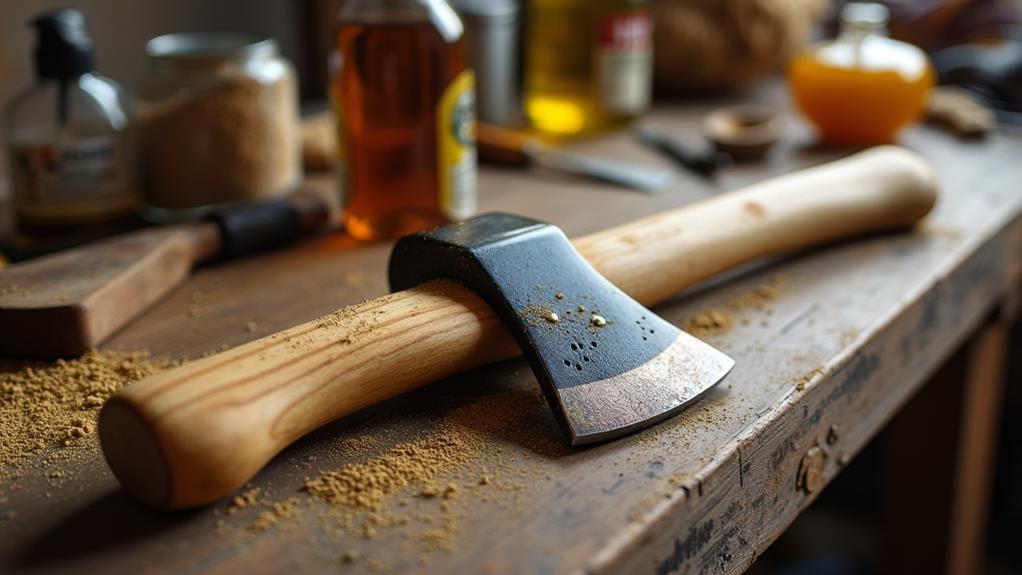
A well-maintained axe handle is crucial for both safety and performance. To ensure your axe remains in top condition, adopt effective handle care techniques. Start by applying boiled linseed oil (BLO) to your natural hickory handle. This treatment maintains the moisture balance, preventing cracks and warping over time.
Follow these key tips:
- Regular Inspections: Check your handle frequently for signs of wear or damage. Early detection allows for timely replacement, ensuring continued safety.
- Proper Storage: Store your axe in a dry location, away from extreme temperature fluctuations to minimize the risk of handle loosening and deterioration.
- Avoid Heavy Objects: Avoid stacking heavy objects on your axe or leaning it against walls, as these practices can cause handle distortion and damage.
- Climate-Controlled Environment: Keep your axe in a climate-controlled environment to prevent the natural hickory handle from warping or shrinking.
Advanced Rust Prevention Methods
To keep your axe rust-free, apply protective oil coatings regularly and store it properly. Using oil prevents moisture-induced rust, while keeping your axe in a dry place with silica gel pouches helps absorb excess humidity. Regular maintenance, including inspection and treatment, ensures your axe remains in optimal condition.
Protective Oil Coatings
Maintaining your axe's longevity and performance requires effective rust prevention methods, such as protective oil coatings. Using boiled linseed oil (BLO) helps prevent rust and maintains the moisture balance of wooden handles. Regular application ensures your axe remains in top condition. Additionally, a mixture of beeswax and mineral spirits creates a robust barrier against moisture, enhancing the durability of both the metal and wooden parts.
Consider these four effective protective coatings:
- Boiled Linseed Oil (BLO): Prevents rust and retains moisture in wooden handles.
- Beeswax Mixture: A blend of beeswax and mineral spirits forms a strong, moisture-resistant coating.
- Heavy-duty Spray Paint: Provides durable rust protection but requires careful removal at wear points to maintain sharpness.
- Clear Lacquer: Seals against moisture without altering the axe's appearance, though it needs periodic reapplication.
Proper Storage Techniques
After confirming your axe is well-oiled and protected, proper storage techniques are crucial to prevent rust and deterioration. Store your axe in a climate-controlled environment with humidity levels below 50% to minimize rust risk. Use silica gel pouches to absorb excess moisture.
Avoid rubber covers, as they trap moisture and accelerate rust formation. Opt for breathable leather sheaths that allow airflow while providing protection. Over time, a good patina will develop, offering additional safeguarding for the metal.
Never store your axe in vehicles or trunks where temperature fluctuations can cause condensation, promoting rust and loosening the handle. Regularly inspect stored axes for rust or handle damage. When necessary, apply a fresh coat of wax or oil to exposed metal surfaces for improved rust prevention.
For the wooden handle, periodically apply boiled linseed oil to maintain its integrity and prevent drying out.
Regular Maintenance Routine
To keep your axe in optimal condition, follow a comprehensive maintenance routine that surpasses basic care. Begin by cleaning the axe head with a mixture of vinegar and salt to remove rust. Do this immediately after use to prevent corrosion.
After cleaning, apply a light coat of boiled linseed oil (BLO) to both the axe head and wooden handle. BLO protects the metal and maintains the handle's moisture balance, preventing warping or damage.
For enhanced rust prevention, use a protective wax mixture made of beeswax, paraffin, and boiled linseed oil. This creates a durable moisture barrier for the axe head and handle. For even more advanced protection, consider applying clear lacquer or heavy-duty spray paint, which provide a hard, moisture-resistant barrier and can be reapplied as needed. Regular inspections are crucial. Check for signs of wear, damage, or rust.
Follow this simple routine:
- Clean with a vinegar and salt mixture.
- Apply boiled linseed oil (BLO).
- Use a protective wax mixture on the axe head and handle.
- Perform regular inspections for damage or rust.
This detailed routine ensures your axe remains in top shape, extending its lifespan and functionality.
Conclusion
By adhering to these axe care guidelines, you can ensure your tool remains in optimal condition for years. Key steps include regular cleaning, proper storage, and applying protective coatings. Additionally, remember to sharpen the blade and maintain the handle for peak performance. With consistent effort and attention, you can prevent rust and corrosion, keeping your axe reliable and effective. Happy chopping!